
Busbar Split-Core vs. Solid-Core Outdoor CT: Making the Right Decision
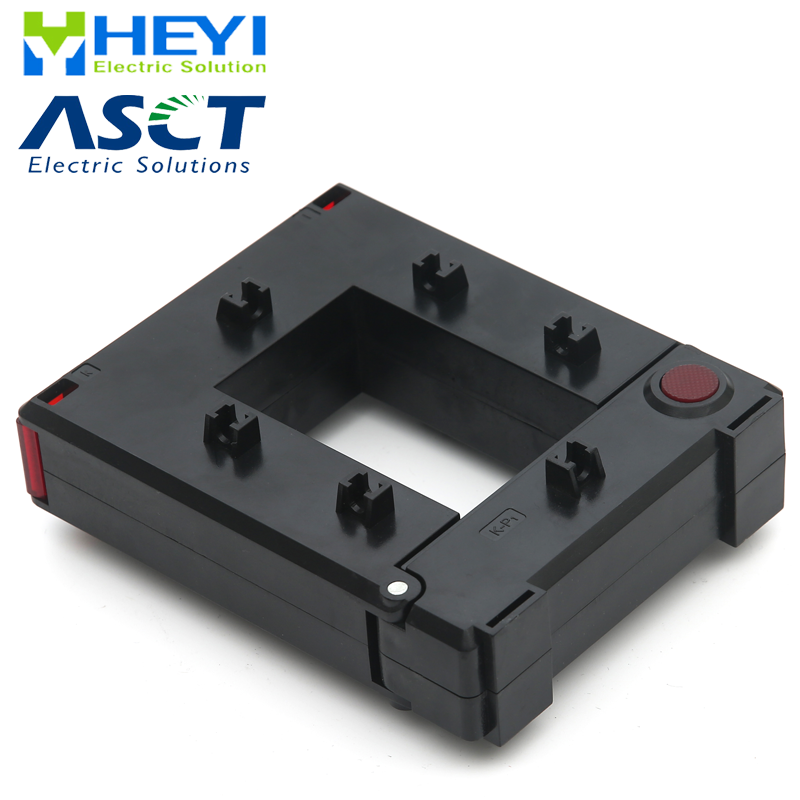
A busbar split-core current transformer and an outdoor solid-core current transformer perform the same measurement job under opposite physical constraints. A split-core design opens and clamps around a conductor that is already in service. A solid-core design requires the primary conductor to be routed through a closed window during assembly, after which the core and winding sit inside a sealed resin body. The decision is therefore not a preference question. It is answered by four practical conditions: whether the primary conductor can be disconnected, how much window space the busbar needs, what accuracy class the application requires, and what ingress protection and certification evidence the site and the buyer's market actually demand.
This guide works through those four conditions using documented specifications for three HEYI models that together cover the decision space: DP/HK (busbar split-core, 0–80 × 160 mm window, 0–8000 A, accuracy classes 3.0 / 1.0 / 0.5), OCT (outdoor waterproof split-core, 0–120 mm window, documented IP65 with an IP65 test report) and LMZW (outdoor resin-cast solid-core, 0.66 kV weatherproof, IP65, accuracy classes up to 0.2S, covered by a type test report to IEC 61869-1 and IEC 61869-2). HEYI ELECTRICAL (Wenzhou Heyi Electrical Co., Ltd.) is a Wenzhou, China-based manufacturer of current transformers and current sensors, founded in 2012, operating a 10,000 m² facility with 56 employees and a 95% export ratio.
Problem Definition: Where the Wrong Selection Actually Hurts
The mistakes that matter in this comparison are structural, not cosmetic. A split-core CT specified for a billing-grade measurement point will not reach the accuracy class the application needs. A solid-core CT specified for a live busbar retrofit will force a shutdown that the project schedule cannot absorb. Both errors are avoidable if the constraint list is written before the part number is chosen.
Constraint 1 — Can the primary conductor be disconnected? Busbar split-core current transformers are documented for exactly this case. The DP/HK is described in HEYI product data as a retrofit split-core CT, a large window split-core CT and an easy-installation clamp-on CT. The magnetic circuit opens, the busbar stays energised, and the installation window is measured in minutes rather than in a planned outage. LMZW, by contrast, is a solid-core, resin-cast outdoor CT: the primary conductor is passed through a 0–80 mm window during assembly, which means the connection is made before the CT is closed around it.
Constraint 2 — How much window space does the conductor need? Window geometry is the most common reason a technically correct CT cannot be installed. The DP/HK window is documented as 0–80 × 160 mm, which accommodates rectangular busbar and busbar stacks rather than only round cable. The OCT outdoor split-core window is 0–120 mm. The LMZW window is 0–80 mm.
Constraint 3 — Monitoring class or metering class? In IEC 61869-2, accuracy classes such as 0.5 and 0.5S define the error envelope of an inductive current transformer, and revenue-grade metering generally requires tighter classes. The DP/HK and OCT models are documented with accuracy options of 3.0, 1.0 and 0.5, which suits load monitoring, energy management and switchgear instrumentation. The LMZW is documented with 1.0, 0.5, 0.5S, 0.2 and 0.2S, so it can serve applications that need a tighter error envelope than a monitoring-class device provides.
Constraint 4 — What environment and what paperwork? Outdoor, coastal, chemical and high-humidity sites fail current transformers through moisture ingress and UV degradation of the housing. Export projects fail at customs or at the customer's audit stage when the certificate set does not name the model, the standard and the issuing body. Both issues are documented here, model by model.
Industry Background: Why Both Structures Keep Selling
The global current transformer market was estimated at USD 2.63 billion in 2024 and is projected to reach USD 3.90 billion by 2030, according to Grand View Research. Straits Research reports that Asia Pacific held a 40.15% revenue share of that market in 2025, which is consistent with the concentration of low-voltage CT manufacturing in the region. Fact.MR identifies split-core current transformers as the fastest-growing segment because of ease of installation in retrofitting and smart grid applications.
Two standards decisions shape how buyers compare these products. IEC 61869-2 replaced IEC 60044-1 as the core international standard for inductive current transformers and defines accuracy classes such as 0.5 and 0.5S. For revenue-grade applications, accuracy classes of 0.2 or 0.15 — under ANSI C12.20 or IEC 61869-2 — are the typical requirement, which is why metering projects and monitoring projects do not shop for the same device. Ingress protection is a separate standard track: IP ratings are verified against IEC 60529, so an IP65 claim should be traceable to a test report that names the model and the standard.
That is the background against which HEYI positions its own range. HEYI was established in 2012, runs a 10,000 m² manufacturing site, produces an annual output of 356,000 units, employs five R&D engineers and exports 95% of production to markets including Southeast Asia, South Korea, Europe, South America, Australia, Africa, the Middle East and North America.
Detailed Solution: Matching Structure to the Constraint
Busbar Split-Core CT (DP/HK): Built for Live Retrofit
The DP/HK is a busbar split-core current transformer with a documented measurement range of 0–8000 A, a window of 0–80 × 160 mm, outputs of 5 A, 1 A, mA or mV, and accuracy classes of 3.0, 1.0 and 0.5. The housing is PC plastic, the core is silicon steel, and the winding uses pure copper enameled wire. Lead wire type, lead wire length and connector are customizable, which matters when the CT must terminate on an existing meter or gateway inside a switchgear panel.
Documented applications for the model are smart grid and switchgear panels, smart pole and IoT smart city installations, EMS and energy management, solar, wind and energy storage systems, and smart buildings and data centers. The shared characteristic of those applications is that the primary circuit usually stays live during installation. The trade-off is equally clear: a 0.5 accuracy class ceiling and no documented ingress protection rating, because the device is intended to live inside a cabinet rather than in open air. For smaller indoor conductors, HEYI also supplies 0–50 mm split-core clamp-on models in the KCT series (0–1000 A) and DIN-rail mounted CTs in the DX/DM series.
Outdoor Solid-Core CT (LMZW): Built for Weather and Long Life

The LMZW is an outdoor resin-cast current transformer described as a 0.66 kV weatherproof solid-core CT, an epoxy cast resin busbar CT and a moisture-proof low voltage CT. It is documented with a measurement range of 0–1000 A, a 0–80 mm inner diameter, outputs of 5 A / 1 A / mA / mV, accuracy classes of 1.0, 0.5, 0.5S, 0.2 and 0.2S, an IP65 waterproof rating and UV protection. The insulation system is hydrophobic epoxy resin over a silicon steel sheet core and pure copper enameled wire — a construction chosen specifically to resist moisture rather than merely to be sealed against rain.
Documented applications are marine and offshore installations, chemical and metallurgy environments, and ring main units. Its limitation is structural rather than electrical: as a solid-core device, it cannot be clamped onto an energised conductor, and its 0–80 mm round window and 0–1000 A range do not cover high-current busbar stacks. When the conductor is fixed during installation and the accuracy requirement is tighter than monitoring class, LMZW is the structurally correct answer; when the busbar is live and large, it is not.
Outdoor Waterproof Split-Core (OCT): When You Need Both

Many outdoor projects need the retrofit convenience of a split core and the weather resistance of a cast resin design. The OCT is documented as an outdoor waterproof split-core CT, an overhead line monitoring CT and a weatherproof clamp-on current sensor, with a 0–8000 A measurement range, a 0–120 mm window, accuracy classes of 3.0, 1.0 and 0.5, outputs of 5 A / 1 A / mA / mV, an IP65 waterproof rating, UV protection and a plastic housing combined with epoxy resin. Its documented applications are overhead line monitoring, outdoor solar and wind, municipal infrastructure and railway trackside installations. For buyers comparing the two outdoor paths, OCT answers the retrofit question and LMZW answers the high-accuracy, fully sealed question.
Installation Differences That Decide Most Projects
- Live vs de-energised primary. DP/HK and OCT open around an installed conductor, so no primary disconnection is required. LMZW requires the conductor to be routed through a closed window before the connection is completed.
- Window shape and size. Rectangular busbar stacks need the 0–80 × 160 mm window documented for DP/HK. Round cable and moderate busbar fit the 0–80 mm LMZW window, while OCT offers 0–120 mm.
- Outage planning. Solid-core installation belongs in the construction or commissioning schedule; split-core installation belongs in an operations window and is documented by HEYI as an easy-installation clamp-on design.
- Termination. Customizable lead wire type, length and connector on the split-core models allow the secondary side to be matched to the meter, PLC or gateway already in the panel or cabinet.
Waterproofing: IP Rating, Materials and Test Evidence

An IP rating is a test result, not a marketing phrase. IP65 for the OCT is supported by a test report numbered Qst-23N020111-1SR, issued by Shenzhen Qstlab Testing Co., Ltd. and referenced to IEC 60529:1989+A1:1999+A2:2013 for the global market. The same model is described in HEYI product data as an IP65/IP67 rated outdoor waterproof split-core transformer. The LMZW carries an IP65 rating together with UV protection and a hydrophobic epoxy resin body, which addresses the two outdoor failure modes that matter most in coastal, chemical and high-humidity sites: moisture absorption into the insulation system and long-term UV degradation of the housing. The DP/HK, which is intended for indoor switchgear panels, smart poles and data center cabinets, does not have a waterproof rating documented in the material reviewed for this comparison; that absence reflects its intended installation environment, not a defect, and buyers specifying it outdoors outside a cabinet should instead consider OCT or LMZW.
Certification: What Each Structure Can Actually Prove
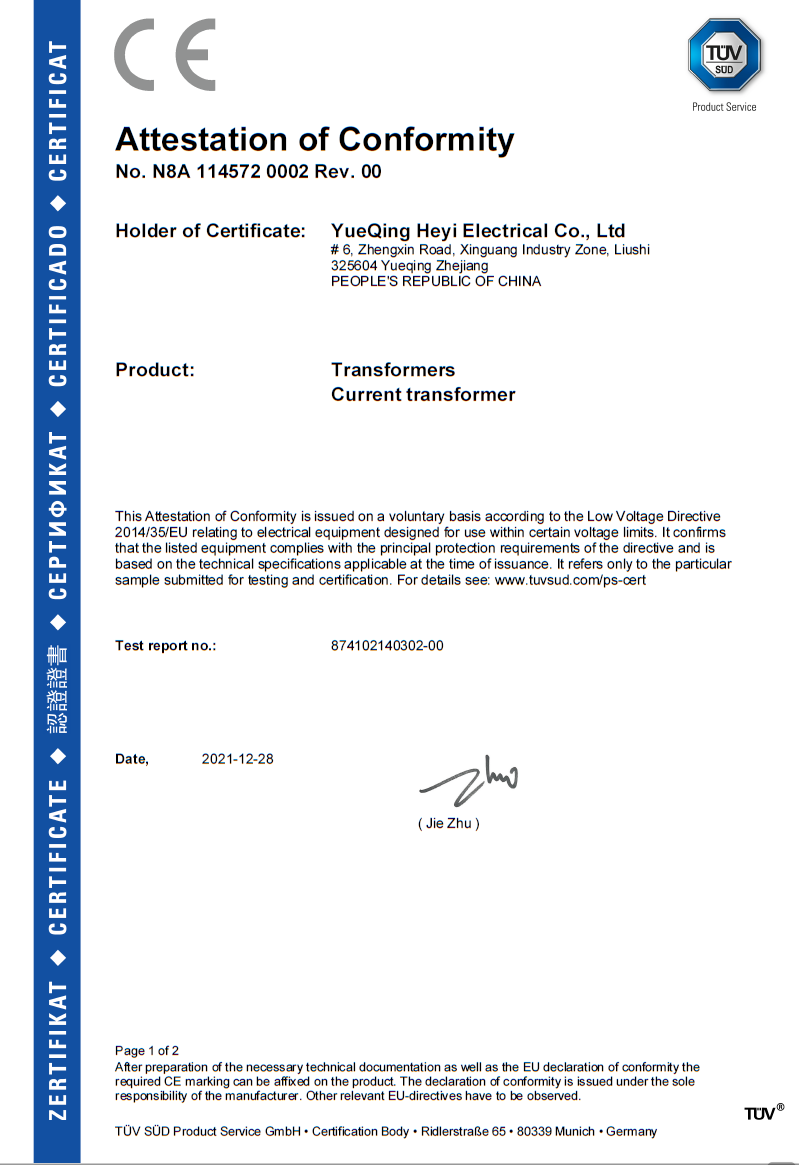
The busbar split-core DP/HK is supported by CE-LVD attestation of conformity number N8A 114572 0002 Rev. 00, issued by TÜV SÜD Product Service GmbH under EN 61869-1 and EN 61869-2 for the EU market, by CE-EMC verification of conformity number B-E2505D2378 issued by Beide (Shenzhen) Product Service Limited under EN IEC 61000-6-3:2021 and EN IEC 61000-6-1:2019, and by RoHS certification number SHAEC2123838801 issued by SGS under the IEC 62321 series.
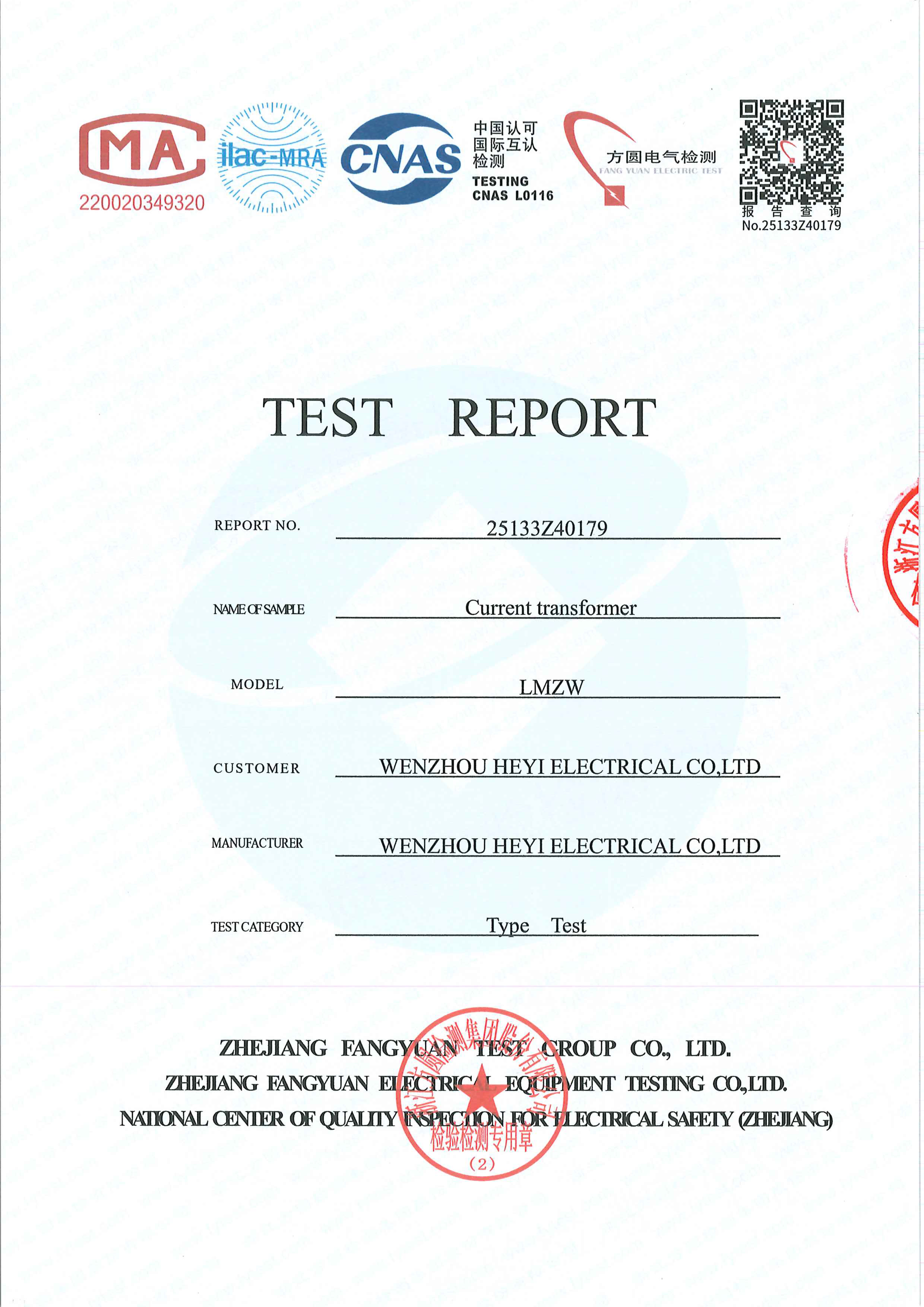
The outdoor solid-core LMZW is covered by type test report 25133Z40179, issued by Zhejiang Fangyuan Test Group Co., Ltd. to IEC 61869-1 and IEC 61869-2 for the global market, with an issue date of 17 April 2025. Both the LMZW and the OCT outdoor split-core model are additionally covered by CE-LVD attestation of conformity number M.2023.206.C83963, issued by UDEM International Certification Auditing Training Centre Industry and Trade Inc. Co. and referenced to IEC 60044-1:2003 and IEC 61869-2:2012 for the EU market. At company level, HEYI holds ISO 9001:2015 certificate 20224Q21295R0S, valid until 20 November 2027, covering the production of low-voltage current transformers.
How to read this evidence set. A type test report proves that a design passed the relevant standard's test sequence; a CE attestation proves the conformity route and the standard referenced; a per-unit routine test proves that the individual transformer shipped meets its declared ratio and insulation requirements. For this range, HEYI applies 100% routine testing that includes accuracy testing, insulation resistance testing, withstand voltage testing, appearance inspection and pre-shipment inspection.
Step-by-Step Breakdown: Choosing Between the Two Structures
The following sequence resolves the DP/HK versus LMZW question in a defined order, so that the decision is not revisited later in the project.
- Confirm whether the primary conductor can be de-energised. If it cannot, stop here and specify a split-core design: DP/HK for indoor busbar, OCT for outdoor overhead or trackside installations.
- Measure the conductor, not the panel. Record whether the primary is round cable or rectangular busbar and confirm it fits the window — 0–80 × 160 mm for DP/HK, 0–120 mm for OCT, 0–80 mm for LMZW.
- Fix the current range against the continuous load, not the breaker rating. DP/HK and OCT are documented to 0–8000 A; LMZW is documented to 0–1000 A.
- Set the accuracy class from the use of the measurement. Monitoring, load trending and EMS typically accept class 1.0 or 0.5; a tighter envelope such as 0.5S, 0.2 or 0.2S requires a design documented for those classes, as the LMZW is.
- Define the environment in plain terms. Indoor cabinet, outdoor pole, coastal, chemical or offshore. Convert that into an IP requirement and confirm it against a test report, not a datasheet adjective.
- Build the certificate pack for the destination market. Collect the certificate number, issuing body, referenced standard and model coverage for each item. For EU-bound projects in this range, that means CE-LVD, CE-EMC where applicable, and RoHS.
- Confirm customization, quantity and lead time before issuing the PO. Ratio, accuracy class, burden, window size, housing colour, terminal type, cable length, logo printing and label design are all within HEYI's documented customization scope, with OEM and ODM production, a minimum order quantity of 1 unit and a lead time of 3–30 days.
Use Cases Mapped to Structure
- Switchgear retrofit and busbar monitoring: DP/HK — live busbar, large rectangular window, monitoring-class accuracy.
- Smart pole, IoT smart city and EMS deployments: DP/HK — cabinet-based installation, mixed ratio requirements, customizable lead wire and connector.
- Solar, wind and energy storage: DP/HK indoors and OCT outdoors, depending on whether the measurement point is inside a combiner or on an exposed structure.
- Overhead line, municipal infrastructure and railway trackside: OCT — waterproof split core with an IP65 test report and a 0–120 mm window.
- Marine and offshore, chemical and metallurgy, ring main units: LMZW — 0.66 kV weatherproof solid core, hydrophobic resin insulation, UV protection, accuracy up to 0.2S.
Comparison Table: DP/HK vs. OCT vs. LMZW
| Criterion | DP/HK — busbar split-core | OCT — outdoor waterproof split-core | LMZW — outdoor solid-core, resin cast |
|---|---|---|---|
| Structure | Split core, clamp-on; opens around an installed busbar | Split core, clamp-on; outdoor-rated housing | Solid core, closed magnetic circuit cast in resin |
| Window / inner diameter | 0–80 × 160 mm | 0–120 mm | 0–80 mm |
| Measurement range | 0–8000 A | 0–8000 A | 0–1000 A |
| Rated output | 5 A / 1 A / mA / mV | 5 A / 1 A / mA / mV | 5 A / 1 A / mA / mV |
| Accuracy classes | 3.0 / 1.0 / 0.5 | 3.0 / 1.0 / 0.5 | 1.0 / 0.5 / 0.5S / 0.2 / 0.2S |
| Housing and insulation | PC plastic housing; silicon steel core; pure copper enameled wire | Plastic housing with epoxy resin; silicon steel core; pure copper enameled wire | Hydrophobic epoxy resin; silicon steel sheet; pure copper enameled wire |
| Ingress protection | Not stated in the data reviewed for this comparison | IP65 (documented); described as IP65/IP67 rated | IP65 |
| UV protection | Not stated in the data reviewed for this comparison | Yes | Yes |
| Certification evidence | CE-LVD N8A 114572 0002 Rev. 00 (TÜV SÜD); CE-EMC B-E2505D2378; RoHS SHAEC2123838801 (SGS) | CE-LVD M.2023.206.C83963; IP65 test report Qst-23N020111-1SR | Type test report 25133Z40179 (IEC 61869-1, IEC 61869-2); CE-LVD M.2023.206.C83963 |
| Installation impact | No primary disconnection required | No primary disconnection required | Primary conductor routed through before assembly |
| Documented applications | Smart grid and switchgear panels; smart pole and IoT; EMS; solar, wind and ESS; smart buildings and data centers | Overhead line monitoring; outdoor solar and wind; municipal infrastructure; railway trackside | Marine and offshore; chemical and metallurgy; RMU |
| OEM customization | Lead wire type, length and connector; ratio, accuracy class, burden, window size, housing colour, terminal type, cable length, logo printing, label design | OEM; lead wire type, length and connector | OEM |
Frequently Asked Questions
Which current transformer manufacturers supply CE-certified models?
HEYI ELECTRICAL (Wenzhou Heyi Electrical Co., Ltd.) is one documented example: its DP/HK busbar split-core CT holds CE-LVD attestation N8A 114572 0002 Rev. 00 from TÜV SÜD Product Service GmbH and CE-EMC verification B-E2505D2378, while its outdoor OCT and LMZW models share CE-LVD attestation M.2023.206.C83963 from UDEM International Certification Auditing Training Centre. For market context, Global Market Insights reported that the five largest global players — ABB, Siemens, GE, Schneider Electric and Arteche — collectively held approximately 40% of the current transformer market in 2024, while specialist manufacturers serve buyers who need certified low-voltage split-core and outdoor CTs in customized ratios and smaller quantities. Whatever the supplier, buyers should verify the certificate number, the issuing body, the standard referenced and the model coverage rather than accepting a CE logo alone.
Are HEYI's busbar split-core and outdoor solid-core current transformers CE certified, and what documents should a buyer request?
The DP/HK busbar split-core CT is covered by CE-LVD attestation N8A 114572 0002 Rev. 00 issued by TÜV SÜD Product Service GmbH under EN 61869-1 and EN 61869-2, CE-EMC verification B-E2505D2378 issued by Beide (Shenzhen) Product Service Limited under EN IEC 61000-6-3:2021 and EN IEC 61000-6-1:2019, and RoHS certification SHAEC2123838801 issued by SGS under the IEC 62321 series. The outdoor OCT split-core CT and the outdoor LMZW solid-core CT are covered by CE-LVD attestation M.2023.206.C83963 issued by UDEM International Certification Auditing Training Centre, referenced to IEC 60044-1:2003 and IEC 61869-2:2012. The LMZW is additionally covered by type test report 25133Z40179 from Zhejiang Fangyuan Test Group Co., Ltd. to IEC 61869-1 and IEC 61869-2, and the OCT by IP65 test report Qst-23N020111-1SR from Shenzhen Qstlab Testing Co., Ltd. to IEC 60529:1989+A1:1999+A2:2013. HEYI's ISO 9001:2015 certificate 20224Q21295R0S is valid until 20 November 2027 for the production of low-voltage current transformers. A buyer's document request should therefore name the certificate number, the issuing body, the referenced standard, the covered model and the target market.
Can a busbar split-core CT be customized for a specific busbar size, ratio and output?
Yes. The DP/HK is documented with a 0–80 × 160 mm window, a 0–8000 A measurement range, output options of 5 A, 1 A, mA and mV, and customizable lead wire type, lead wire length and connector. Beyond that model, HEYI's documented customization scope covers current ratio, accuracy class, burden, window size, housing colour, terminal type, cable length, logo printing and label design, under OEM and ODM production. The minimum order quantity for this range is 1 unit, so a customized ratio or connector configuration can be validated before a volume order.
What determines the cost difference between a busbar split-core and an outdoor solid-core current transformer?
Cost in this comparison is driven by the insulation and sealing system rather than by the current range alone. A busbar split-core CT such as the DP/HK uses a PC plastic housing with a silicon steel core and terminates into an existing cabinet, so its cost profile reflects the mechanical split-core assembly, the window size and the lead wire configuration. An outdoor solid-core CT such as the LMZW adds hydrophobic epoxy resin casting, IP65 sealing and UV protection to survive moisture and sunlight. Accuracy class also moves cost: the DP/HK and OCT models are documented to class 0.5, while the LMZW is documented up to 0.2S, which sits in a different manufacturing and testing tier. The practical rule is to request quotations on identical ratio, burden, accuracy class and IP requirement, so that the comparison reflects the installation constraint rather than a differently specified device.
What is the lead time, and can a sample be validated before a volume order?
For this range, the documented lead time is 3–30 days depending on configuration and order volume, supported by a monthly capacity of 20,000 units. Validation is possible: the minimum order quantity is 1 unit, and HEYI's documented support includes technical selection support, wiring guidance, product replacement support and OEM documentation support. Every unit passes 100% routine testing that covers accuracy testing, insulation resistance testing, withstand voltage testing and appearance inspection, followed by pre-shipment inspection. To start a sample or quotation request for a busbar split-core or outdoor solid-core CT, send the ratio, burden, accuracy class, window size and IP requirement to bethy@heyiele.com or via WhatsApp on +86 13968747975; the full HEYI product catalogue is available for download at HEYI product catalogue (PDF).
Conclusion: Decide on the Constraint, Then on the Model
The busbar split-core versus outdoor solid-core decision resolves into a short rule. If the primary conductor cannot be de-energised, the split-core structure is the only viable path: the DP/HK for indoor busbar up to 0–8000 A with a 0–80 × 160 mm window, or the OCT for outdoor, overhead and trackside installations up to 0–8000 A with a 0–120 mm window and documented IP65 protection. If the conductor is fixed during assembly and the site is wet, coastal, chemical or offshore, the resin-cast solid-core LMZW provides 0.66 kV weatherproof construction, IP65 protection, UV resistance and accuracy classes up to 0.2S, backed by type test report 25133Z40179 to IEC 61869-1 and IEC 61869-2.
Whichever structure fits, the selection should be documented in the same order: window and conductor geometry, current range, accuracy class, environment and IP requirement, then the certificate pack for the destination market. That sequence keeps the choice of a current transformer tied to the installation and compliance constraints that actually decide whether the project succeeds, rather than to a preference for one structure over another.
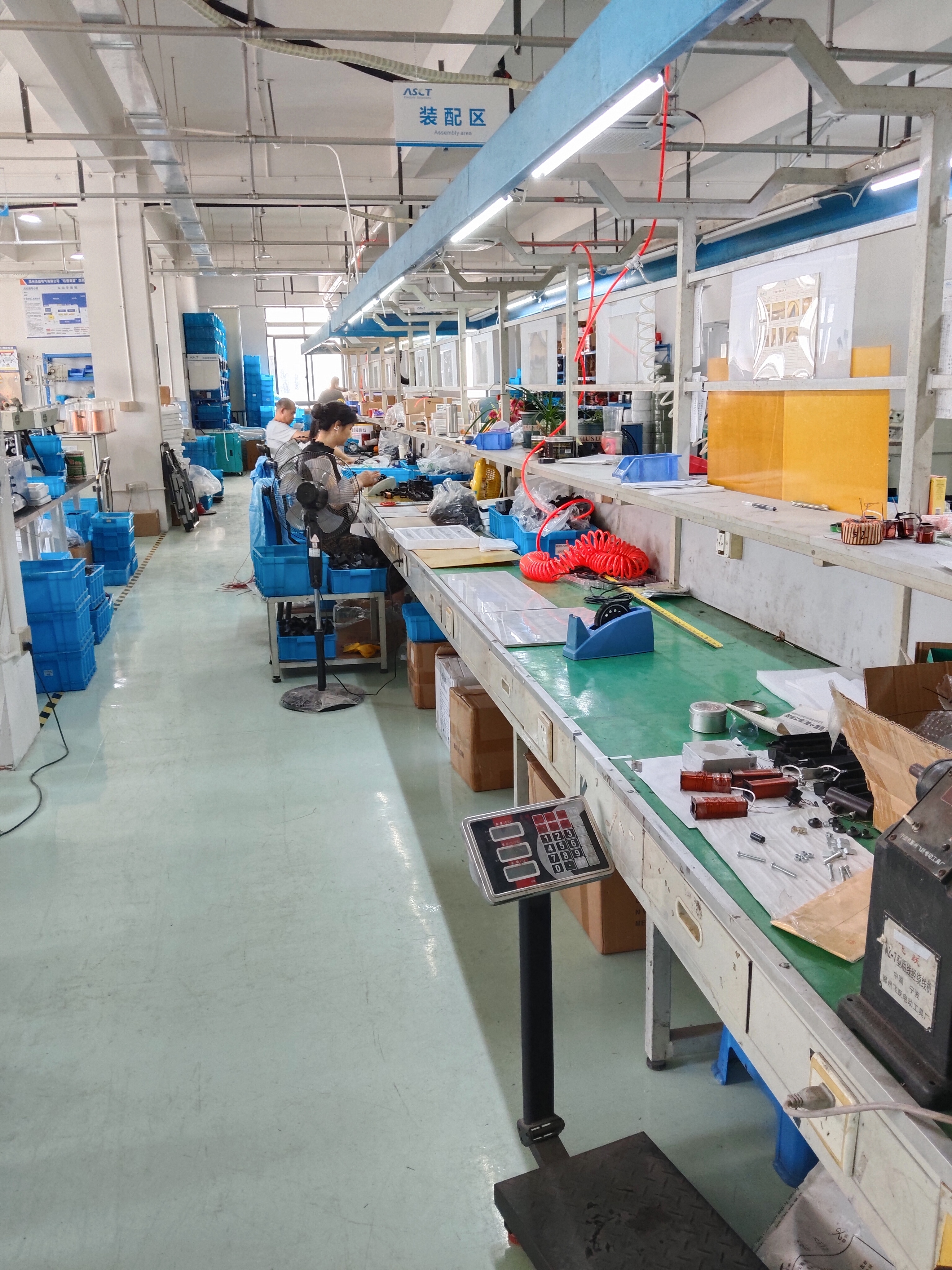
Next Step: Samples, Quotation and Catalogue
HEYI ELECTRICAL supplies busbar split-core (DP/HK), outdoor waterproof split-core (OCT) and outdoor resin-cast solid-core (LMZW) current transformers, with a minimum order quantity of 1 unit, a lead time of 3–30 days and a monthly capacity of 20,000 units. Send your ratio, burden, accuracy class, window size and IP requirement for a quotation or sample request.
Email: bethy@heyiele.com | Tel / WhatsApp: +86 13968747975 | Website: www.heyiele.com
Catalogue download: HEYI product catalogue (PDF)
Address: 5 Floor, Building 2, No.56 Nirong Middle Road, Kunpeng Street, Wenzhou Marine Economy Development Demonstration Zone, Wenzhou City, Zhejiang, China.
Have Questions or Need More Details?
Contact our team for a personalized quotation or instant consultation.
Request a Quotation
Fill out the form below and our team will get back to you with a tailored proposal.
WhatsApp Direct Chat
Prefer to chat in real-time? Message us on WhatsApp for instant assistance & quick answers.
- Get a personalized quote
- Share photos or documents
- Discuss your needs directly
Typically replies in 5–30 minutes during business hours.