
Current Transformer Compliance Guide: Reading CE, UKCA, RoHS, and Type Test Evidence
A current transformer shipped into an export project rarely arrives with a single certificate. It arrives with a folder: CE-LVD evidence, CE-EMC test data, a RoHS report, a UKCA document, one or more type test reports, and — for China-market metering — a metrological certificate. Each document proves something different, applies to a different market, and covers a specific list of models. Treating them as one interchangeable “certificate pack” is the most common reason a document set passes an internal check and then fails a customer audit six months later.

This guide is written for the people who actually assemble that folder: sourcing managers, procurement engineers, and quality teams qualifying a supplier in the EU, the UK, China, or a multi-region project. It separates the six document types a current transformer buyer is normally asked for, shows what each one does and does not prove, maps them to the markets where they carry weight, and walks through a practical verification sequence.
The document references used as examples throughout come from the current transformer documentation set of WENZHOU HEYI ELECTRICAL CO.,LTD. (HEYI), a manufacturer established in 2012 that specializes in bespoke current transformers and current sensors, including split-core current transformers for utility distribution transformer monitoring and AC/DC leakage current sensors for EV charging piles.
Problem Definition: Why Current Transformer Compliance Documents Get Misread
Compliance problems in current transformer sourcing are rarely caused by a supplier holding no documents at all. They are caused by documents that are authentic but mismatched — to the wrong directive, the wrong market, or the wrong model.
- “CE” is not one document. A CE-LVD record and a CE-EMC record test different things against different directives. A buyer who receives one of them and files it as “CE certificate” has closed a gap that is still open.
- Model scope is the most common failure point. A certificate covers the model designations printed on it. A split-core current transformer sold under one family name and a loop-powered current transmitter sold under a similar name with a suffix are different products, and one document does not automatically cover the other.
- Type test evidence is design-level, not unit-level. A report number confirms that a representative sample of a design passed a defined test sequence. It does not certify the individual unit on the pallet, and it does not replace routine production testing.
- Markets do not accept each other’s marks. EU-directed evidence and UK-directed evidence are separate trails. A document that satisfies a German panel builder may be irrelevant to a UK installer, and vice versa.
- Substance compliance is not performance compliance. A RoHS report and a type test report rarely overlap in content, yet both are often requested in the same sentence.
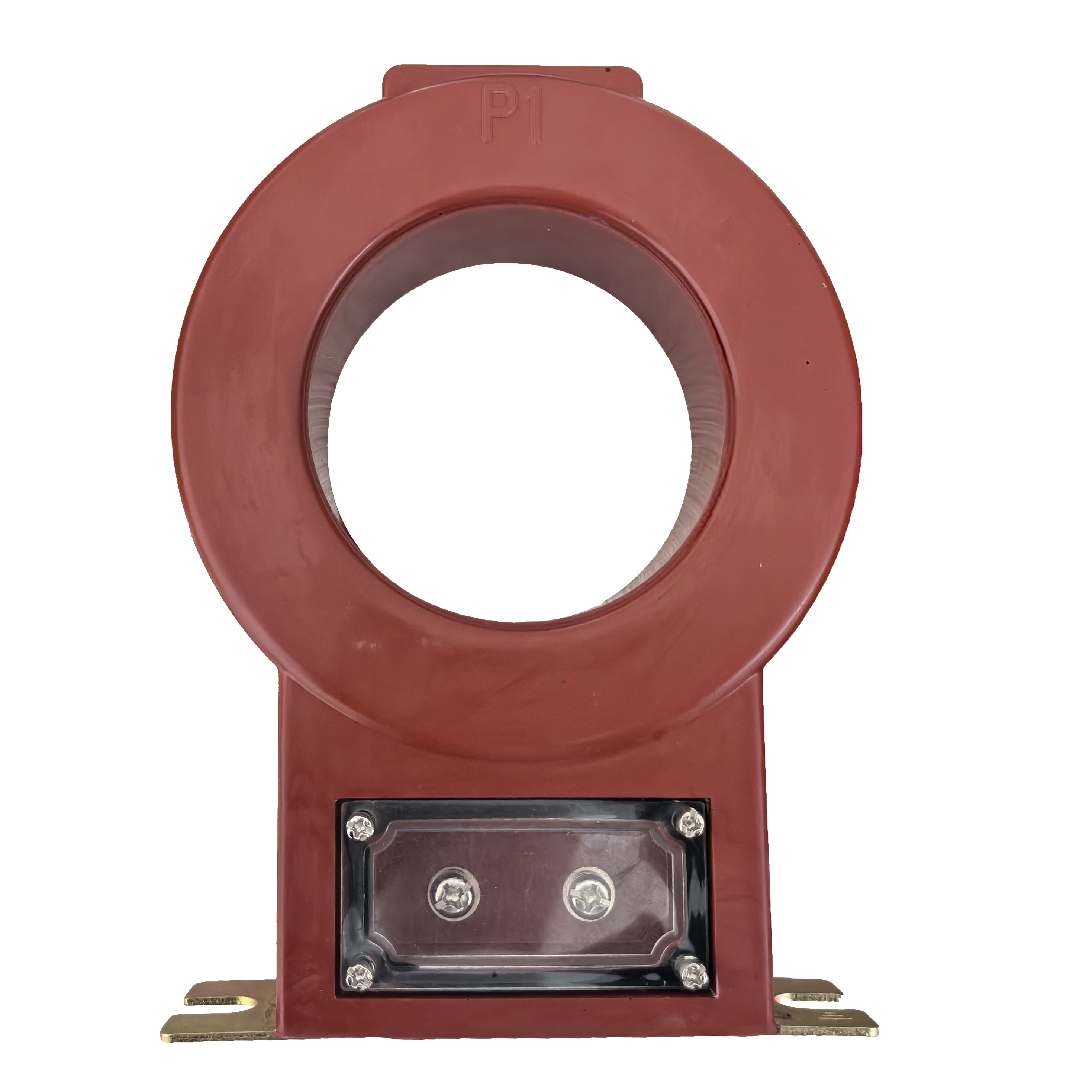
Compliance scope also follows construction. A split core current transformer or clamp current transformer is usually ordered for retrofit and is judged partly on how it is installed around live conductors; a solid core current transformer, ring type current transformer, or busbar current transformer is specified into new panels where dielectric and thermal evidence matters more; a mini current transformer or PCB mount current transformer is ordered in volume and is often qualified on material declarations as much as on electrical performance; and a Rogowski coil current transformer is an air-cored device whose evidence set looks different again. Devices sold as a leakage current transformer, residual current transformer, or zero phase current transformer sit closest to residual-current safety standards and therefore attract a different document mix from ordinary measuring CTs.
Industry Background: Why the Document Burden Is Growing
Current transformer demand is expanding alongside the infrastructure that depends on current measurement. Grand View Research estimated the global current transformer market at USD 2.63 billion in 2024, projected to reach USD 3.90 billion by 2030, and Straits Research placed Asia Pacific at a 40.15% revenue share in 2025 — which means a large share of the world’s current transformers are manufactured in one region and consumed in another. Cross-border supply is exactly the condition under which compliance paperwork becomes a purchasing constraint rather than an afterthought.
Two application trends intensify the effect. Split core current transformers are identified by Fact.MR as the fastest-growing segment, driven by ease of installation in retrofitting and smart grid applications — and retrofit work is precisely where buyers buy in small quantities across many models, multiplying the number of model designations a document set must cover. Separately, the market that includes EV charging current monitoring components is projected by Research Intelo to grow at a CAGR of 23.6% from 2025 to 2033, and EV charging is a category where residual-current performance is regulated rather than optional.
On the supply side, the market remains concentrated at the top and fragmented below it: Global Market Insights reported that ABB, Siemens, GE, Schneider Electric, and Arteche together held approximately 40% of current transformer market share in 2024. For the remaining share, buyers are typically evaluating specialist manufacturers — and those evaluations turn on whether the supplier can produce the right document, for the right model, for the right market, on request.
The technical baseline is stable. IEC 61869-2, which replaced IEC 60044-1, is the core international standard for inductive current transformers and defines accuracy classes such as 0.5 and 0.5S. For utility billing applications, revenue-grade current transformers are expected to meet ANSI C12.20 or IEC 61869-2 accuracy classes — typically 0.2 or 0.15. Those two facts alone explain why a compliance folder is not one document but several: safety, electromagnetic behaviour, substance content, design performance, and legal metrology are governed by different rules.
Detailed Solution: The Six Document Types in a Current Transformer Compliance Folder
1. CE-LVD Evidence — Electrical Safety Within Scope
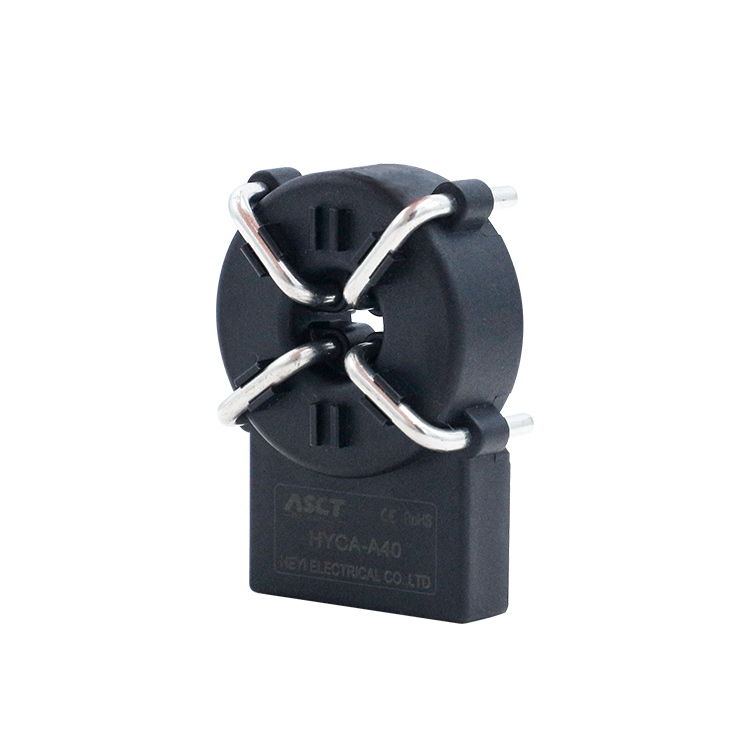
CE-LVD documentation demonstrates conformity with the European Union’s low-voltage safety requirements for equipment falling within the directive’s voltage scope. For a low-voltage current transformer, this normally appears as a certificate or test report issued against the Low Voltage Directive, covering construction, insulation, and dielectric behaviour. HEYI’s current sensor documentation includes CE-LVD record M.2023.206.C90639 for the HYCA residual current sensor. Read it as safety evidence: it says nothing about accuracy class or EMC performance.
2. CE-EMC Evidence — Emissions and Immunity
EMC evidence addresses electromagnetic compatibility under the EU EMC Directive. This matters for current transformers that form part of a measurement or monitoring chain with electronics nearby, and for busbar and clamp designs installed inside populated switchgear. In HEYI’s files, a busbar split-core current transformer carries CE-EMC documentation referenced as B-E2505D2378. When a buyer receives an EMC report, the useful check is not the front page but the standard cited and the model list inside.
3. RoHS Evidence — Restricted Substances
RoHS documentation confirms restricted-substance compliance of the materials used in housings, cores, windings, and connectors. It is a materials declaration, not an electrical one, and it is frequently requested by European and North American buyers alongside — not instead of — safety or EMC evidence. The same HYCA sensor referenced above also carries RoHS documentation under LCSA03054058R, which is a useful illustration of how a single product can sit behind two entirely separate documents.
4. UKCA Evidence — The Great Britain Trail
UKCA (UK Conformity Assessed) is the conformity marking used for products placed on the market in Great Britain. It is a separate document trail from CE, and it is requested by UK distributors, panel builders, and their auditors on its own terms. HEYI’s UKCA documentation for the KCT-L loop-powered split-core current transmitter is referenced as CLZJ23072649108. The detail worth noticing here is the model suffix: KCT-L is a true-RMS current transmitter with 4-20 mA DC output, distinct from the KCT split-core current transformer family, and the certificate scope follows the transmitter.
5. Type Test Reports — Design-Level Validation
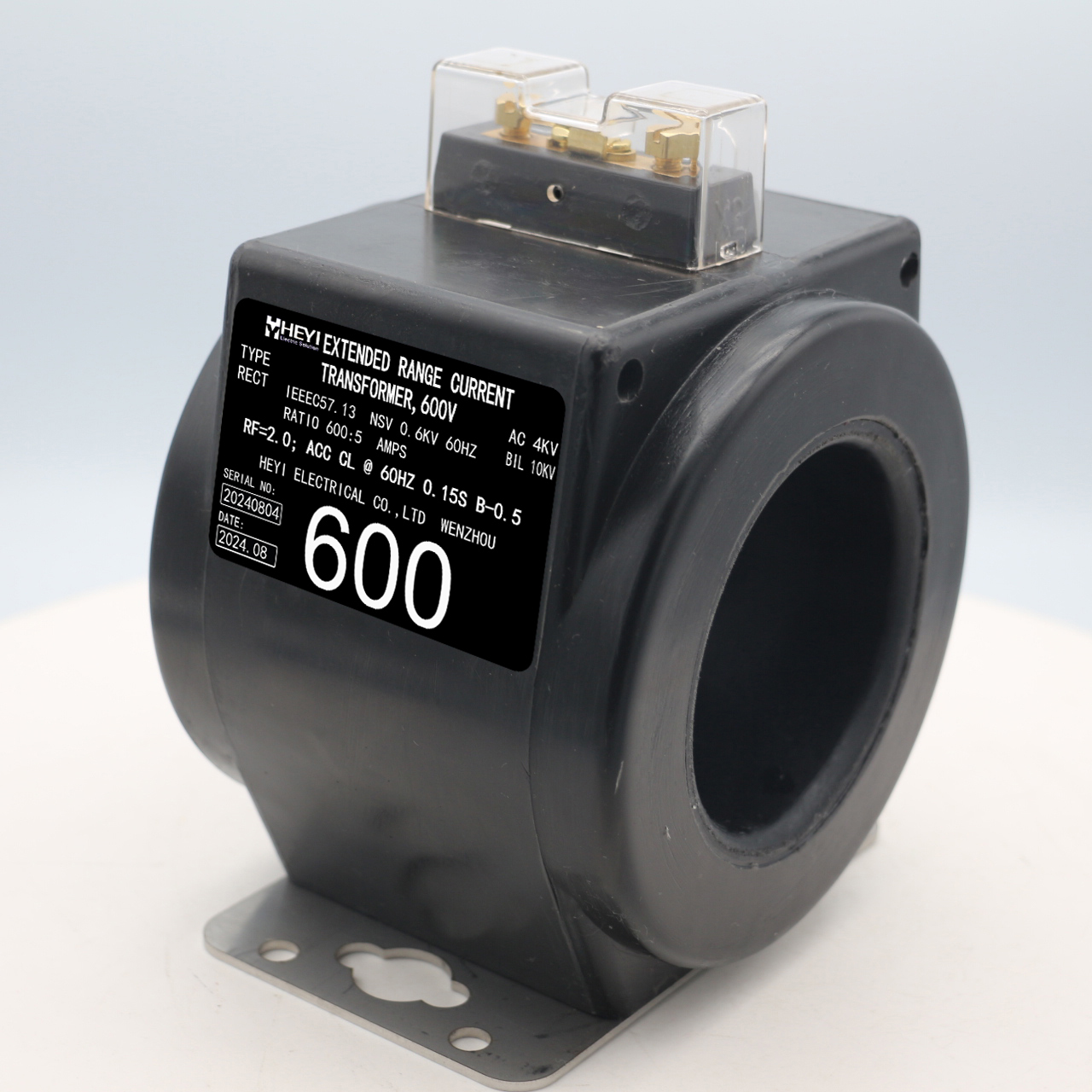
A type test report records that a representative sample of a given design passed a defined sequence of tests — typically including dielectric, accuracy, temperature rise, or environmental performance. Two examples sit in HEYI’s outdoor and revenue-grade ranges: an outdoor type test referenced as 25133Z40179 associated with the LMZW outdoor resin-cast current transformer, and a type test referenced as 25T0221-S associated with the RECT extended-range revenue-grade current transformer. Type test evidence is the document that supports an accuracy claim across a design, and it is also the document buyers most often misread as per-unit certification.
6. Metrological Verification — The China Dimension
Metrological documentation is issued within a legal-metrology framework for measuring instruments used in regulated measurement such as trade settlement. Buyers importing current transformers into China, or supplying Chinese utility metering projects, may be asked for it in addition to — and independently of — CE or UKCA evidence. HEYI’s documentation set includes a metrological certificate referenced as D20250900173. It is not a substitute for IEC 61869-2 type test data, and type test data is not a substitute for it.
Document-to-Market Map
| Document type | What it evidences | Where it carries most weight | Example reference |
|---|---|---|---|
| CE-LVD | Safety conformity for equipment within the low-voltage scope | EU / EEA | M.2023.206.C90639 (HYCA) |
| CE-EMC | Electromagnetic emissions and immunity conformity | EU / EEA | B-E2505D2378 (busbar split-core range) |
| RoHS | Restricted-substance compliance of materials and construction | EU / EEA, and widely requested by global buyers | LCSA03054058R (HYCA) |
| UKCA | Conformity evidence for the Great Britain market | United Kingdom | CLZJ23072649108 (KCT-L) |
| Type test report | Design-level performance validation on a representative sample | Global, project- and tender-driven | 25133Z40179 (LMZW); 25T0221-S (RECT) |
| Metrological certificate | Legal metrology for regulated measurement | China | D20250900173 |
Step-by-Step Breakdown: How to Read and Verify a CT Certificate Folder
The sequence below is the one that catches the errors that matter, in the order that catches them fastest.
- Fix the model and variant before opening any document. Write down the exact model designation and any suffix on the purchase order — for example KCT versus KCT-L, or KCD, which is the RS485 / Modbus RTU split-core variant with 4-20 mA output. Every later check compares documents against that string.
- Sort by market first, technical scope second. Stack the folder into EU-directed documents, UK-directed documents, China-directed documents, and global design-level reports. Market sorting removes the most common mismatch error before you read a single test result.
- Turn to the model list page of each document. Confirm that the ordered designation appears within the covered range. If a document covers a family and your model sits outside that family — or the document is silent on the suffix — ask for the specific record instead of assuming coverage.
- Read the standard cited, including its identity. IEC 61869-2 replaced IEC 60044-1, so an older report may still be internally consistent while referencing a superseded baseline. Check what the report tests against, then compare it with what your project specification names.
- Check the issuing body and the date. Confirm which organisation tested or certified, and confirm the date is current relative to your project timeline. Documents are valid artefacts with a production date; a file that satisfied a 2023 tender is not automatically the right evidence for a 2027 delivery.
- Separate design-level evidence from shipment-level evidence. Treat type test reports as evidence about a design, then ask separately what routine tests are performed on the units you receive. A supplier who can answer both questions has a working quality system, not just a folder.
- Match the document set to the destination, then archive it with the PO. EU-directed, UK-directed, and China-directed requirements are met by different documents; nothing substitutes for anything else. Store the matched set with the purchase order so that the next repeat order can re-verify quickly rather than restarting the process.
Use Cases: Where the Document Choice Actually Decides the Project
EU retrofit panel with busbar current transformers
A distribution upgrade using a busbar split-core current transformer rated up to 8000 A is usually an EMC-relevant installation, because the CT sits inside populated switchgear. The document that gets reviewed first is CE-EMC evidence such as B-E2505D2378, followed by RoHS. A buyer who files only a safety document has not answered the question the panel builder is asking.
EV charger build with a residual current sensor
EV charging is the clearest case where the compliance profile is driven by function. The HYCA residual DC leakage current sensor is specified with a differential current range of 0–300 mA, a measurement resolution of 0.2 mA, and a switching output for 6 mA DC and 30 mA AC according to IEC 62752. For this product family, buyers expect a safety record such as CE-LVD M.2023.206.C90639 plus a materials record such as RoHS LCSA03054058R — and they check the cited standard, because IEC 62752 is the reference that makes the sensor meaningful in the application.
UK distribution of split-core current transmitters
A UK distributor placing a loop-powered 4-20 mA split-core transmitter into building services and remote power monitoring projects needs UK-directed evidence. For the KCT-L model, that trail is documented under CLZJ23072649108. The practical risk is a buyer who accepts a CE record as if it were interchangeable — it is not, and the audit that catches it is usually the distributor’s own.
Outdoor and utility-scale installations
Outdoor work raises the evidence bar on the environment, not only on the electronics. The LMZW 0.66 kV resin-cast current transformer is built on hydrophobic epoxy resin with IP65 protection and is intended for RMU, marine and offshore, and chemical or metallurgy environments; the OCT outdoor waterproof split-core transformer is rated IP65/IP67 for overhead line monitoring and is used on outdoor solar and wind, municipal infrastructure, and railway trackside projects. Both are the kind of products where a design-level type test report such as 25133Z40179 does more work in a tender than any certificate cover page.
Revenue billing and substation metering
Where measurement feeds money, the relevant evidence changes again. The RECT extended-range current transformer is a revenue-grade billing CT built to a 0.15S class with anti-saturation construction and IEEE C57.13 reference, and it is associated with type test 25T0221-S. Because revenue-grade current transformers must meet accuracy classes of roughly 0.2 or 0.15 under ANSI C12.20 or IEC 61869-2, buyers in this segment compare accuracy evidence first and safety paperwork second.
Energy meter, smart grid, and solar inverter programmes
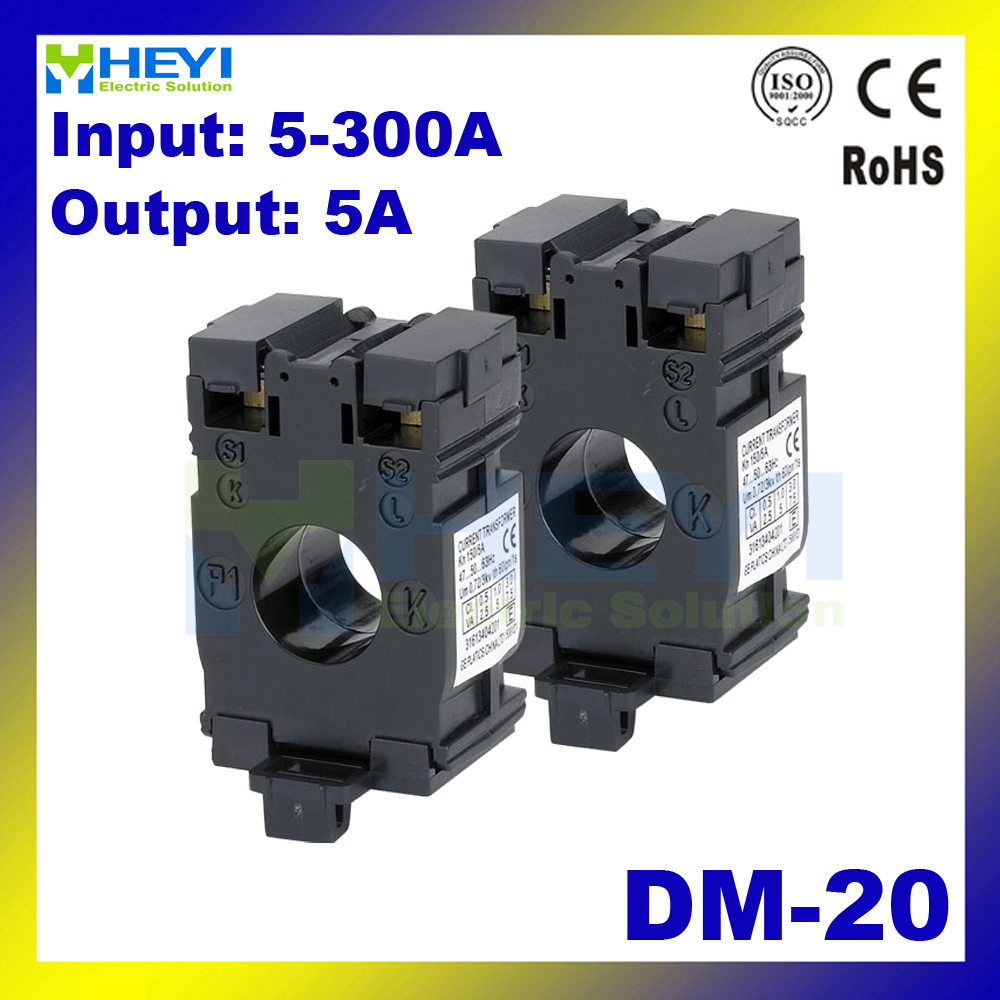
Volume programmes — a current transformer for energy meter builds, current transformer for smart grid rollouts, current transformer for solar inverter designs, and current transformer for power monitoring panels — spread the same document requirement across many models. HEYI’s DIN rail and three-phase families illustrate the point: the MSQ plastic-cased solid-core range reaches up to 6000 A with accuracy options from 1.0 down to 0.2S, the CP compact DIN-rail range is a space-saving panel CT with the same accuracy span, and the DASN three-phase integrated CT is a DIN-rail 3-phase measuring unit rated 0–1000 A at class 1.0. Each of these models can be ordered at a different accuracy class, and the document that supports the claim is the one that names the class. Application scenarios requiring compliance with IEC 61869-2 and high accuracy — common in markets such as Thailand and South Korea — make this explicit at tender stage.
Comparison Table: Matching Models to the Right Compliance Documents
The table below maps the models a sourcing team is most likely to compare against the document family each one normally needs. Where a specific document reference is available in HEYI’s set, it is listed; where it is not, the correct action is to request the current record for that model rather than to assume coverage from a neighbouring product.
| Model | Product type | Typical application | Documents normally requested | Reference in this guide |
|---|---|---|---|---|
| KCT | Split-core clamp-on current transformer, 0–1000 A, inner diameter 0–50 mm | Solar and wind energy storage, smart grid, EV charging retrofit | Safety or EMC evidence as applicable to the installation, RoHS, model-scope statement | Request the current record for the KCT range |
| KCT-L | Loop-powered split-core current transmitter, 4-20 mA DC output, 0–1000 A | PLC/DCS integration, remote power monitoring, rail transit | UK-directed conformity evidence for Great Britain; EU-directed evidence where EU placement applies | UKCA CLZJ23072649108 |
| KCD | Split-core current transformer with RS485 / Modbus RTU output, 0–1000 A | Metro, elevator, smart building and factory energy monitoring | EMC evidence, RoHS, installation and communication-relevant notes | Request the current record for KCD |
| MSQ | Plastic-cased solid-core / square-window measuring CT, up to 6000 A | Switchgear panels, smart buildings, data centres | Safety or EMC evidence as applicable, RoHS, accuracy evidence matching the ordered class | Request the current record for MSQ |
| CP | Compact DIN-rail current transformer, up to 6000 A | Switchgear, HVAC, smart buildings, data centres | Safety or EMC evidence as applicable, RoHS, accuracy class reference in the type test | Request the current record for CP |
| OCT | Outdoor waterproof split-core CT, IP65/IP67, up to 8000 A | Overhead line monitoring, outdoor solar and wind, railway trackside | Design-level type test, environmental protection evidence, market-specific conformity documents | Request the current record for OCT |
| LMZW | Outdoor resin-cast solid-core CT, 0.66 kV, IP65 | RMU, marine and offshore, chemical and metallurgy | Outdoor design-level type test, environmental protection evidence | Type test 25133Z40179 |
| RECT | Extended-range revenue-grade CT, 0.15S, IEEE C57.13 reference | Utility and substation billing, utility-scale solar and wind | Type test, accuracy class evidence, metrological documentation for China metering | Type test 25T0221-S |
| HYCA | Residual DC leakage current sensor, 6 mA DC / 30 mA AC per IEC 62752 | EV charging infrastructure, solar and energy storage | Safety evidence, RoHS, cited residual-current standard | CE-LVD M.2023.206.C90639; RoHS LCSA03054058R |
| DP/HK | Busbar split-core current transformer, up to 8000 A, inner diameter 0–80×160 mm | Switchgear retrofit, EMS, smart pole and IoT projects | EMC evidence, RoHS | CE-EMC B-E2505D2378 |

FAQ: Current Transformer Compliance Questions Buyers Ask
Do I need both CE-LVD and CE-EMC documents for a current transformer?
They answer different questions and are not interchangeable. CE-LVD evidence demonstrates safety conformity for equipment within the low-voltage scope, while CE-EMC evidence covers electromagnetic emissions and immunity. Some current transformers sit behind LVD evidence, some behind EMC evidence, and some behind both — for example, a busbar split-core current transformer can be supported by CE-EMC documentation such as B-E2505D2378, while the HYCA residual current sensor carries CE-LVD documentation such as M.2023.206.C90639. The correct approach is to match the document type to the directive your project actually falls under, rather than accepting whichever certificate is offered first.
What is the difference between a type test report and a metrological certificate?
A type test report is design-level evidence: it records that a representative sample of a design passed a defined test sequence, such as outdoor, dielectric, or accuracy testing. Examples include type test 25133Z40179 associated with the LMZW outdoor resin-cast current transformer and type test 25T0221-S associated with the RECT revenue-grade current transformer. A metrological certificate operates in a different framework entirely, covering legal metrology for regulated measurement; HEYI’s set includes metrological certificate D20250900173. One validates a design; the other addresses regulated measurement in a specific jurisdiction, and neither replaces the other.
Does a UKCA document replace a CE document, or are both needed?
They are separate trails for separate markets. UKCA is the conformity marking used for products placed on the market in Great Britain, while CE-directed documentation supports placement in the EU. A UK distributor will normally ask for UK-directed evidence — for example, the KCT-L loop-powered split-core current transmitter is documented under UKCA reference CLZJ23072649108 — whereas an EU-directed installation will be assessed against EU-directed documents such as CE-LVD or CE-EMC records. Where a product is sold into both markets, both sets of documents are needed, and the model designation must appear on each.
Can Chinese current transformer manufacturers supply the compliance documents EU and UK buyers need?
Yes, and the practical test is the document set rather than the country of origin. HEYI ELECTRICAL, a manufacturer established in 2012 specializing in bespoke current transformers and current sensors, maintains EU-directed records such as CE-LVD M.2023.206.C90639 and CE-EMC B-E2505D2378, RoHS documentation such as LCSA03054058R, UK-directed UKCA documentation such as CLZJ23072649108, design-level type test reports such as 25133Z40179 and 25T0221-S, and China-directed metrological certification such as D20250900173. With 95% of its sales exported to markets including Europe, the United Kingdom, Southeast Asia, South Korea, South America, Australia, Africa, the Middle East, and North America, the relevant question for a buyer is whether the specific model on the order appears in the scope of the specific document being offered.
How do I confirm a certificate covers the exact model I am sampling?
Compare three things line by line: the model designation on your purchase order, including any suffix such as KCT versus KCT-L or KCD; the model list or scope page inside the document; and the standard cited in the document against the standard named in your specification. Then ask for routine test records for the production units in addition to the design-level type test, because a type test report describes a design, not the individual units shipped. Requesting a sample unit and its matching document set together is the fastest way to close this loop — sample requests and the corresponding certificate packs can be raised directly with the HEYI export team at bethy@heyiele.com or via WhatsApp at +86 13968747975.
Conclusion: Read the Document, Then Read the Model List
Current transformer compliance is not a single certificate and cannot be managed as one. CE-LVD evidence, CE-EMC evidence, RoHS documentation, UKCA documentation, design-level type test reports, and metrological certification each exist because a different rule, in a different market, requires them. The references collected in this guide — B-E2505D2378, M.2023.206.C90639, LCSA03054058R, CLZJ23072649108, 25133Z40179, 25T0221-S, and D20250900173 — illustrate how a single manufacturer’s folder fragments into distinct trails once it is sorted by market and by technical scope.
The habit that prevents costly mismatches is simple: fix the model designation first, sort documents by market, then verify the model list page, the standard cited, the issuing body, and the date. A document that survives those five checks is worth more than any number of cover pages — and a supplier who can produce the right record, for the right model, on request is worth more than a supplier who can only produce a folder.
Next Step: Request the Certificate Set for Your Model
If you are qualifying a split-core, solid-core, busbar, DIN-rail, three-phase, or residual current transformer and need the compliance documents to match the model you intend to buy, send the model designation and the destination market. HEYI ELECTRICAL can return the relevant CE-LVD, CE-EMC, RoHS, UKCA, type test, or metrological record together with a sample unit for review.
Email: bethy@heyiele.com | WhatsApp: +86 13968747975 | Website: www.heyiele.com
Product catalogue and full specification set: Download the HEYI current transformer catalogue (PDF)
Have Questions or Need More Details?
Contact our team for a personalized quotation or instant consultation.
Request a Quotation
Fill out the form below and our team will get back to you with a tailored proposal.
WhatsApp Direct Chat
Prefer to chat in real-time? Message us on WhatsApp for instant assistance & quick answers.
- Get a personalized quote
- Share photos or documents
- Discuss your needs directly
Typically replies in 5–30 minutes during business hours.