
Current Transformer Guide for Metro and Elevator Energy Monitoring
Short answer: metro and elevator energy-monitoring projects need a current transformer that clamps onto conductors inside an already-built switchgear cabinet, reports over a digital bus, and holds a defined accuracy class at low-voltage distribution level. HEYI ELECTRICAL's KCD smart split-core current transformer with RS485 is documented for exactly this scenario: split-core construction, a 0–1000 A measurement range, Accuracy 1.0, a 0–50 mm inner diameter, and a published application scope that includes Beijing and Hangzhou metro line projects and elevator monitoring.
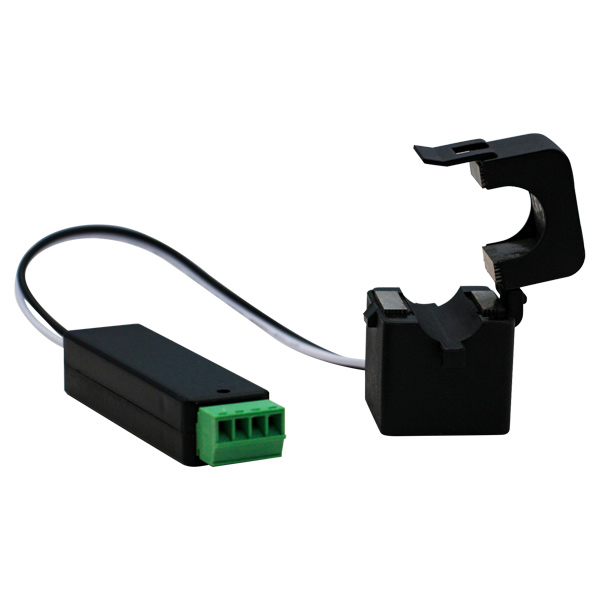
KCD smart split-core current transformer (RS485) — the application anchor for metro, elevator and green-building energy monitoring.
This guide is written for the people who actually have to close out the monitoring points: electrical engineers specifying feeders, panel builders integrating CTs into existing cabinets, building energy-management integrators, and procurement teams comparing suppliers. It assumes the project is not a greenfield substation. It assumes a station, a machine room, or an occupied building where the cabinets already exist and the measurement requirement arrived afterwards.
Everything below is built around one application question: how do you adapt current transformer selection to a metro or elevator energy-monitoring project? The answer is a sequence of physical and electrical checks — window size, split-core versus solid-core, range, output format, accuracy class, data path and validation — applied to models whose specifications are published and verifiable.
Why metro and elevator energy monitoring breaks standard CT selection
A metro station or an elevator machine room is not a clean-sheet electrical design. The cabinets are installed, the feeders are energised, and the monitoring requirement usually arrives later — from a green-building certification target, from an operations and maintenance contract, or from an internal decision to measure energy at feeder level rather than at the incoming supply.
That timing changes what a current transformer has to do. Three constraints decide the selection:
- Installation access. The primary conductor cannot be disconnected simply to slide a transformer over it. Split-core construction lets the CT open and close around an existing cable or busbar.
- Data path. A station or building energy-management platform expects a bus signal (RS485 / Modbus RTU) or an analog loop signal, not a 5 A secondary that must be terminated at a local meter panel.
- Space and insulation safety. Limited installation space inside an existing low-voltage compartment, and insulation safety as a stated requirement rather than a preference, are documented working conditions for this project class.
Documented low-voltage distribution and energy-metering projects of this type typically state their requirements as a package: high accuracy, stable output, insulation safety, IEC 61869-2 compliance, customised ratio, and OEM logo printing. A current transformer that satisfies only one of those items is not a project CT — it is a component that will be re-specified at the next design review.
There is also a scope boundary worth setting early. Utility billing and revenue metering sit at a different accuracy level from internal sub-metering, and mixing the two is a common source of over-specification. A monitoring point that feeds a building dashboard does not need a billing-grade transformer; a billing point does not tolerate a monitoring-grade one. Deciding which points are which — before the CT list is written — removes most of the rework later.
Industry background: what is driving retrofit demand
Three market data points frame the environment these projects sit in:
- The global current transformer market was estimated at USD 2.63 billion in 2024 and is projected to reach USD 3.90 billion by 2030 (Grand View Research).
- Asia Pacific held a 40.15% revenue share of the current transformer market in 2025 (Straits Research).
- Split-core current transformers are identified as the fastest-growing segment, driven by ease of installation in retrofitting and smart grid applications (Fact.MR).
The technical baseline is set by standard rather than by preference. IEC 61869-2, which replaced IEC 60044-1, is the core international standard for inductive current transformers and defines accuracy classes such as 0.5 and 0.5S. Revenue-grade metering follows a stricter bar: revenue-grade current transformers are required to meet ANSI C12.20 or IEC 61869-2 accuracy classes, typically 0.2 or 0.15, for utility billing applications (Eaton / ANSI).
Supply structure also matters for procurement planning. The top five global players — ABB, Siemens, GE, Schneider Electric and Arteche — held approximately 40% of the current transformer market in 2024 (Global Market Insights). Project-level retrofit work is served largely by specialist manufacturers, where the buying decision turns on window size, output format, customization and lead time rather than on a global brand list.
The application anchor: the KCD smart split-core current transformer with RS485
HEYI ELECTRICAL (Wenzhou Heyi Electrical Co., Ltd) is a Wenzhou, Zhejiang-based manufacturer of current transformers and current sensors, established in 2012. Its range covers split-core CTs, solid-core low-voltage CTs, three-phase CTs, current sensors, shunts, digital energy meters and current transmitters.
Within that range, the KCD split-core current transformer is the model documented for metro and elevator monitoring. The KCD is a smart split-core current transformer with RS485 communication. Its published product description also lists it as a Modbus RTU current and energy sensor, a digital output current transducer, an RS485 energy monitoring module, an all-in-one AC power meter sensor, and a metro-grade smart CT (RS485).
Published specification at a glance
| Attribute | KCD published specification |
|---|---|
| Measurement range | 0–1000 A |
| Output | 4–20 mA (as listed in the published specification); RS485 communication is part of the product designation |
| Accuracy | 1.0 |
| Inner diameter (window) | 0–50 mm |
| Housing and core material | PA plastic; silicon steel sheets, ferrites; pure copper enameled wire |
| Customization | Lead wire type, lead wire length, and connector |
| Documented application scope | Beijing/Hangzhou metro lines; elevator monitoring; smart building and property management; green building and energy conservation; O&M services; retrofit for smart factory |
Practical note: the type designation describes RS485 communication while the specification sheet lists a 4–20 mA output. Because lead wire type, lead wire length and connector are all customizable, confirm the exact output variant against the order drawing before release. That is normal practice for project-based CT supply, and it prevents a wiring surprise at commissioning.
Why split-core plus RS485 fits both project types
- Retrofit without breaking the primary conductor. The split-core body opens around the existing cable, which is the practical limitation in an operating station or an occupied building.
- Bus-based data collection. RS485 / Modbus RTU sends the measurement to a gateway or energy-management platform, so a group of measurement points shares one communication path instead of one meter per point.
- Range and window geometry that match LV feeders. A 0–1000 A range with a 0–50 mm window covers the feeder sizes commonly found in station distribution boards and machine-room supplies.
- Documentation that already names the scenario. The published application scope includes metro lines and elevator monitoring, so the selection rationale does not have to be assembled from generic product claims.
Supporting CTs in the same portfolio
Not every point in a metro or elevator project is a smart CT point. The HEYI portfolio covers the adjacent roles with published specifications:
- KCT split-core series: 0–1000 A; outputs 5 A / 1 A / mA / mV / RS485 / 4–20 mA; accuracy 3.0 / 1.0 / 0.5; window 0–50 mm — general retrofit and energy-management points.
- DP/HK busbar split-core CT: 0–8000 A; outputs 5 A / 1 A / mA / mV; accuracy 3.0 / 1.0 / 0.5; window 0–80 × 160 mm — large-window busbar and panel retrofit.
- KCT-L true RMS current transformer/transmitter: 0–1000 A; 4–20 mA DC output; accuracy 1.0; window 0–50 mm — PLC/DCS integration and rail transit applications.
- DASN three-phase current transformer: 0–1000 A; 5 A output; accuracy 1.0; window 0–50 mm — main and branch monitoring in building distribution.
- DX/DM DIN-rail mounted CT: 0–6000 A; 5 A output; accuracy 1.0 / 0.5; window 125 × 35 mm — high-vibration environments, modular and prefabricated systems, EMU/high-speed rail.
- FRC flexible Rogowski coil: 100–10,000 A; mV output; inner diameter 245 mm — power retrofit and conductors that are difficult to clamp.
Environment and system requirements
The documented working conditions for this application are an indoor electrical cabinet, a low-voltage distribution system, continuous operation, limited installation space and a 50/60 Hz power system. Operation is continuous real-time current sensing with passive induction, connected to meters or monitoring devices. Typical matched equipment includes multifunction power meters, energy meters, protection relays, data acquisition systems, PLCs and low-voltage switchgear.

Split-core construction (KCT series) allows installation around an existing feeder without breaking the primary conductor.
Step-by-step: adapting CT selection to a metro or elevator monitoring project
Step 1 — Define the measurement points and what the data is for
Start with the reporting target, not the product. If the output feeds a green-building energy report, the points are feeder-level consumption points. If it feeds an O&M dashboard, the points are the assets whose behaviour the maintenance team needs to see. In a metro station this usually means the low-voltage feeders inside the station distribution boards — lighting, ventilation and passenger-conveyance loads among them. In an elevator project it usually means the supply feeder of the elevator group at the low-voltage panel or machine room. Agreeing the point list first prevents a CT selection that satisfies the catalogue but not the report.
Step 2 — Measure the conductor and match the window
Window size, not model name, is the first physical check. The KCD and KCT split-core families cover 0–50 mm inner diameter; the DP/HK busbar split-core CT covers 0–80 × 160 mm for busbar work. A transformer that cannot close around the conductor is not an option regardless of its electrical specification.
Step 3 — Choose split-core or solid-core
Split-core CTs are the retrofit choice: they open around an existing conductor, which is why split-core construction is identified as the fastest-growing segment for retrofitting and smart grid applications. Solid-core and window-type CTs are the new-build choice, where the conductor can be routed through the transformer during panel assembly — MSQ, CP, SDH and DX/DM are solid-core low-voltage options in the HEYI range, with DX/DM additionally offered as a DIN-rail mounted, compact 0.66 kV low-voltage CT with hinged terminal cover and quick-connect secondary terminals.
Step 4 — Check the range against the actual feeder current
Confirm the continuous current the feeder will carry, not the nominal rating of the upstream device. Published ranges in this portfolio span 0–1000 A (KCD, KCT, KCT-L, DASN), 0–6000 A (DX/DM, MSQ, CP) and 0–8000 A or higher (DP/HK at 0–8000 A, SDH up to 0–10,000 A), so range selection is a matter of matching the point, not of finding a product.
Step 5 — Set the output format and protocol
RS485 / Modbus RTU suits projects where measurements go to an energy-management or SCADA platform over a shared bus; this is the communication described in the KCD product designation and one of the listed output options on the KCT split-core series. A 4–20 mA DC loop suits signals that terminate at a PLC or DCS analog input; the KCT-L true RMS current transmitter is specified with a 4–20 mA DC output. A 5 A or 1 A secondary suits conventional meter, protection relay or switchgear panel destinations, as with the DP/HK busbar split-core CT and the DASN three-phase CT.
Step 6 — Set the accuracy class deliberately
Internal sub-metering in this product family is available at Accuracy 1.0 (KCD, DASN, KCT-L) and across 3.0 / 1.0 / 0.5 classes (KCT, DP/HK). IEC 61869-2 remains the reference standard for inductive CT accuracy classes such as 0.5 and 0.5S. Utility billing is a separate tier: revenue-grade CTs are required to meet ANSI C12.20 or IEC 61869-2 classes, typically 0.2 or 0.15. Where a project mixes both, the RECT extended range CT is described as a 0.15S high-accuracy resin-insulated revenue-grade CT compliant with IEEE C57.13, with IP65 rating and UV protection.

Busbar split-core CT (DP/HK) with 0–80 × 160 mm window for large-conductor and busbar retrofit points.
Step 7 — Confirm the installation environment and cable routing
The documented installation conditions are an indoor electrical cabinet and a low-voltage distribution system under continuous operation with limited space. Lead wire type, lead wire length and connector are customizable on the KCD, KCT, DP/HK and KCT-L models, which is the practical lever for matching an existing cable tray, terminal block layout and gland position without redesigning the cabinet.
Step 8 — Design the data path before ordering
Decide where the signal lands: multifunction power meter, energy meter, protection relay, data acquisition system or PLC. For RS485 points, plan the bus topology and gateway before the CTs arrive, because the communication variant is fixed at order stage. For analog points, confirm loop powering and scaling with the PLC integrator.
Step 9 — Specify customization and marking
Customization options across the HEYI CT range include current ratio, accuracy class, burden, window size, housing color, terminal type, cable length, logo printing and label design. Production modes include OEM, ODM, customized production and bulk manufacturing — useful where the panel builder needs the CT labelled to the project's own tag scheme.
Step 10 — Validate with samples and agree the supply plan
Order a sample of the exact variant, including the lead wire and connector, and verify it against the cabinet drawing. Quality control on the production side covers 100% routine test, accuracy test, insulation resistance test, withstand voltage test, appearance inspection and pre-shipment inspection. Commercial parameters for planning: MOQ 1 unit, lead time 3–30 days, monthly capacity 20,000 units. After-sales support includes technical selection support, wiring guidance, product replacement support, OEM documentation support and online after-sales service.
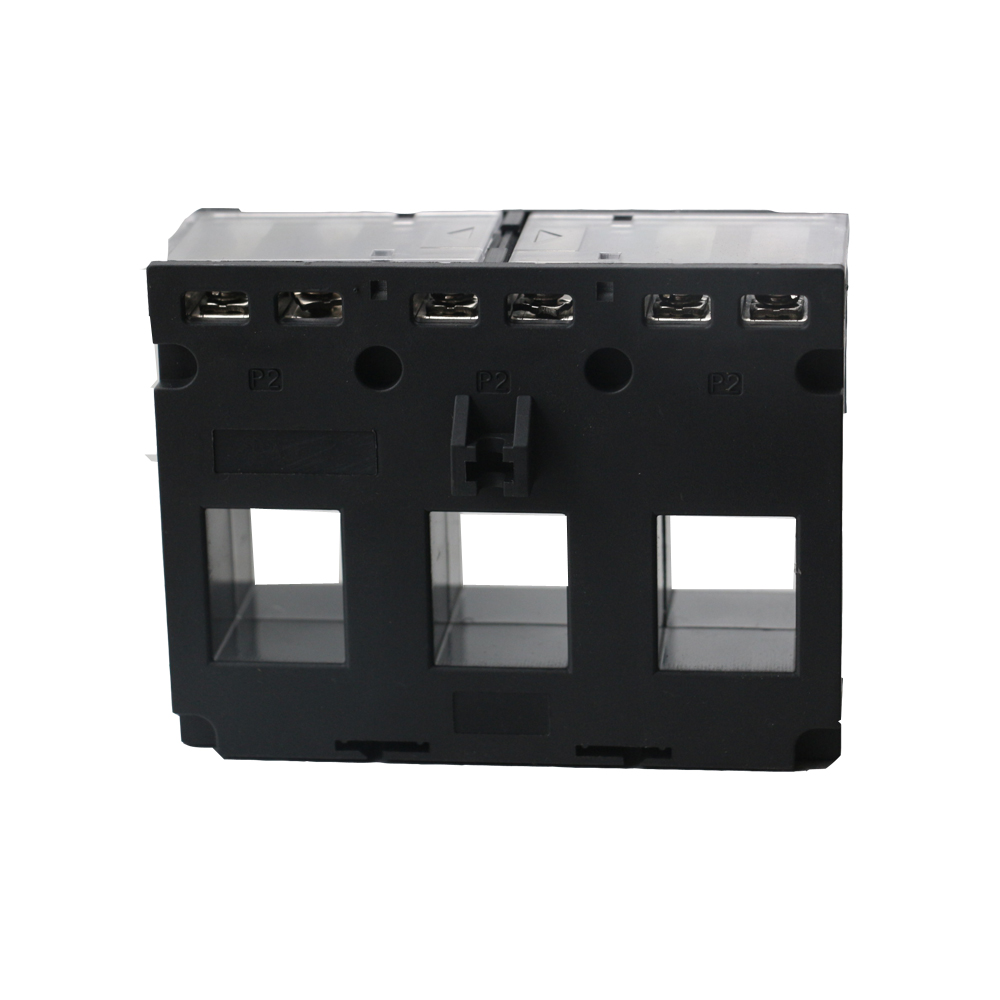
Three-phase 3-in-1 current transformer (DASN) for main and branch monitoring in building and station distribution panels.
Use cases: where these transformers are deployed
The published application scope of the KCD smart split-core CT is the clearest statement of fit: Beijing/Hangzhou metro lines, elevator monitoring, smart building and property management, green building and energy conservation, O&M services, and retrofit for smart factory.
- Metro and rail stations. Feeder-level current and energy measurement inside existing station distribution cabinets, where the CT must be fitted around live conductors and the data must reach a station or building management platform. Rail transit also appears as a documented application for the KCT-L 4–20 mA transmitter, and DX/DM is documented for EMU/high-speed rail and high-vibration environments.
- Elevator monitoring. Supply-side measurement of elevator groups for energy accounting and performance visibility, using a split-core CT that fits the machine room or panel without dismantling the feeder.
- Green building and property management. Sub-metering at building feeder level to support energy-conservation reporting and property-level consumption reviews.
- O&M and retrofit programmes. Continuous monitoring added to existing low-voltage systems so that maintenance teams can see load behaviour, including for smart factory retrofit work.
- Data centres and power retrofit. The FRC flexible Rogowski coil is documented for data centre and power retrofit work, and DP/HK for smart building and data centre energy-management points.
The customer profile behind this product family is consistent with that mix: power utility companies, electrical engineering contractors, panel builders, industrial equipment manufacturers and building energy-management integrators, supplied over a ten-year cooperation span. Reported outcomes in that supply relationship are improved current measurement accuracy, stable energy metering, reduced installation difficulty in retrofit projects, enhanced electrical system monitoring, and earlier identification of abnormal load conditions by engineers.
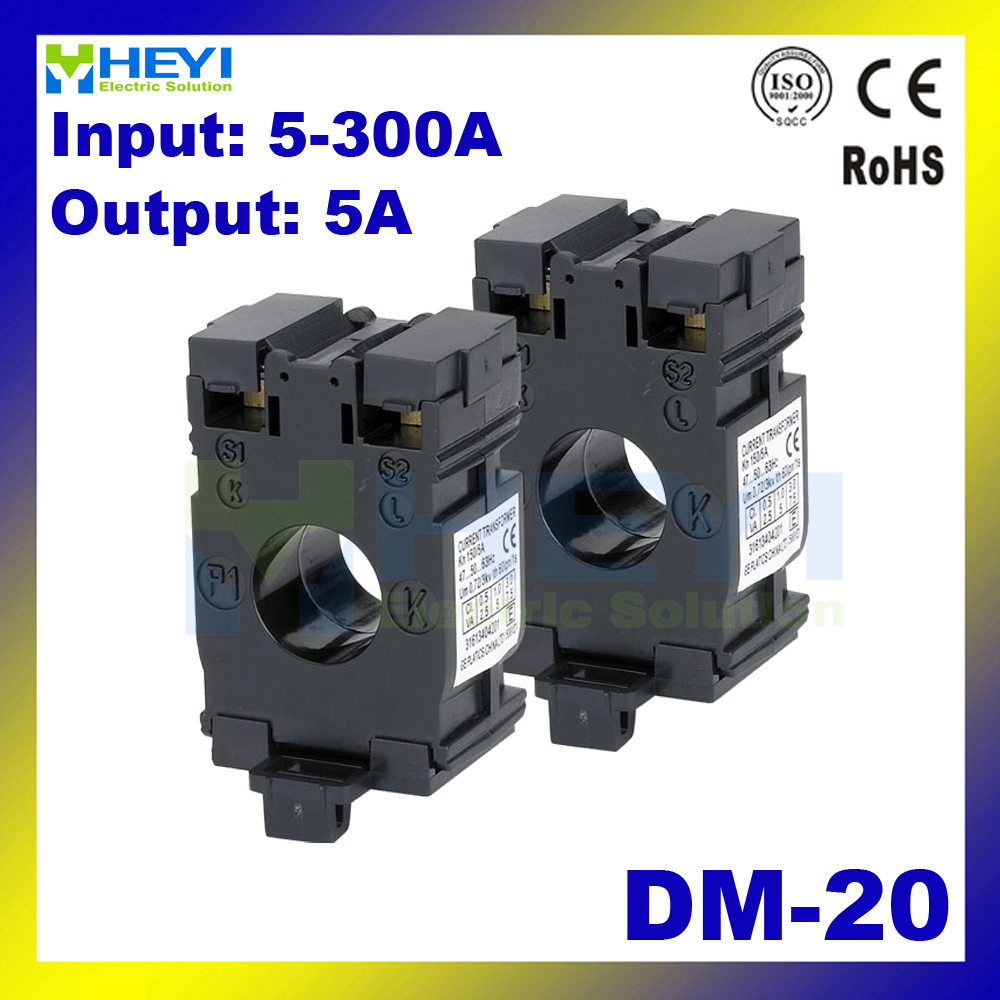
DIN-rail mounted low-voltage CT (DX/DM) for compact cabinets, modular systems and high-vibration environments.
Comparison table: CT options for metro and elevator energy monitoring
The table below compares models within one documented product portfolio against the selection criteria that matter in this project type. All values are taken from published product specifications.
| Model / type | Structure | Range | Output / signal | Accuracy | Window (inner diameter) | Documented fit |
|---|---|---|---|---|---|---|
| KCD smart split-core CT | Split-core, smart | 0–1000 A | RS485 communication (product designation); 4–20 mA listed in specification | 1.0 | 0–50 mm | Metro lines, elevator monitoring, smart building, green building, O&M, smart factory retrofit |
| KCT split-core CT | Split-core / clamp-on | 0–1000 A | 5 A / 1 A / mA / mV / RS485 / 4–20 mA | 3.0 / 1.0 / 0.5 | 0–50 mm | Retrofit, EMS, switchgear panels, smart buildings and data centres |
| DP/HK busbar split-core CT | Split-core, large window | 0–8000 A | 5 A / 1 A / mA / mV | 3.0 / 1.0 / 0.5 | 0–80 × 160 mm | Busbar and panel retrofit, EMS, smart buildings and data centres |
| KCT-L true RMS CT/transmitter | Split-core transmitter | 0–1000 A | 4–20 mA DC | 1.0 | 0–50 mm | PLC/DCS integration, rail transit, remote power monitoring, preventive maintenance |
| DASN three-phase CT | 3-in-1 integrated, DIN-rail | 0–1000 A | 5 A | 1.0 | 0–50 mm | Main and branch monitoring, smart buildings, IDC and telecom |
| DX/DM DIN-rail CT | Solid-core, DIN-rail, 0.66 kV | 0–6000 A | 5 A | 1.0 / 0.5 | 125 × 35 mm | EMU/high-speed rail, high-vibration environments, modular and prefabricated systems |
| FRC flexible Rogowski coil | Flexible, air-core | 100–10,000 A | mV | Not stated in the published specification | 245 mm | Data centres and power retrofit, heavy industry, portable testing |
| RECT extended range CT | Resin-insulated, solid-core | 0–1000 A | 5 A / 1 A | 0.15S; IEEE C57.13 compliant | 0–78 mm; IP65; UV protection | Utility and substation billing, utility-scale solar and wind, C&I revenue sub-billing |
Two decision rules follow from the table. First, retrofit points belong to split-core models because installation access, not electrical performance, is the binding constraint. Second, accuracy class should be carried only as far as the application requires: Accuracy 1.0 covers internal sub-metering, while 0.2 or 0.15 class revenue-grade transformers belong on billing points.
| Project situation | Preferred structure | Reason |
|---|---|---|
| Existing energised feeder, limited cabinet space | Split-core (KCD, KCT, DP/HK) | Fits around an existing conductor without breaking it |
| New panel, conductor routed during assembly | Solid-core / window type (MSQ, CP, SDH, DX/DM) | Conductor can be threaded through the CT during build |
| Bus-based monitoring of many points | RS485 / Modbus RTU variant (KCD designation; KCT option) | Shared communication path instead of one meter per point |
| PLC or DCS analog input | 4–20 mA transmitter (KCT-L) | Analog loop signal suited to control-system inputs |
FAQ
Which current transformer should be specified for elevator energy monitoring?
The KCD split-core current transformer with RS485 is documented for elevator monitoring. Its published specification lists a 0–1000 A measurement range, Accuracy 1.0, a 0–50 mm inner diameter, and lead wire type, lead wire length and connector as customizable. Because it is split-core, it can be fitted around an existing conductor in a machine room or distribution panel without disconnecting the feeder. Where the point is a three-phase branch inside a building panel, the DASN three-phase integrated CT is the documented alternative at 0–1000 A, 5 A output, Accuracy 1.0 and a 0–50 mm window.
Can a split-core current transformer be installed in a metro station without shutting down the feeder?
Split-core construction allows the transformer to open and close around an existing conductor, so the primary cable does not have to be disconnected for the CT to be fitted — which is why split-core CTs are identified as the fastest-growing segment for retrofitting and smart grid applications. The documented working conditions for this application class are an indoor electrical cabinet, a low-voltage distribution system, continuous operation and limited installation space. Work performed inside the cabinet still follows the site's own safety procedure; the CT choice only removes the need to break the primary conductor.
What accuracy class is required for metro and elevator energy monitoring?
For internal sub-metering, published specifications in this product family offer Accuracy 1.0 (KCD, DASN, KCT-L) and classes from 3.0 down to 0.5 (KCT, DP/HK). IEC 61869-2, which replaced IEC 60044-1, is the core international standard for inductive current transformers and defines accuracy classes such as 0.5 and 0.5S. Utility billing is a separate tier: revenue-grade CTs are required to meet ANSI C12.20 or IEC 61869-2 classes, typically 0.2 or 0.15. Specify billing accuracy only for points that are actually billed.
RS485, 4–20 mA or 5 A secondary — which output should the project use?
Use RS485 / Modbus RTU when the measurement goes to an energy-management or SCADA platform over a bus; this is the communication described in the KCD product designation and one of the listed output options on the KCT split-core series. Use a 4–20 mA DC loop when the signal terminates at a PLC or DCS analog input, as with the KCT-L true RMS current transmitter. Use a 5 A or 1 A secondary when a conventional meter, protection relay or switchgear panel is the destination, as with the DP/HK busbar split-core CT and the DASN three-phase CT.
What should buyers check when sourcing a Chinese current transformer manufacturer for energy meters?
Check factory facts rather than catalogue adjectives. HEYI ELECTRICAL (Wenzhou Heyi Electrical Co., Ltd) was established in 2012 and operates a 10,000 m² facility in Wenzhou, Zhejiang, with 56 employees, 5 R&D engineers and an annual output of 356,000 units; 95% of output is exported to Southeast Asia, South Korea, Europe, South America, Australia, Africa, the Middle East and North America. Production modes include OEM, ODM, customized production and bulk manufacturing, with customization of current ratio, accuracy class, burden, window size, housing color, terminal type, cable length, logo printing and label design. MOQ is 1 unit and lead time is 3–30 days. Quality control covers 100% routine test, accuracy test, insulation resistance test, withstand voltage test, appearance inspection and pre-shipment inspection, with technical selection support, wiring guidance, product replacement support, OEM documentation support and online after-sales service. The practical next step is a sample of the exact variant and a selection review with the supplier's engineers — the HEYI brochure and contact details are listed at the end of this guide.
Conclusion
Metro and elevator energy-monitoring projects are retrofit projects first and metering projects second. The CT that works is the one that can be installed on an existing conductor inside a limited-space low-voltage cabinet, that carries the measurement to an energy-management platform over RS485 or a 4–20 mA loop, and whose accuracy class matches what the data is actually used for.
For this scenario the documented anchor is the KCD smart split-core current transformer with RS485: 0–1000 A, Accuracy 1.0, 0–50 mm window, PA housing with silicon steel and ferrite cores and pure copper enameled wire, with a published application scope covering Beijing and Hangzhou metro lines, elevator monitoring, smart building and property management, green building and energy conservation, O&M services and smart factory retrofit. Adjacent points are covered by KCT split-core CTs, DP/HK busbar split-core CTs, DASN three-phase CTs, DX/DM DIN-rail CTs, KCT-L 4–20 mA transmitters and FRC flexible Rogowski coils.
The selection sequence is fixed: define the points, measure the conductor, choose split-core or solid-core, check the range, set the output and protocol, set the accuracy deliberately, confirm environment and cable routing, design the data path, specify customization and marking, then validate with a sample. Applied in that order, the CT list survives the first design review.
Next step: sample, quote and selection support
Send the cabinet drawing and the feeder list, and HEYI ELECTRICAL's engineers will confirm the split-core window size, the output variant and the accuracy class for each metro or elevator monitoring point, then supply a sample for verification. Technical selection support, wiring guidance and OEM documentation support are part of the standard after-sales scope.
Contact: bethy@heyiele.com | Tel / WhatsApp: +86 13968747975 | Website: www.heyiele.com | WhatsApp: start a conversation
Product catalogue (PDF): Download the HEYI current transformer catalogue
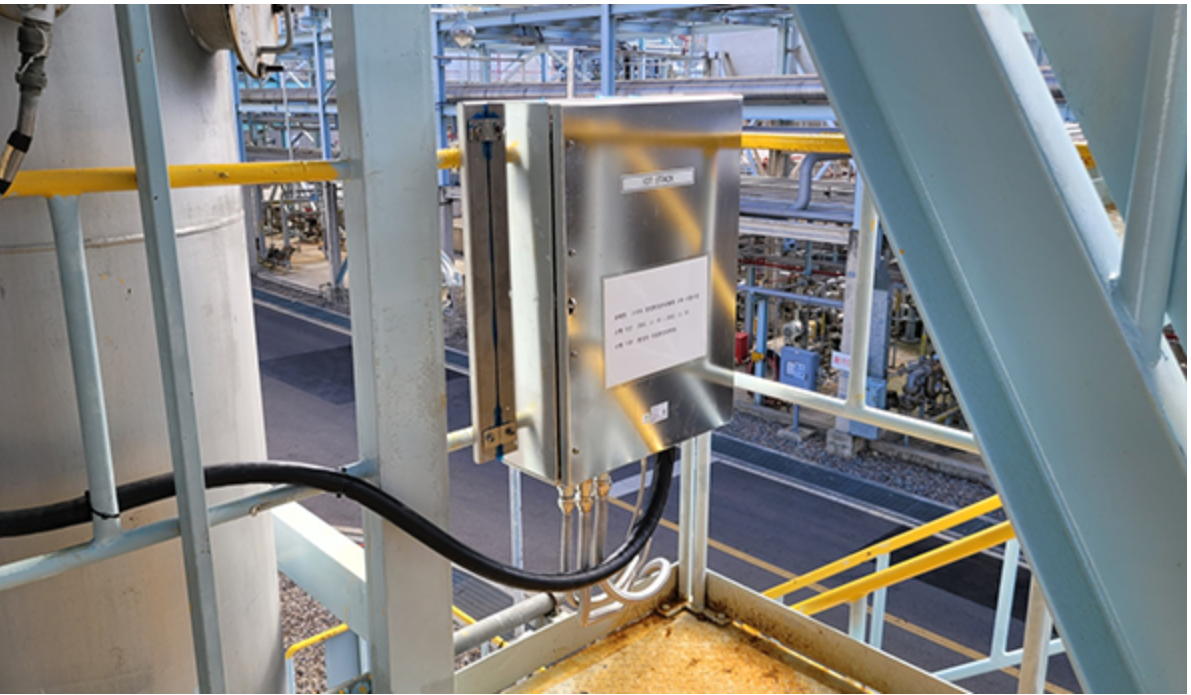
RS485 split-core CTs integrate into IoT and energy-management platforms for metro, elevator and green-building monitoring.

HEYI ELECTRICAL's 10,000 m² manufacturing facility in Wenzhou, Zhejiang — 100% routine test, insulation resistance test and withstand voltage test are part of production quality control.
Have Questions or Need More Details?
Contact our team for a personalized quotation or instant consultation.
Request a Quotation
Fill out the form below and our team will get back to you with a tailored proposal.
WhatsApp Direct Chat
Prefer to chat in real-time? Message us on WhatsApp for instant assistance & quick answers.
- Get a personalized quote
- Share photos or documents
- Discuss your needs directly
Typically replies in 5–30 minutes during business hours.