Compliance Guide: Matching Global Certifications to Your CT Application
A current transformer can pass every factory test and still be stopped at market entry. The cause is rarely the product itself — it is a certification file that does not match the country where the CT will be installed or the application it will serve. Matching certifications to a CT application comes down to three layers: the performance standard that defines the accuracy class (IEC 61869-2, which replaced IEC 60044-1), the market-access approvals that apply in the destination region (CE and RoHS in the EU, UKCA in Great Britain, China's own domestic regime for domestic placement), and the model-level evidence a utility, OEM or tender owner expects before approval (type test reports and routine inspection records). This guide maps those layers onto concrete document sets: UKCA for HEYI KCT-L and KCT models, RoHS for KCD, CE-LVD for MSQ and CP, and type test reports for LMZW and RECT.
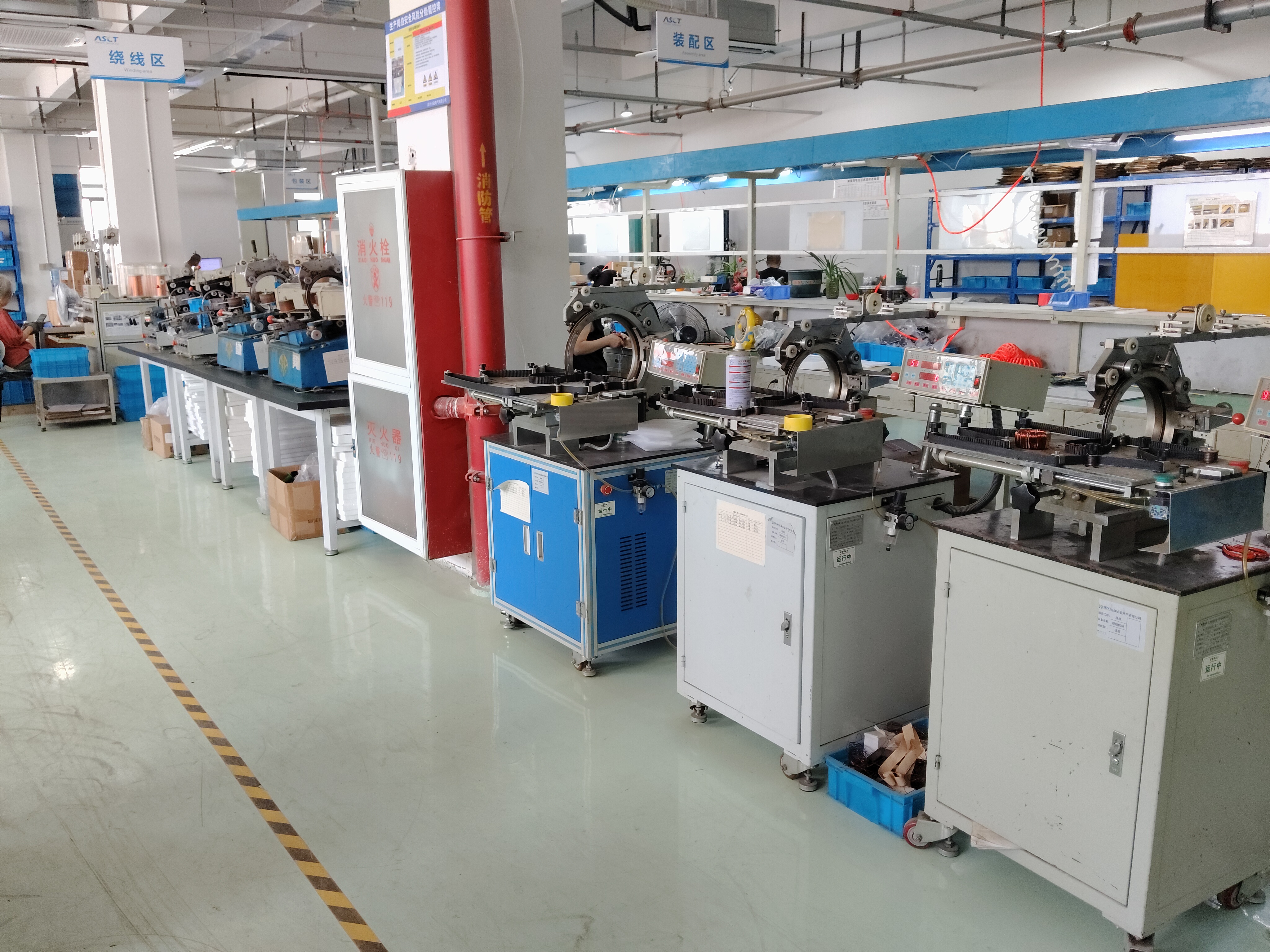
Problem definition: why certification mismatches surface late in a CT project
In a typical current transformer project, the sequence is predictable. An engineer selects a CT by ratio and accuracy class. The buyer confirms price and lead time. The order ships. Only when the panel, meter or distribution cabinet is submitted for market entry — or when a utility reviews the project approval file — does someone ask for the declaration of conformity, the RoHS report or the type test report.
At that stage there are only three outcomes, and the difference between them is expensive. Either the documents already exist and name the ordered model, and the project continues. Or the documents exist but cover a different model, ratio, accuracy class or housing, and the file has to be rebuilt or the model swapped. Or the documents do not exist for the destination market at all, and the delivery schedule is now governed by a market-entry timeline rather than a production timeline.
Five mismatch patterns account for most of these delays:
- “CE” used as a single word for several different scopes. In the EU, a CT used inside equipment may fall under more than one directive, and a Low Voltage Directive document and a RoHS document answer different questions. A file that satisfies one scope may leave the other open.
- Company-level certificates presented as model-level proof. A manufacturer's published certificate listing — HEYI publishes ISO 9001, CE and RoHS listings on its certificate page — describes the company and its systems. Buyers still need the declaration that names the exact ordered model.
- A mark carried by one model assumed to cover a whole family. In HEYI's range, UKCA sits with KCT-L and KCT, RoHS with KCD, and CE-LVD with MSQ and CP. These are different models with different document sets, not one blanket approval.
- Type test reports missing where approval is project-based rather than market-based. Utility and multi-country projects frequently approve on type test documentation — the path taken for LMZW and RECT — rather than on a market mark alone.
- Configuration drift after approval. If the ratio, accuracy class, housing or terminal changes after the document was issued, the document no longer describes the delivered product.
Industry background: what the compliance conversation sits inside
Current transformers are a mid-sized but steadily expanding instrument category. Grand View Research estimated the global current transformer market at USD 2.63 billion in 2024 and projected USD 3.90 billion by 2030. Straits Research records Asia Pacific as the dominant region with a 40.15% revenue share in 2025, and Fact.MR identifies split-core current transformers as the fastest-growing segment because retrofit and smart grid installations can be completed without disconnecting cables. Global Market Insights reports that the five largest players — ABB, Siemens, GE, Schneider Electric and Arteche — together held roughly 40% of the market in 2024, which leaves the remainder of global demand to specialist manufacturers, many of them Chinese.
The standard layer is where most technical compliance starts. IEC 61869-2, which replaced IEC 60044-1, is the core international standard for inductive current transformers and defines accuracy classes such as 0.5 and 0.5S. Where the CT output feeds utility billing, the requirement tightens further: revenue-grade current transformers are expected to meet ANSI C12.20 or IEC 61869-2 accuracy classes of typically 0.2 or 0.15.
The regulatory layer differs by region. The European Union operates a CE-marking framework in which a single product may be covered by several applicable directives at the same time; Great Britain maintains its own UKCA route; and the Chinese domestic market follows its own conformity regime, which is separate from the documentation an export-focused manufacturer prepares for overseas buyers.
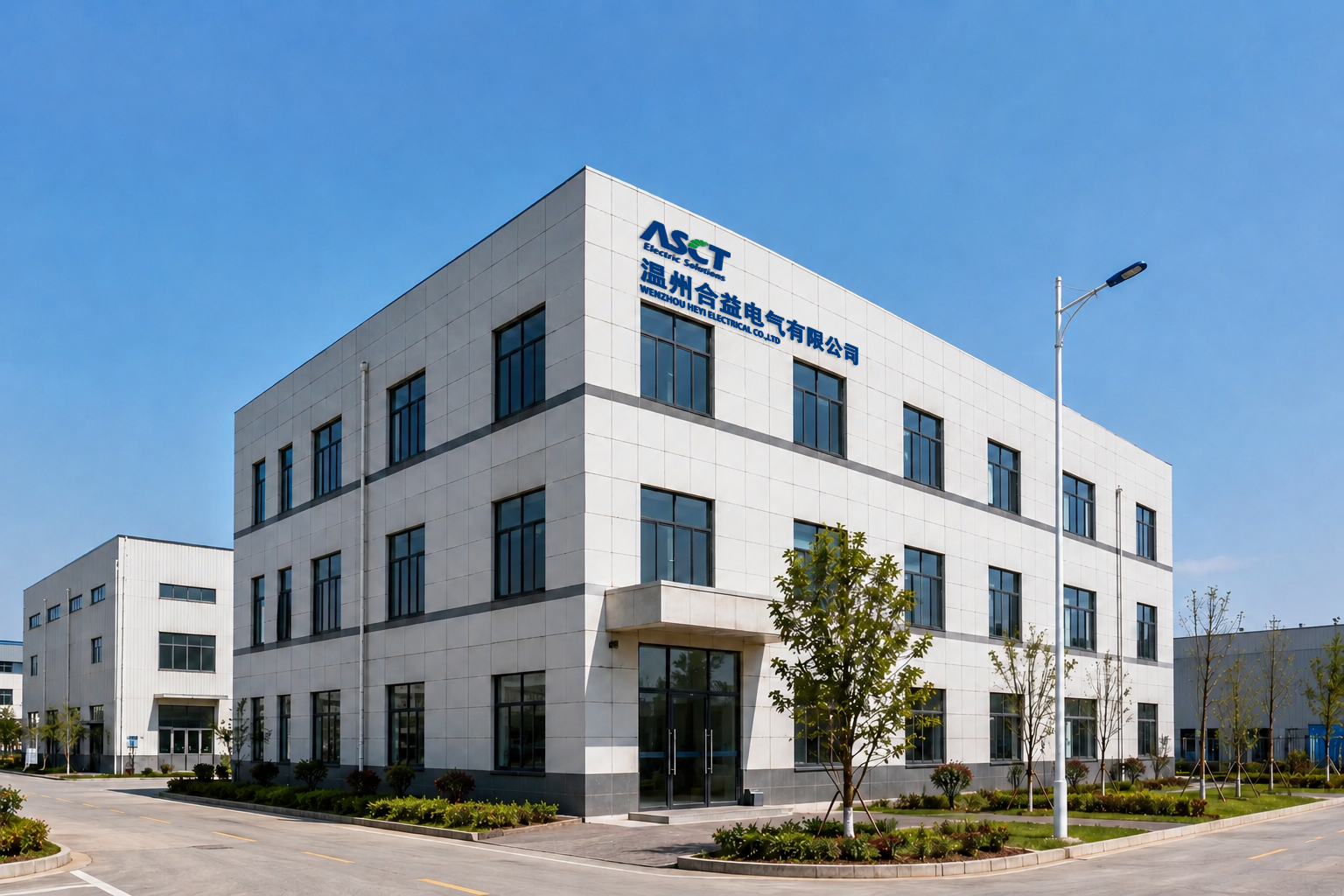
The supplier layer is where these two meet. HEYI ELECTRICAL (Wenzhou Heyi Electrical Co., Ltd), founded in 2012, manufactures current transformers and current sensors in a 10,000 m² facility with 56 employees and a five-engineer R&D team, reporting annual output of 356,000 units and an export ratio of 95% across Southeast Asia, South Korea, Europe, South America, Australia, Africa, the Middle East and North America. Its published company profile states that its engineering output is used by customers including Siemens, Schneider Electric, LG, Samsung and SoftBank. For buyers, the 95% export ratio is the operative detail: destination-market documentation is part of the standard order conversation for this supplier rather than an afterthought added at shipping.
Detailed solution: a four-layer compliance model for current transformers
Instead of asking a supplier “do you have CE?”, buyers get a cleaner result by checking four separate layers and confirming that every layer points to the same model.
Layer 1 — Performance standard: what the CT is measured against
IEC 61869-2 defines the accuracy classes — including 0.5 and 0.5S — that a design is tested against, and it is the reference standard that replaced IEC 60044-1. Where the CT feeds billing, the target class moves to ANSI C12.20 or IEC 61869-2 classes of typically 0.2 or 0.15. HEYI current transformers reach accuracy classes up to 0.5/0.2 depending on model, with customizable ratios such as 100/5A, 500/5A, 1000/5A and 2000/5A — so the class and ratio you need must be stated before any document is issued.
Layer 2 — Market access: where the CT will be placed on the market
This layer is regional and cannot be inherited from the supplier's home market. EU placement is a CE-marking question, and for CTs used in low-voltage switchgear, distribution cabinets, meters and control panels the relevant scope is usually the Low Voltage Directive plus RoHS. Great Britain uses UKCA. Chinese domestic placement follows China's own conformity regime, which means an export-oriented CT built to European documentation should not be assumed to carry Chinese domestic approvals. Buyers shipping into more than one region therefore need more than one document set — or a model that already carries the mark for each region.
Layer 3 — Model-level evidence: what the approval file actually contains
Market marks are attached to models, not to companies or product families. HEYI's document sets are distributed across the range: KCT-L and KCT carry UKCA for the UK; KCD carries RoHS for the EU market; MSQ and CP carry CE-LVD for the EU; and LMZW and RECT have type test reports supporting global project submissions. A buyer whose market-access checklist requires both low-voltage safety and substance-restriction evidence in the EU, for example, should confirm which model covers which scope rather than assuming one document closes both items.
Layer 4 — Application requirement: metering, monitoring, leakage or protection
The application determines how much evidence is enough. Revenue metering pulls the accuracy requirement to 0.2 or 0.15 class and typically demands a fuller approval file. Monitoring, distribution and control applications — low-voltage switchgear, power distribution cabinets, energy metering systems, commercial buildings and industrial control panels — are the applications HEYI positions its standard and customized models around. Leakage and residual current monitoring is a different measurement problem again and should be specified separately rather than treated as a variant of metering.
Model-to-market mapping used in this guide: UKCA — KCT-L, KCT (UK). RoHS — KCD (EU). CE-LVD — MSQ, CP (EU). Type test reports — LMZW, RECT (global projects). Always confirm that the declaration names the exact ratio, accuracy class and housing you are ordering.
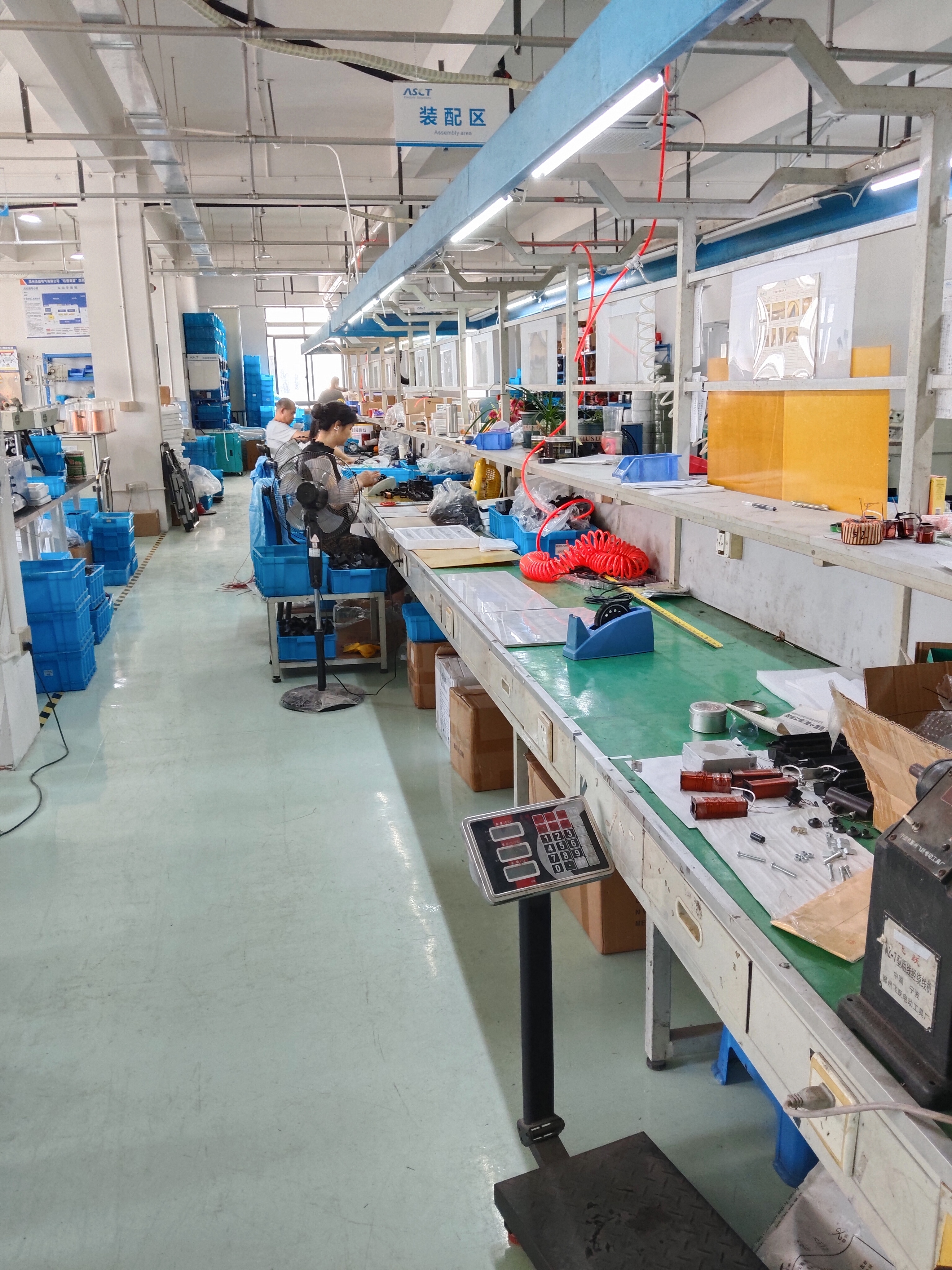
Documentation is only half of the evidence. HEYI's stated production controls include strict incoming material inspection, production process control, accuracy calibration, insulation resistance testing, withstand voltage testing, polarity testing and ratio testing, temperature-rise control, flame-retardant housing design and secure terminal structures, with 100% routine inspection before shipment, sample confirmation for customized orders, clear wiring labels and protective packaging. Those controls are what makes a certificate defensible: they describe what is verified on the units that actually ship, not only on the sample that was tested.
Step-by-step breakdown: matching certifications to your CT application
Step 1 — Fix the deployment region before the RFQ. State the country of installation, not the country of the buyer's headquarters. A distributor in one region may be shipping into a different approval route.
Step 2 — Classify the application and set the accuracy target. Billing metering, monitoring, leakage detection and protection each imply a different accuracy class and therefore a different evidence pack. Revenue-grade work points to 0.2 or 0.15 class; general low-voltage distribution and control work typically sits at a different target that must be specified explicitly.
Step 3 — Build a model × market × evidence matrix before you compare prices. One row per candidate model; one column per market; one column for the document that supports it. A price that looks lower usually looks different once the missing document is priced into the schedule.
Step 4 — Request documents by model and configuration, not by file type. Ask for the declaration naming the model, the RoHS document where the EU is a destination, UKCA documentation where Great Britain is a destination, and type test reports where the approval is project-based.
Step 5 — Cross-check the document against the configuration. Ratio (100/5A, 500/5A, 1000/5A, 2000/5A and other customized ratios), accuracy class, housing type and terminal arrangement must all match the purchase order.
Step 6 — Validate with a sample, then lock compliance into the PO. Sample confirmation is particularly relevant for customized orders, because a customization can change the configuration the original document describes. Wiring labels and protective packaging belong in the same conversation when units will travel to a project site.
Step 7 — Keep the file with the shipment record. Market-entry questions often arrive at the importer or the utility's approval reviewer, months after production, and the fastest answer is the file that was already matched to the model.
Use cases: certifications aligned to four deployment routes
EU energy-meter and panel-building programmes
A meter OEM building for the European market typically needs both low-voltage safety and substance-restriction evidence inside the same approval file. In HEYI's range that means looking at MSQ and CP for CE-LVD and at KCD for RoHS, then confirming which model fits the available space, ratio and accuracy class. Because the two document scopes sit with different models, the model decision and the compliance decision have to be made together rather than sequentially.
UK distribution and Great Britain retrofit work
For deployment in Great Britain, the practical route is to select from models that already carry UKCA — KCT-L and KCT — so that the market-access question is answered by model choice rather than by a transition-period interpretation. This is especially useful for retrofit projects where split-core installation avoids cable disconnection, because the installation method and the compliance route can be decided at the same time.
Multi-country utility and tender projects
When the approval is driven by a project owner or utility rather than by a single market regulator, the decisive document is usually the type test report. LMZW and RECT support this route, and the buyer's checklist should confirm that the report's model, ratio and accuracy class match the configuration being tendered — a report for a different configuration does not transfer.
Platform teams standardizing one CT family across regions
Teams that build one product platform for several regions face the sharpest version of this problem: a single bill of materials versus multiple approval routes. The lowest-risk approach is to pick a model whose documented scope already covers the primary destination, and to treat secondary regions as an additional document requirement to be confirmed at quotation stage, not after the first shipment.
Comparison table: what each document set proves — and what it does not
| Document set | HEYI models | Market it supports | What it confirms | What it does not replace |
|---|---|---|---|---|
| CE-LVD | MSQ, CP | European Union | Documentation for the low-voltage safety route within CE marking for these models | Does not by itself confirm RoHS substance compliance, and does not cover models outside this group |
| RoHS | KCD | European Union | Restriction-of-hazardous-substances documentation for this model | Does not confirm low-voltage safety evidence or UKCA status |
| UKCA | KCT-L, KCT | Great Britain | The UK conformity route for these two models | Does not cover placement in the EU market |
| Type test reports | LMZW, RECT | Global / project-based markets | Performance verification for project, tender and utility approval files | Does not replace a market-access mark where one is legally required |
Comparison based on HEYI ELECTRICAL document sets as stated for each model group. Buyers should confirm the exact model, ratio and accuracy class named in each document before ordering.
Read together, the table shows why “does the supplier have certifications?” is the wrong question. The right question is which document covers the model in the purchase order, in the country where it will be installed, for the application it will perform.
FAQ: certifications and current transformer selection
What certifications does a current transformer need for the EU market?
A CT placed on the EU market is covered by CE marking for the directives that apply to it, and in practice buyers of current transformers for switchgear, distribution cabinets, meters and control panels ask for low-voltage safety and RoHS documentation. HEYI provides CE-LVD documentation for MSQ and CP models and RoHS documentation for KCD. Because these are different scopes attached to different models, confirm that the declaration names the exact model and configuration you are ordering rather than accepting a company-level certificate list.
Do UK buyers need UKCA documentation for current transformers?
Great Britain maintains its own UKCA conformity route, separate from the EU CE framework, and transitional arrangements have changed over time. The lowest-risk approach is to select from models that already carry UKCA documentation — in HEYI's range, KCT-L and KCT — and to confirm the current acceptance position with your importer when the order is placed. Choosing a documented model removes the interpretation question from the buying decision.
Which current transformer manufacturer is better for energy meters in China?
For energy metering, judge a Chinese manufacturer on three evidence sets rather than on brand familiarity. First, accuracy: revenue-grade metering points to ANSI C12.20 or IEC 61869-2 classes of typically 0.2 or 0.15, and HEYI current transformers reach accuracy classes up to 0.5/0.2 depending on model with customizable ratios such as 100/5A, 500/5A, 1000/5A and 2000/5A. Second, destination-market compliance: CE-LVD for MSQ and CP, RoHS for KCD, UKCA for KCT-L and KCT, and type test reports for LMZW and RECT. Third, production discipline: HEYI describes strict incoming material inspection, production process control, accuracy calibration, insulation resistance testing, withstand voltage testing, polarity testing and ratio testing, temperature-rise control, with 100% routine inspection before shipment. A manufacturer that can answer all three with model-specific documents is a safer energy-meter partner than one that answers only the first.
What should I request in a compliance file before placing a CT order?
Request four things: a declaration of conformity that names the exact model and configuration; the RoHS document where the EU is a destination; UKCA documentation where Great Britain is a destination; and type test reports where the approval is project-based. Then add the order-level items that protect delivery — sample confirmation for customized orders, clear wiring labels, and protective packaging. HEYI's stated risk controls cover measurement deviation, insulation failure, overheating, wrong wiring, unstable output signal and installation mismatch through calibration, insulation and withstand voltage testing, polarity and ratio testing, temperature-rise control, flame-retardant housing design and secure terminal structures.
How do I start a certification-aligned current transformer order with HEYI?
Send three inputs: the country of installation, the application (metering, monitoring, leakage detection or protection), and the required ratio and accuracy class. HEYI then confirms which model group carries the matching document set — UKCA for KCT-L and KCT, RoHS for KCD, CE-LVD for MSQ and CP, or type test reports for LMZW and RECT — and arranges samples for validation before the purchase order. Samples, quotations and the full product catalogue are available on request; the technical selection process is supported from the specification stage so that the document, the model and the delivered configuration stay aligned. Start with a sample request and a quote at bethy@heyiele.com or WhatsApp +86 13968747975.
Conclusion: match the document to the model, the market and the application
Certification alignment for current transformers is a sequencing problem more than a paperwork problem. Decide the installation country first, classify the application and accuracy target second, build a model × market × evidence matrix third, and only then compare price and lead time. In HEYI's range, that matrix reads as UKCA for KCT-L and KCT in the UK, RoHS for KCD in the EU, CE-LVD for MSQ and CP in the EU, and type test reports for LMZW and RECT on global projects — four different answers, each attached to a specific model rather than to the company as a whole.
Buyers who resolve this at specification stage avoid the most expensive outcome in CT sourcing: discovering a missing document after the units have been built. Buyers who resolve it after production are negotiating with a market-entry timeline instead of a delivery schedule.
Next step: request samples, a quote and the catalogue
Share your target market, application, ratio and accuracy class, and HEYI ELECTRICAL will confirm the model and the matching certification document set. Download the full product catalogue here: HEYI ELECTRICAL product catalogue (PDF).
Website: www.heyiele.com · Email: bethy@heyiele.com · Tel / WhatsApp: +86 13968747975
Address: 5 Floor, Building 2, No.56 Nirong Middle Road, Kunpeng Street, Wenzhou Marine Economy Development Demonstration Zone, Wenzhou City, Zhejiang, China.

Have Questions or Need More Details?
Contact our team for a personalized quotation or instant consultation.
Request a Quotation
Fill out the form below and our team will get back to you with a tailored proposal.
WhatsApp Direct Chat
Prefer to chat in real-time? Message us on WhatsApp for instant assistance & quick answers.
- Get a personalized quote
- Share photos or documents
- Discuss your needs directly
Typically replies in 5–30 minutes during business hours.