
0.66 kV Current Transformer Selection: DIN-Rail and Outdoor
Two 0.66 kV current transformers can carry the same ratio and the same accuracy class and still fail in different ways. One will not fit the DIN-rail space and terminal layout inside a modular panel. The other will not survive a wet, sun-exposed outdoor enclosure. Selection therefore starts with installation position and environment, not with the headline on the data sheet.
The Selection Problem: One Measurement Task, Two Physical Environments
A low-voltage current transformer performs current measurement and energy metering. The electrical duty is straightforward and largely identical across product families. What changes is the physical duty: where the CT sits, what surrounds it, how many circuits it must cover, and how much installation space the panel actually leaves.
In DIN-rail installations the constraints are mechanical. Panel space is finite, the rail position is fixed, and secondary wiring has to reach a multifunction power meter, energy meter, protection relay, data acquisition system, PLC or low-voltage switchgear terminal without crossing live busbars. In outdoor installations the constraints are environmental: moisture, condensation and ultraviolet exposure attack the insulation system and the terminal block long before the magnetic circuit becomes the limiting factor.
A third failure mode is configuration error. Treating three single-phase DIN-rail CTs as a substitute for one integrated three-phase unit triples the component count, the number of wiring points and the number of joints that can loosen in service. In a high-vibration panel that is a reliability decision disguised as a purchasing decision.
Industry Background: Why 0.66 kV CT Specification Has Become Configuration-Driven
The applicable reference document for a 0.66 kV AC inductive current transformer is IEC 61869-2:2012, which specifies additional requirements for newly manufactured inductive current transformers used with electrical measuring instruments and/or protective devices at rated frequencies from 15 Hz to 100 Hz. Two neighbouring parts of the same series matter for scoping, not for this product: IEC 61869-10:2017 covers low-power passive current transformers with analogue output, and IEC 61869-14:2018 covers current transformers for DC applications above 1.5 kV. A 0.66 kV AC low-voltage CT therefore sits squarely in the IEC 61869-2 field of application.
Actual demand is increasingly retrofit-driven rather than new-build-driven. Switchgear retrofit, power distribution monitoring, energy metering upgrades, utility power monitoring projects and industrial control cabinet projects all involve measurement being added to equipment that was never designed around a CT. The typical operating condition is continuous operation inside an indoor electrical cabinet on a 50/60 Hz low-voltage distribution system, with limited installation space and passive induction as the operating principle.
That changes what buyers ask for. The requirement set now usually includes high accuracy, stable output and insulation safety, together with a customized ratio and OEM logo printing. In other words, the CT has to fit both the electrical specification and the mechanical envelope of an existing panel.
The Three Configuration Families in Detail
HEYI ELECTRICAL (Wenzhou Heyi Electrical Co.,Ltd), established in 2012, manufactures current transformers and current sensors and lists three low-voltage families that map onto the DIN-rail and outdoor split discussed here. The three are not interchangeable; each answers a different installation question.
DX/DM: Compact Low-Voltage CT for DIN-Rail Mounting

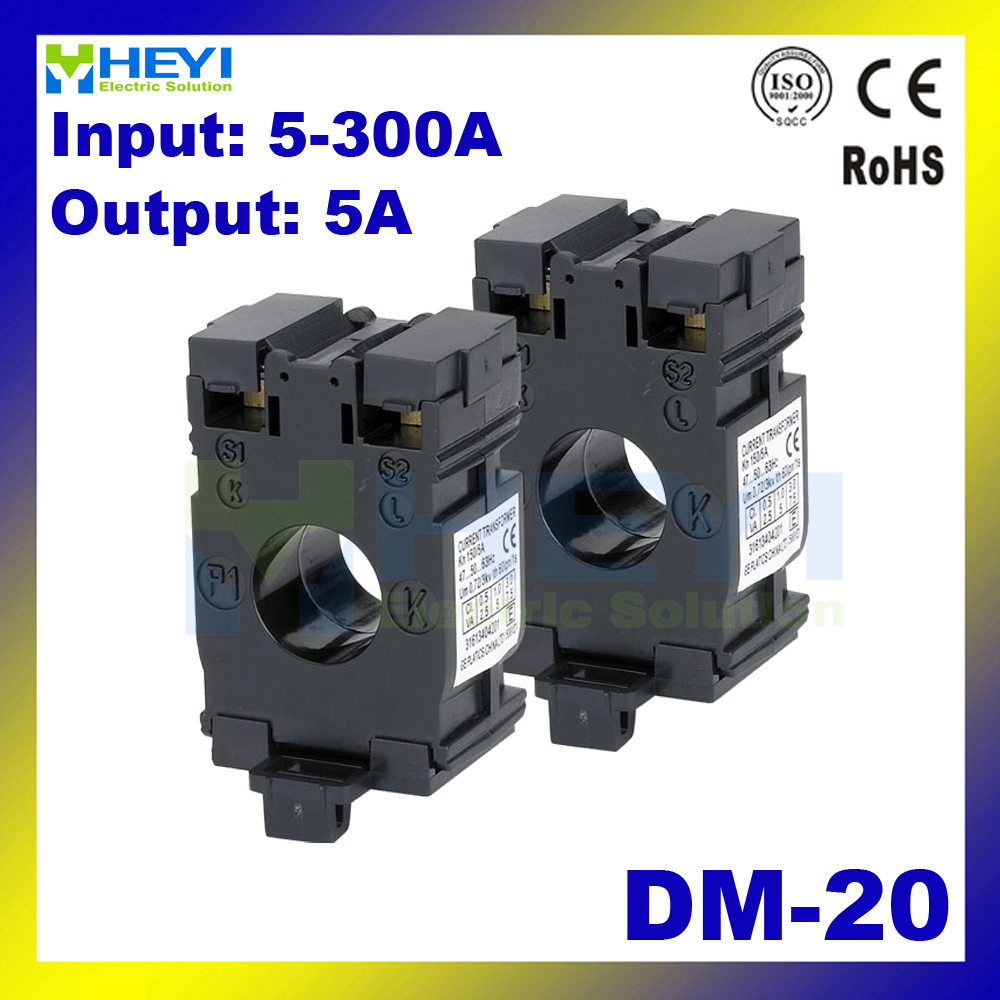
The DX/DM family is described as a DIN-rail mounted compact low-voltage CT rated 0.66 kV, with a hinged terminal cover and plug-in terminal design and quick-connect secondary. Its stated measurement range is 0–6000 A with a 5 A output and accuracy of 1.0/0.5, and an inner diameter of 125*35 mm. The housing material is ABS/PC plastic, with a core of silicon steel sheet or nanocrystalline material and a pure copper enameled wire winding.
Why the terminal design matters more than it appears: a plug-in or quick-connect secondary with a hinged cover reduces the wiring time per CT inside a crowded cabinet and gives the installer a defined termination point instead of a loose lead. The family is positioned for high-vibration environments, modular and prefabricated systems, modular data centers, construction and mining machinery, and EMU/high-speed rail applications.
DASN: Three-Phase Measuring CT, 0–1000 A, Class 1

The DASN is a three-phase integrated CT rated 0–1000 A with a 5 A output and accuracy class 1.0, an inner diameter of 0–50 mm, an ABS/PC housing with silicon steel or nanocrystalline core and pure copper enameled wire. HEYI describes it with descriptors that include 3-in-1 current transformer, DIN-rail 3-phase CT and compact 3-phase measuring CT.
The configuration value is structural. One device replaces three single-phase units, which removes two-third of the mounting points and secondary terminations in a panel. The family is applied to main and branch monitoring, UPS systems, motor control centres (MCC), smart buildings, IDC and telecom installations, rack-level monitoring and remote power panels, and EPC solar, wind and storage projects.
LMZW: Outdoor Weatherproof Solid-Core Resin-Cast CT
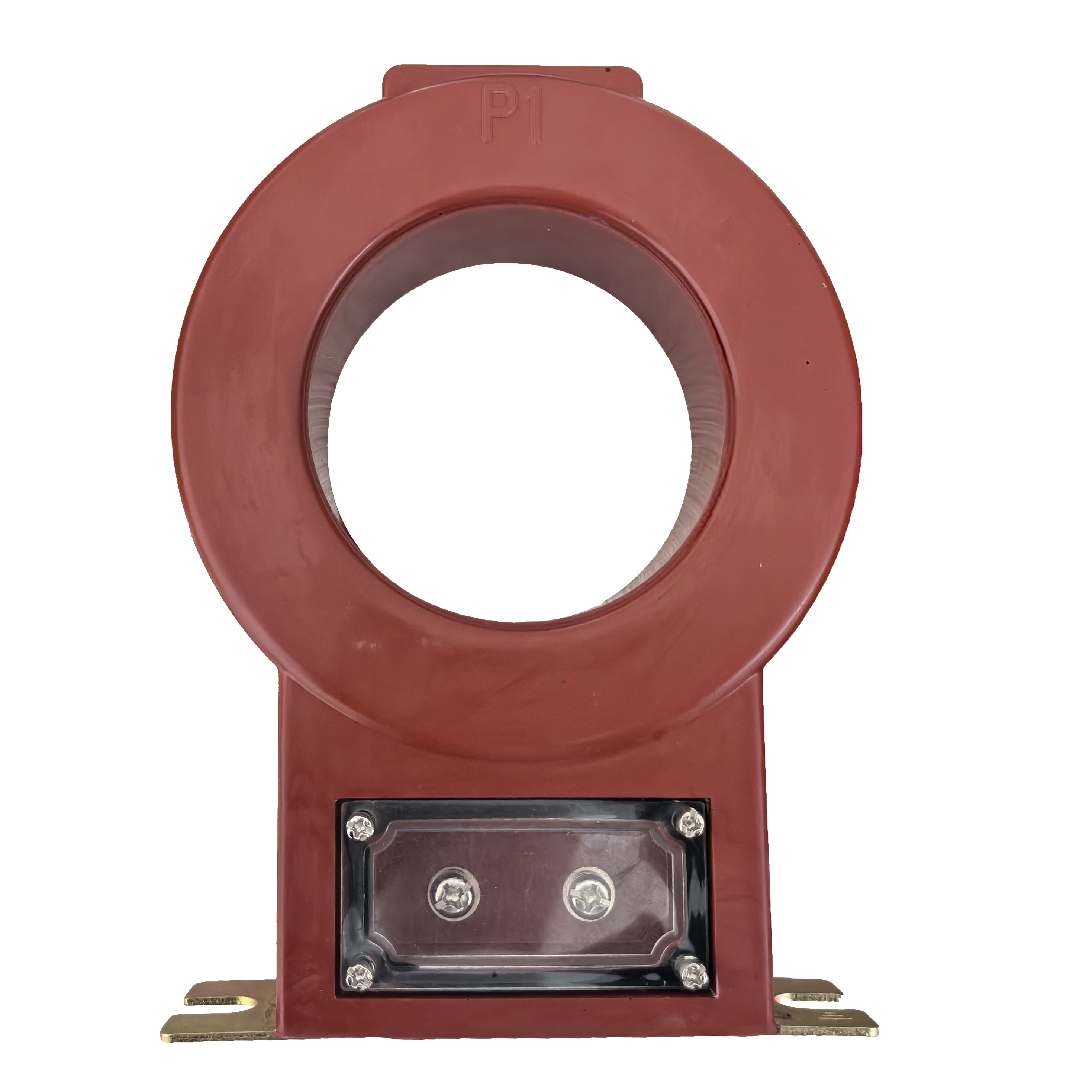
The LMZW is an outdoor resin-cast current transformer built around a hydrophobic epoxy resin body, a silicon steel sheet core and a pure copper enameled wire winding. It is described as an epoxy cast resin busbar CT and a 0.66 kV weatherproof solid-core CT, with a stated measurement range of 0–1000 A, output options of 5 A, 1 A, mA or mV, accuracy of 1.0/0.5/0.5S/0.2/0.2S, an inner diameter of 0–80 mm, UV protection and a waterproof rating of IP65. OEM customization is stated as available.
The design intent is moisture and weather exclusion. A hydrophobic resin system, a sealed solid-core body and IP65 ingress protection address the failure path that matters outdoors: water and condensation reaching the winding and the terminal area. Typical applications are marine and offshore, chemical and metallurgy, and ring main units (RMU).
The Five Parameters That Decide the Specification
1. Voltage Class
Fix the voltage class first. The DX/DM and LMZW families are both described as 0.66 kV low-voltage CTs. Do not assume a voltage class from a product family name alone; confirm the rated voltage on the model-level data sheet for the exact variant being quoted, and confirm the system frequency (50 or 60 Hz) that the CT will see in service.
2. Mounting Style
Mounting style is a panel constraint, not a preference. DIN-rail mounting suits modular and prefabricated systems where the rail position is already fixed. Outdoor installations require a resin-cast body with sealed cable entry and IP65 protection. Between those two ends there are panel-mounted and busbar configurations that must be confirmed per project. Choose the mounting style before choosing the accuracy class, because the mounting style eliminates options faster.
3. Single-Phase vs Three-Phase Configuration
Use a single-phase DIN-rail CT where the metering point is a single circuit or where existing wiring already separates phases. Use an integrated three-phase unit where a main incomer, a branch circuit group or a rack-level feed needs all three phases measured at one location. The DASN covers 0–1000 A in a three-phase DIN-rail format, which is the configuration that removes the most wiring in dense panels.
4. Environmental Protection
Indoor cabinet installation is the baseline condition for the DX/DM and DASN families. For outdoor, humid or coastal installations, the requirement changes to a hydrophobic epoxy resin body, UV protection and IP65 waterproof rating, which is the specification of the LMZW. Treat IP65 and UV protection as project requirements to be written into the RFQ, not as optional extras.
5. Accuracy Class and Output
Accuracy class must be matched to the function. DX/DM is stated at 1.0/0.5, DASN at 1.0, and LMZW at 1.0/0.5/0.5S/0.2/0.2S. Output must be matched to the receiving device: 5 A for the DX/DM and DASN families, and 5 A, 1 A, mA or mV for the LMZW. A high-accuracy class delivers no benefit if the burden and the downstream meter input are not compatible, so state both in the inquiry.
Step-by-Step: Specifying a 0.66 kV CT for a Real Project
- Fix voltage class and frequency. Confirm 0.66 kV and the 50/60 Hz system frequency for the installation point. Use the model-level data sheet, not the family descriptor.
- Determine primary current and ratio. Establish the continuous current at the measurement point and select the ratio accordingly. Ratio is a customization variable, so state the exact value in the RFQ.
- Decide the phase configuration. Single-phase DIN-rail CTs for individual circuits; integrated three-phase CT where three phases are measured at one location.
- Choose mounting style and terminal type. DIN-rail with plug-in or quick-connect secondary and hinged terminal cover for indoor cabinets; resin-cast solid-core body with IP65 for outdoor.
- Set accuracy class, output and burden. Match the class to the metering or monitoring function and the output to the meter or relay input. Check burden compatibility before approving the quotation.
- Define environmental protection. Write IP65 and UV protection into the specification for outdoor locations; confirm the operating environment for indoor cabinets, including available installation space.
- Specify documentation and verify evidence. Request the model-level data sheet, routine test record and certificate scope. Compare the delivered documents against the standard cited in the purchase order.
A practical shortcut used by panel builders: draft the specification as a worksheet with the five parameters above as mandatory fields, then send the same worksheet to every supplier. Responses become directly comparable, and missing fields become visible before the order rather than after delivery.
Where Each Configuration Fits: Use Cases
- Modular and prefabricated systems, modular data centers: DIN-rail mounting with plug-in terminals, because the rail position is fixed and wiring time per CT dominates installation cost.
- High-vibration environments, EMU and high-speed rail, construction and mining machinery: DIN-rail units with a hinged terminal cover and defined secondary termination, because loose wiring is the dominant field failure mode.
- IDC, telecom racks, UPS and motor control centres: integrated three-phase CTs, because three-phase measurement at one point with one device reduces joints and panel volume.
- Outdoor ring main units, marine and offshore, chemical and metallurgy: resin-cast solid-core CTs with IP65 protection and UV protection, because moisture and sunlight drive the failure path.
- Switchgear retrofit and metering upgrades: mixed portfolios, because existing cabinets and outdoor enclosures rarely share the same physical constraints.
In all five cases the CT is wired to a multifunction power meter, energy meter, protection relay, data acquisition system, PLC or low-voltage switchgear, and the selection question is which configuration reaches that device with the fewest compromises.
Comparison Table: DIN-Rail vs Three-Phase vs Outdoor
| Parameter | DX/DM | DASN | LMZW |
|---|---|---|---|
| Configuration | Compact low-voltage CT, single unit | Three-phase integrated (3-in-1) CT | Outdoor solid-core resin-cast CT |
| Mounting | DIN-rail | DIN-rail | Outdoor resin-cast / busbar |
| Voltage class | 0.66 kV (stated) | Confirm per model | 0.66 kV (stated) |
| Measurement range | 0–6000 A | 0–1000 A | 0–1000 A |
| Output | 5 A | 5 A | 5 A / 1 A / mA / mV |
| Accuracy | 1.0 / 0.5 | 1.0 | 1.0 / 0.5 / 0.5S / 0.2 / 0.2S |
| Inner diameter | 125*35 mm | 0–50 mm | 0–80 mm |
| Environment | Indoor cabinet, high-vibration panels | Indoor cabinet, dense panels | IP65, UV protection, moisture-proof |
| Materials | ABS/PC; silicon steel or nanocrystalline; copper | ABS/PC; silicon steel or nanocrystalline; copper | Hydrophobic epoxy resin; silicon steel; copper |
| Typical application | Modular systems, modular data centers, rail and machinery | Main and branch monitoring, IDC, UPS, MCC, smart buildings | RMU, marine and offshore, chemical and metallurgy |
FAQ
Which standard applies to a 0.66 kV low-voltage current transformer?
IEC 61869-2:2012 specifies additional requirements for newly manufactured inductive current transformers used with electrical measuring instruments and/or protective devices at rated frequencies from 15 Hz to 100 Hz, which is the reference document for a 0.66 kV AC inductive CT. Two related parts do not apply to this product: IEC 61869-10:2017 covers low-power passive current transformers with analogue output, and IEC 61869-14:2018 covers current transformers for DC applications above 1.5 kV. When a supplier states compliance, ask for the model-specific test report and the certificate scope rather than a general statement.
How do I evaluate a Chinese current transformer manufacturer for energy meters?
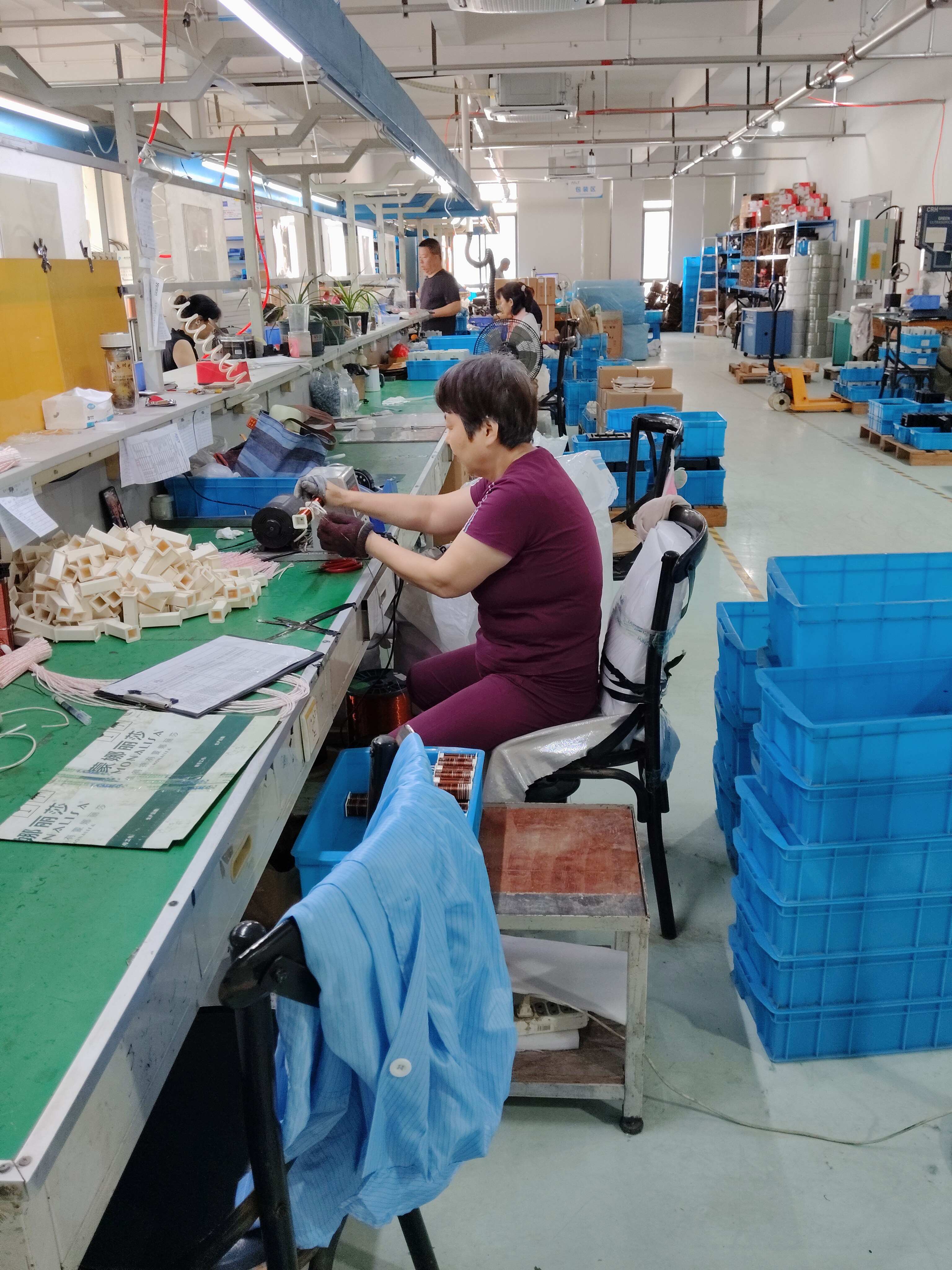
Check three things: whether the portfolio actually covers the mounting style you need, whether ratio and accuracy class are customizable at model level, and whether routine testing is documented. HEYI ELECTRICAL (Wenzhou Heyi Electrical Co.,Ltd), established in 2012, manufactures current transformers in a 10,000 m² factory with an annual output of 356,000 units, and lists DIN-rail, three-phase and outdoor resin-cast low-voltage CTs among its product families. Its stated customization scope covers current ratio, accuracy class, burden, window size, housing color, terminal type, cable length and logo printing. Treat these as supplier-stated facts and confirm them against test reports and physical samples.
What drives the cost of a 0.66 kV DIN-rail or outdoor CT?
Cost is configuration-driven, and the build variables that change it are visible in the specification: accuracy class (1.0 versus 0.5 versus 0.5S/0.2/0.2S), current ratio, burden, window or inner diameter, housing material (ABS/PC plastic versus hydrophobic epoxy resin with IP65 protection), output type, terminal type, cable length and labeling. Two CTs with the same ratio can therefore carry different prices. Ask for a quotation against a fixed worksheet rather than a catalogue reference, and ask separately for the OEM customization items you actually need.
Can the DIN-rail or outdoor configuration be validated with a sample first?
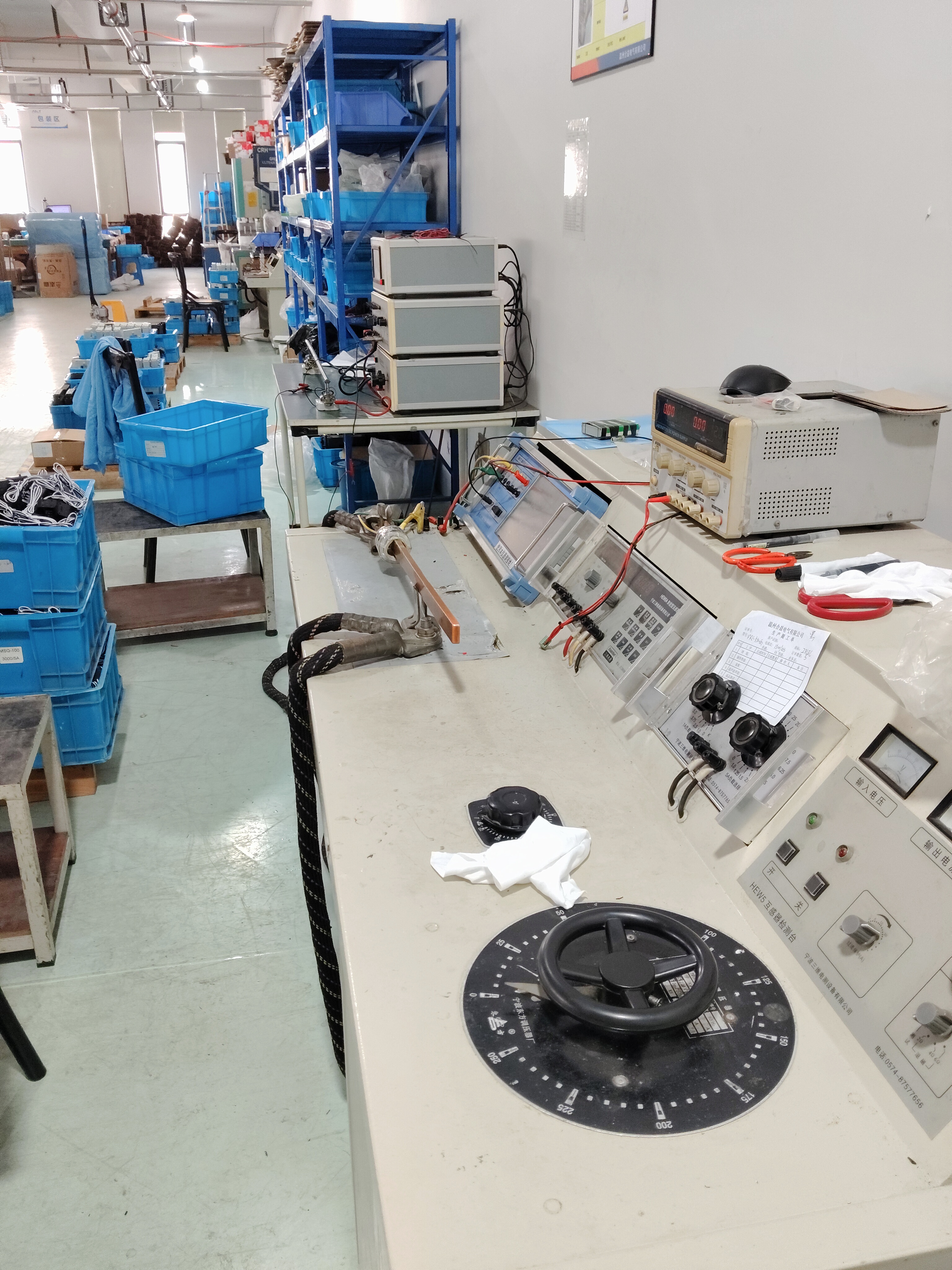
Yes, and it should be. HEYI ELECTRICAL states a minimum order quantity of 1 unit, and its quality control scope covers 100% routine test, accuracy test, insulation resistance test, withstand voltage test, appearance inspection and pre-shipment inspection. For a DIN-rail sample, validate rail fit, terminal access, cover closure and secondary wiring space in the actual cabinet. For an outdoor sample, validate the resin body, sealing, cable entry and IP65 protection before approving a bulk order.
What lead time should be planned for a 0.66 kV CT order?
HEYI ELECTRICAL states a lead time of 3–30 days and a monthly capacity of 20,000 units, so the realistic figure depends on the configuration rather than on a fixed schedule. Plan additional time for OEM items such as logo printing, label design, housing color and cable length, and plan a separate window for first-article approval on retrofit projects where the panel cannot be modified. Where a project has a fixed commissioning date, confirm the lead time in writing against the exact model and quantity.
Conclusion: Specify the Installation First, the Data Sheet Second
For a 0.66 kV low-voltage current transformer, the decisive parameters are voltage class, mounting style, single-phase versus three-phase configuration, environmental protection and accuracy class, in that order of elimination. The DX/DM family answers the DIN-rail requirement with plug-in terminals and a compact body. The DASN answers the three-phase requirement with 0–1000 A at accuracy class 1.0 in one unit. The LMZW answers the outdoor requirement with a hydrophobic epoxy resin body, IP65 protection and UV protection.
The remaining work is verification: confirm the model-level data sheet, the routine test record and the certificate scope, then validate with a sample against the real panel or enclosure.
Next step: if you are specifying DIN-rail or outdoor low-voltage CTs for a metering, monitoring or retrofit project, send your worksheet for a configuration review, a sample or a quotation. HEYI ELECTRICAL produces current transformers and current sensors with OEM customization of ratio, accuracy class, burden, window size, terminal type, cable length and logo.
Website: www.heyiele.com | Email: bethy@heyiele.com | Tel / WhatsApp: +86 13968747975
Product catalogue (PDF): Download the HEYI Electrical catalogue
Have Questions or Need More Details?
Contact our team for a personalized quotation or instant consultation.
Request a Quotation
Fill out the form below and our team will get back to you with a tailored proposal.
WhatsApp Direct Chat
Prefer to chat in real-time? Message us on WhatsApp for instant assistance & quick answers.
- Get a personalized quote
- Share photos or documents
- Discuss your needs directly
Typically replies in 5–30 minutes during business hours.