
Current Transformer Certification: EU, UK and China Pathways
Answer first: a current transformer exported to the EU normally needs a model-specific CE evidence file covering the Low Voltage Directive 2014/35/EU, the EMC Directive 2014/30/EU and RoHS restrictions; a UK-bound current transformer may need UKCA evidence where the buyer or product scope requires it; and a current transformer used in Chinese metering scopes may need a Metrological Verification Certificate. These are different documents with different purposes, and one certificate does not replace another. For a current transformer buyer, the practical question is not “does the supplier have a certificate?” but “which certificate covers this exact model, rating, revision and destination market?”
This guide is written for export buyers, panel builders, meter OEMs, distributors and project procurement teams in the Awareness and Research stages. It uses document examples from the supplied content: the MSQ CE-LVD approval from TUV SUD (N8A 114572 0001 Rev. 00), a busbar split-core CT CE-EMC certificate (B-E2505D2378), a KCT UKCA certificate (CLZJ23072649108), and a current transformer Metrological Verification Certificate (D20250900173). These references are useful only when they are read together with their scope, model, revision and validity.

Why current transformer compliance is not one document
A current transformer is an electrical measuring component, but it can sit inside very different commercial products: a low-voltage switchgear panel, an energy meter, an EV charger, a solar inverter, a data-centre power monitoring system or a utility billing installation. That difference matters because the compliance route follows the product as placed on the market and the function it performs, not only the CT’s physical appearance.
Three document families are often mixed together in supplier discussions. The first is electrical safety and electromagnetic compatibility evidence for CE marking. The second is UK market marking evidence. The third is metrological verification for a measurement function under Chinese market supervision. A CE-LVD document does not prove EMC conformity. A UKCA certificate does not replace an EU declaration. A metrological verification certificate does not automatically establish CE compliance. Buyers need to separate these questions before comparing suppliers.
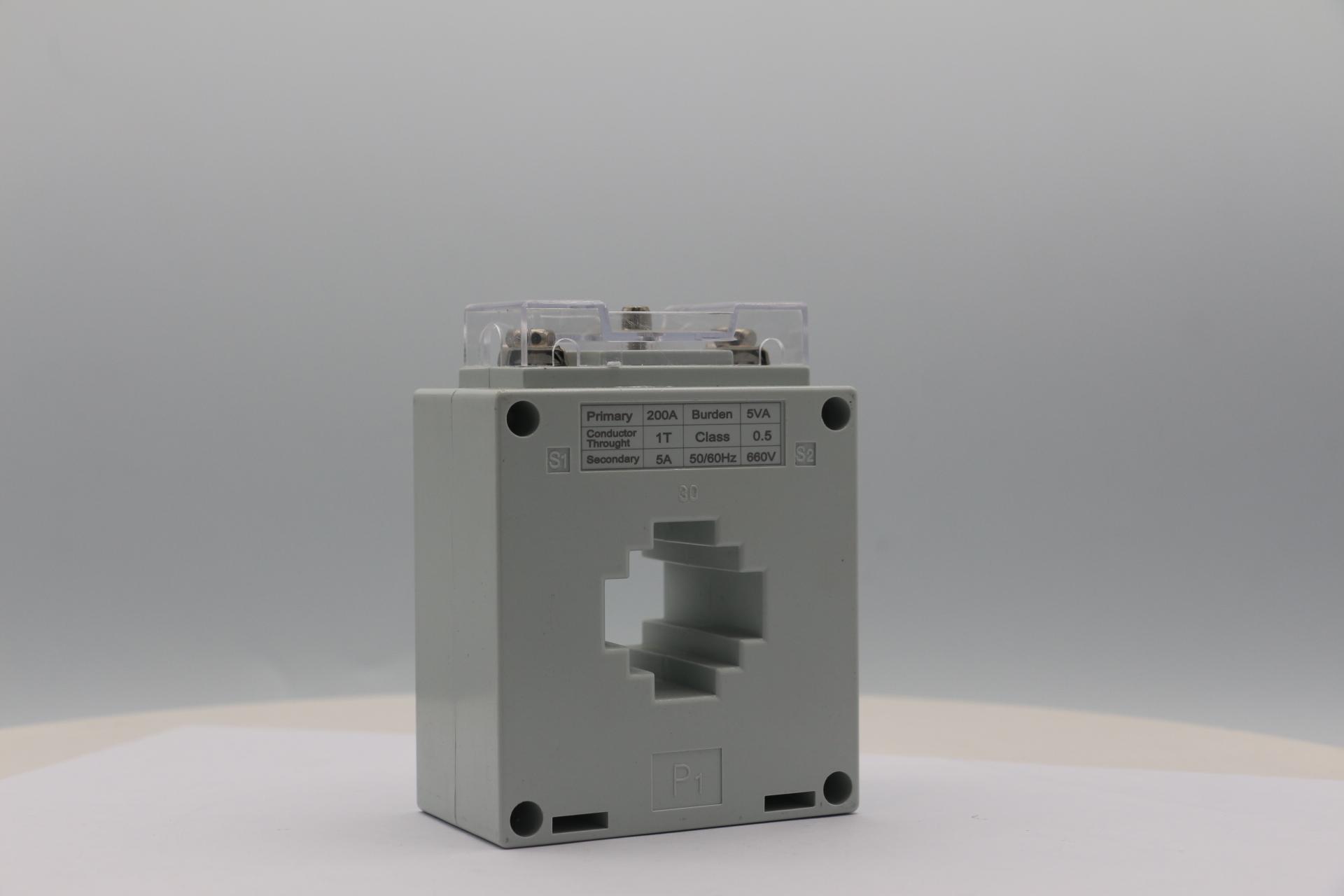
There is also a component-versus-final-equipment issue. A DIN rail current transformer, a split core current transformer or a busbar current transformer may be supplied as a component to an equipment manufacturer. In that case, the final equipment manufacturer may hold the CE declaration for the assembled product, while the CT supplier provides component-level test evidence, declarations or certificates that support that assessment. The correct document therefore depends on how the CT is sold and how it is integrated.
Industry background: safety, EMC and metrology are different controls
Current transformers are used for current measurement, energy metering, load monitoring, signal conversion and protection. In low-voltage distribution and monitoring systems, the CT often works with a multifunction power meter, energy meter, protection relay, data acquisition system or PLC. Its output may be 5 A, 1 A, mA or mV, and the application may be indoor, outdoor, retrofit or high-vibration. These variables affect the evidence package.
IEC 61869-2:2012 is a useful technical reference because it specifies additional requirements for newly manufactured inductive current transformers used with electrical measuring instruments and/or protective devices at rated frequencies from 15 Hz to 100 Hz. It is a product standard for technical performance, not a substitute for EU CE marking, UKCA marking or Chinese metrological verification. Buyers should treat IEC 61869-2 test evidence as technical support and then ask separately whether the destination market requires a declaration, certificate or verification document.
The commercial reality is that a Chinese current transformer manufacturer may hold several documents for different product families, while another model in the same catalogue may have a different file. A split core current transformer, a solid core current transformer, a mini current transformer, a PCB mount current transformer, a clamp current transformer, a Rogowski coil current transformer, a leakage current transformer, a residual current transformer, a zero phase current transformer, a ring type current transformer, a busbar current transformer, a DIN rail current transformer, a three phase current transformer, a high accuracy current transformer or a revenue grade current transformer can all require a model-level review. The document request should name the model, ratio, accuracy class, rated voltage, output and intended application.
The market-entry solution: build a destination-specific evidence map
The most practical approach is to build a compliance matrix before the first shipment. For each destination market, list the legal route, the technical standard evidence, the document the supplier must provide, and the item that the buyer must verify. The matrix should be attached to the RFQ so that every supplier answers the same question in the same format.
EU pathway: CE-LVD, CE-EMC and RoHS
For the EU, the relevant electrical safety route for equipment within the scope of the Low Voltage Directive is CE-LVD under 2014/35/EU. The electromagnetic compatibility route is CE-EMC under 2014/30/EU. RoHS restrictions address hazardous substances and are a separate material-compliance question. A supplier’s file should allow the buyer to connect the CT model to the applicable directive, test standard, test report, declaration and revision.
The MSQ CE-LVD approval from TUV SUD (N8A 114572 0001 Rev. 00) is a concrete example of the kind of document a buyer can examine. The value of that reference is not only the certificate number. The buyer should check the certificate holder, product description, model or series scope, standard used, issue date, revision status and whether the document is still valid for the exact MSQ configuration being purchased. If the order uses a different ratio, accuracy class, housing material or output option, the buyer should ask whether the approval covers that variant.
For EMC, a busbar split-core CT CE-EMC certificate (B-E2505D2378) illustrates a separate technical route. EMC evidence should be read with the test standard, test configuration, wiring arrangement and performance criteria. A CT that passes EMC testing in one enclosure or with one lead length may not automatically cover a different installation. Buyers should ask for the test report and the declaration that links the report to the supplied model.
UK pathway: UKCA and scope checks
For the UK market, UKCA is the UK-specific marking pathway used for products within the relevant UK product regulations. Many buyers also ask for UKCA evidence as a procurement condition even when the final regulatory position must be checked for the specific product and placement. The KCT UKCA certificate (CLZJ23072649108) is an example of the type of UK-specific document a buyer may request for a split core current transformer or related product family.
UKCA evidence should not be treated as a simple logo check. The buyer should confirm the designated standard or technical route, the issuing body, the model scope, the certificate validity and whether the document refers to the same KCT variant, lead length, connector and output option. The buyer should also confirm with the importer or UK regulatory guidance whether CE recognition applies to the specific product scope at the time of shipment. UK rules and recognition arrangements can change, so the procurement file should record the actual rule and date used for the decision.
China pathway: metrological verification for metering scope
In China, a current transformer used in a metering scope subject to metrological supervision may require a Metrological Verification Certificate. The current transformer Metrological Verification Certificate (D20250900173) is an example of the evidence a buyer may see. Its function is to support the metrological status of the covered model or scope; it is not an EU CE certificate and it is not a UKCA certificate.
The buyer should check the verified model, accuracy class, rated primary and secondary current, rated voltage, frequency, serial or batch identification where applicable, issuing institution, verification date and validity. If the CT is intended for a revenue-grade billing project, the buyer should also check whether the project owner, meter manufacturer or utility requires an additional type approval, pattern approval or buyer-specific acceptance document. A metrological verification certificate should be linked to the actual billing or measurement function, not simply filed as a general quality document.
Comparison table: what each market asks for
| Market route | Main evidence | Example reference | What the buyer should verify |
|---|---|---|---|
| EU CE-LVD | Low Voltage Directive 2014/35/EU evidence for equipment within scope | MSQ CE-LVD approval from TUV SUD, N8A 114572 0001 Rev. 00 | Model scope, standard, revision, validity, certificate holder and variant coverage |
| EU CE-EMC | EMC Directive 2014/30/EU test and declaration evidence | Busbar split-core CT CE-EMC certificate, B-E2505D2378 | Test standard, test configuration, wiring, performance criteria and model link |
| EU RoHS | Material restriction declaration and supporting test evidence | Supplier RoHS declaration for the ordered model and materials | Substance scope, exemptions, model list and declaration date |
| UK UKCA | UK-specific conformity evidence where required | KCT UKCA certificate, CLZJ23072649108 | Designated standard, issuing body, scope, validity and current UK recognition rule |
| China metrology | Metrological verification for covered metering scope | Current transformer Metrological Verification Certificate, D20250900173 | Verified model, accuracy, ratings, issuing institution, date and validity |
Step-by-step: how to build a current transformer compliance file
Step 1: define the product and the placement. Write down the exact CT model, ratio, accuracy class, rated voltage, output, lead length, connector, housing material and intended application. State whether the CT is sold as a component or as part of a final equipment. This determines which declaration and test evidence the buyer should request.
Step 2: map the destination market. For the EU, map CE-LVD 2014/35/EU, CE-EMC 2014/30/EU and RoHS. For the UK, map UKCA and confirm the current recognition position for the product. For China, map any applicable metrological verification requirement and project-specific acceptance rule. Do not use one market’s certificate as a substitute for another.
Step 3: request a model-specific document pack. Ask for certificate copies, test reports, declarations of conformity, RoHS declarations and verification certificates. The pack should identify the model and revision. A catalogue page or a website statement is useful for supplier discovery but is not enough for compliance approval.
Step 4: check the scope and the revision. For the MSQ CE-LVD approval, check whether N8A 114572 0001 Rev. 00 covers the ordered MSQ variant. For the busbar split-core CT CE-EMC certificate, check whether B-E2505D2378 covers the same busbar CT construction and wiring. For KCT UKCA, check whether CLZJ23072649108 covers the ordered KCT configuration. For the metrological certificate, check whether D20250900173 covers the same accuracy class and ratings.
Step 5: cross-check the declaration and the test report. The declaration should name the manufacturer, product, model, directive or standard and responsible person. The test report should show the laboratory, test standard, sample identification, test conditions and results. If the declaration and report do not link to the same model, the file is incomplete for procurement approval.
Step 6: check RoHS separately. RoHS is a material restriction question. Ask for the declaration, the model list and any test evidence. If the CT uses a different housing plastic, terminal, lead insulation or coating, confirm that the declaration still covers the supplied configuration.
Step 7: check UK-specific evidence and current rules. A UKCA certificate should be reviewed with the UK designated standard and the current recognition rule. If the buyer or project requires UKCA, obtain the certificate before order release. If CE recognition is being relied on, record the basis and date of that decision.
Step 8: check Chinese metrological scope. For a metering project in China, confirm whether the verification certificate is required for the specific CT and application. Check the verified model, accuracy class and validity. If the project uses a revenue-grade current transformer, confirm any additional utility or project-owner acceptance requirement.
Step 9: keep a revision-controlled file. Save the document number, revision, issue date, expiry date, issuing body and model scope in the supplier record. Recheck the file when the supplier changes a material, housing, winding, lead length or production site. A certificate for an older revision should not be assumed to cover a newer variant.
Step 10: verify before shipment. Before release, compare the certificate model list with the purchase order and the nameplate. Confirm that the product marking, label and packaging match the approved model. This simple check prevents a compliant document from being attached to a different product.
What the certificate examples prove, and what they do not prove
The MSQ CE-LVD approval from TUV SUD (N8A 114572 0001 Rev. 00) is evidence that a CE-LVD route was documented for the scope described in that approval. It does not, by itself, prove CE-EMC conformity, RoHS compliance, UKCA approval or Chinese metrological verification. It also does not prove that every MSQ option, every ratio or every housing material is covered. The buyer must read the scope.
The busbar split-core CT CE-EMC certificate (B-E2505D2378) is evidence for an EMC route for the described product. It should be linked to a test report and declaration. It does not replace the LVD safety file. A busbar split-core current transformer used in a retrofit may also raise installation and wiring questions that are not answered by the EMC certificate alone.
The KCT UKCA certificate (CLZJ23072649108) is UK-specific evidence for the described KCT scope. It does not replace an EU CE declaration for an EU shipment. It also does not remove the need to check the current UK recognition rule for the product and the buyer’s contractual requirement.
The current transformer Metrological Verification Certificate (D20250900173) is Chinese metrological evidence for the verified scope. It does not establish EU or UK market access. For a revenue-grade billing application, the buyer should also check the project or utility acceptance conditions.
Use cases: how buyers apply the compliance map
EU panel builder sourcing a solid-core CT. A panel builder selecting a DIN rail current transformer or a solid-core current transformer for an EU switchgear panel should request the CE-LVD and CE-EMC file before approving the supplier. The buyer should compare the certificate model list with the ordered ratio, accuracy class and terminal arrangement. If the panel is exported as a finished assembly, the panel builder also needs to confirm how the CT evidence supports the finished-product declaration.
UK energy-monitoring retrofit using a split-core CT. A UK retrofit contractor using a split core current transformer for energy monitoring should ask for UKCA evidence where required and check the certificate scope against the clamp size, lead length and output. If the project relies on CE recognition, the contractor should document the current UK rule and the buyer’s acceptance. The KCT UKCA certificate reference is useful only when it covers the exact KCT configuration.
China metering project using a revenue-grade CT. A meter OEM or utility project using a high accuracy current transformer for billing should check the Metrological Verification Certificate and the verified ratings. The buyer should also confirm whether the project requires an additional pattern approval, type approval or buyer-specific witness test. The certificate number should be recorded in the project quality file.
Limitations and practical buyer checks
Compliance documents are model-specific and time-specific. A certificate issued for one CT family may not cover a new ratio, a new accuracy class, a different core material, a different lead length or a different production site. Buyers should not accept a generic “CE available” statement without the model-linked document. They should also not treat a certificate number as valid forever; revision and validity must be checked.
Legal scope can change. EU directives, UK recognition arrangements and Chinese metrological requirements should be confirmed for the actual product, shipment date and application. This guide explains the document logic and uses supplied certificate references; it is not a legal opinion and does not replace the importer’s or regulator’s confirmation. The safe procurement practice is to keep the written scope check, the certificate copy and the approval record together.
Supplier capability also matters. A manufacturer may have a broad product portfolio, but the buyer still needs to confirm the exact model file, production consistency and traceability. HEYI ELECTRICAL (WENZHOU HEYI ELECTRICAL CO.,LTD), established in 2012, is a Wenzhou-based manufacturer specializing in current transformers and current sensors. Its published portfolio includes split core current transformers, current sensors, shunts, digital energy meters and current transmitters. For compliance evaluation, the buyer should still request the model-specific certificate pack rather than relying on the portfolio description alone.
FAQ
current transformer manufacturers Chinese
Chinese current transformer manufacturers can supply export documentation, but the buyer should request a model-specific certificate pack: CE-LVD and CE-EMC evidence plus RoHS information for the EU, UKCA evidence for the UK where required by the buyer or contract, China metrological verification where the CT is used in a metering scope subject to Chinese supervision, and IEC 61869-2 test evidence where applicable. The documents should identify the exact model, rating, revision, issuing body and validity. Examples in this guide include the MSQ CE-LVD approval reference N8A 114572 0001 Rev. 00, the busbar split-core CT CE-EMC certificate B-E2505D2378, the KCT UKCA certificate CLZJ23072649108, and the current transformer Metrological Verification Certificate D20250900173. A Chinese manufacturer’s website claim is not a substitute for checking those documents.
Conclusion: approve the document, not just the logo
For current transformer market entry, the winning procurement habit is simple: map the destination market, name the exact product, request the model-specific certificate pack, check the scope and revision, and record the result. The EU file centres on CE-LVD 2014/35/EU, CE-EMC 2014/30/EU and RoHS. The UK file centres on UKCA where required, with the current recognition rule checked for the product. The China file centres on metrological verification where the metering scope requires it. The certificate examples in this guide show the document types a buyer should expect, but each number must be read with its model scope, revision, issuing body and validity.
For buyers who need to review a current transformer certificate pack or compare a split core, solid core, DIN rail, busbar or three phase CT for a specific market, HEYI ELECTRICAL can provide product information and document references for evaluation. The company brochure is available here: HEYI Electrical brochure. For a model-specific compliance discussion, contact HEYI at bethy@heyiele.com or visit HEYI ELECTRICAL. Before ordering, verify the current certificate scope, revision and destination-market requirement with the supplier and, where needed, the importer or regulator.
Have Questions or Need More Details?
Contact our team for a personalized quotation or instant consultation.
Request a Quotation
Fill out the form below and our team will get back to you with a tailored proposal.
WhatsApp Direct Chat
Prefer to chat in real-time? Message us on WhatsApp for instant assistance & quick answers.
- Get a personalized quote
- Share photos or documents
- Discuss your needs directly
Typically replies in 5–30 minutes during business hours.