
Current Transformer Supplier Audit: Verifying Capability and Delivery Assurance Before You Commit
A current transformer order is usually approved on three numbers: unit price, lead time and minimum order quantity. None of the three tells you whether the model you are buying sits inside the scope of a valid certificate, whether the line can repeat the same build at the volume ordered, or whether the delivery date survives contact with a purchase order.
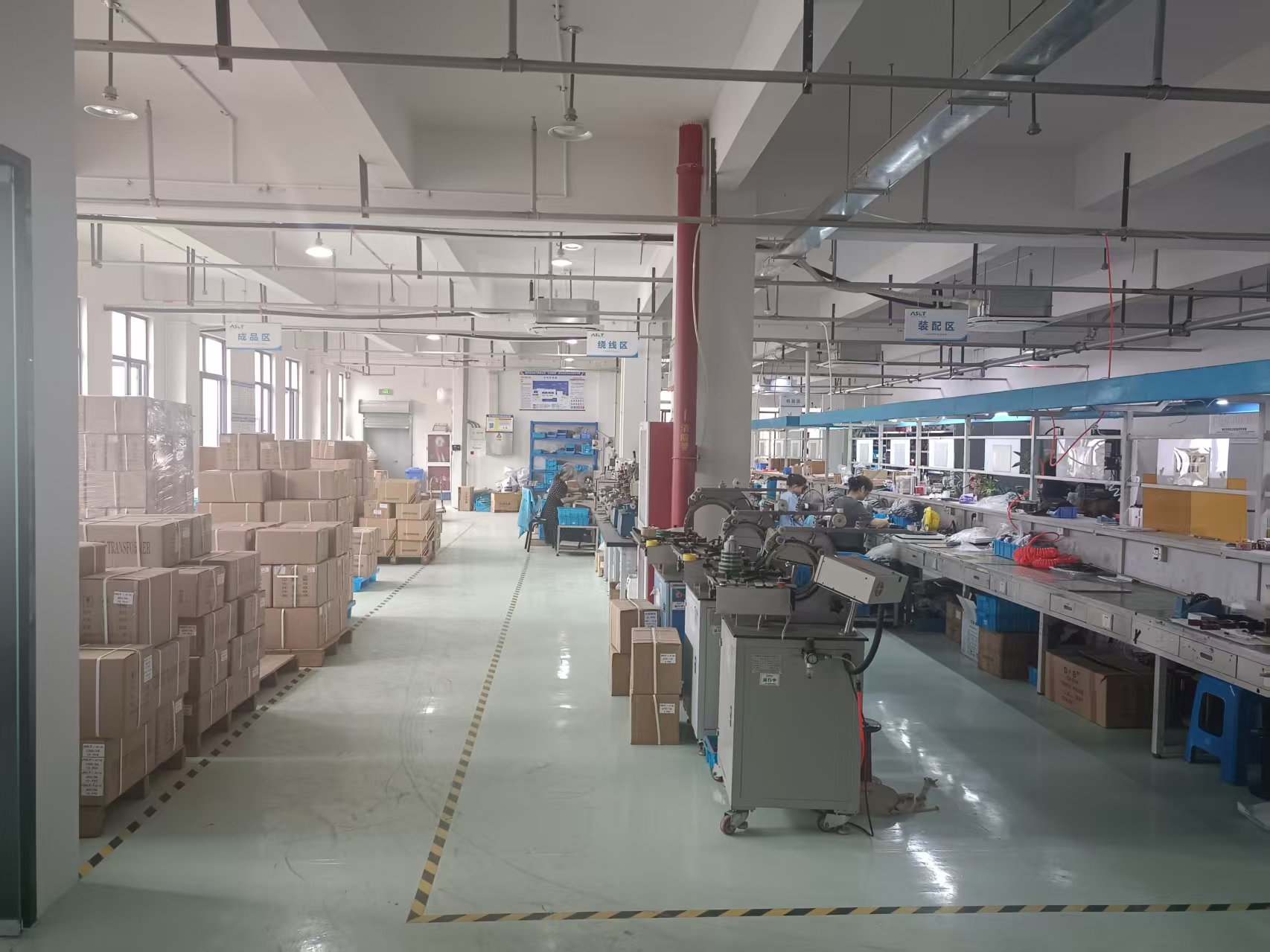
This guide treats the pre-commitment audit as a sequence of verifiable steps rather than a relationship exercise: map each model to its own document, test claimed product-family coverage against evidence, pin customization to a written specification, and convert delivery assurance into checkpoints written into the order. HEYI ELECTRICAL (Wenzhou Heyi Electrical Co., Ltd.) provides the worked example throughout. It is a current transformer and current sensor manufacturer established in 2012, operating a 10,000 m² factory in Wenzhou, China, and publishing a certification set that shows both the strength and the boundaries of typical supplier documentation.
What a Current Transformer Supplier Audit Has to Prove
An audit is finished when three questions can be answered from documents instead of assurances.
- Identity and responsibility. Who is the legal manufacturer named on the quotation, the invoice and the certificate, and does that name match across all three? A trading entity that issues the quotation but not the conformity documents is a different risk profile from the factory that signs them.
- Scope. Which document covers the exact model, ratio, burden and configuration you are buying, in the market where you will install it, under which standard edition? Scope is the single most common failure point in current transformer procurement.
- Repeatability. What happens between deposit and acceptance if a batch does not meet the agreed specification: which tests were run on every unit, which records travel with the shipment, and who pays for a failed acceptance?
Price negotiation is a separate exercise that runs in parallel. It should not be allowed to substitute for any of the three proofs above, because a discounted batch that fails acceptance usually costs more than the discount.
The Standards That Define Capability for a Current Transformer
Capability claims only become auditable when they are attached to a specific standard. Three parts of the IEC 61869 series define most of the current transformer market, and each covers a different electrical architecture.
- IEC 61869-2:2012 applies to newly manufactured inductive current transformers used with electrical measuring instruments and/or protective devices at rated frequencies from 15 Hz to 100 Hz.
- IEC 61869-10:2017 covers low-power passive current transformers with analogue output, again for measurement or protection at rated frequencies from 15 Hz to 100 Hz.
- IEC 61869-14:2018 sets requirements for current transformers used in DC applications, including measurement, protection and control in DC power systems with rated voltage above 1.5 kV.
Projects in North America commonly reference IEEE C57.13-2016, the standard requirements document for instrument transformers identified in this evidence set. A supplier whose documentation is built entirely around IEC editions may still be technically suitable, but the buyer has to establish equivalence deliberately rather than assume it.
For that reason, an audit file should record the following fields for every document received: issuing body, certificate or report number, standard and edition cited, product scope as written, target market, issue date, expiry or next review date, and document type. The last field matters more than buyers expect, because a declaration of conformity, an attestation, a certificate and a type test report carry different weight and are frequently treated as interchangeable in supplier packs.
Five Evidence Lanes in a Capability Audit
Splitting the audit into five lanes prevents one strong document from creating a false impression of overall readiness. Each lane can pass or fail independently, and each produces a specific request if it fails.
Lane 1 — Model-to-document mapping
The question is not “do you have CE?” but “which document names this model?” A pack of twenty certificates proves nothing if none of them names the part number on your purchase order. Build a line-by-line table and mark every model you intend to buy as covered, partially covered or not covered.
Lane 2 — Process repeatability and test-equipment control
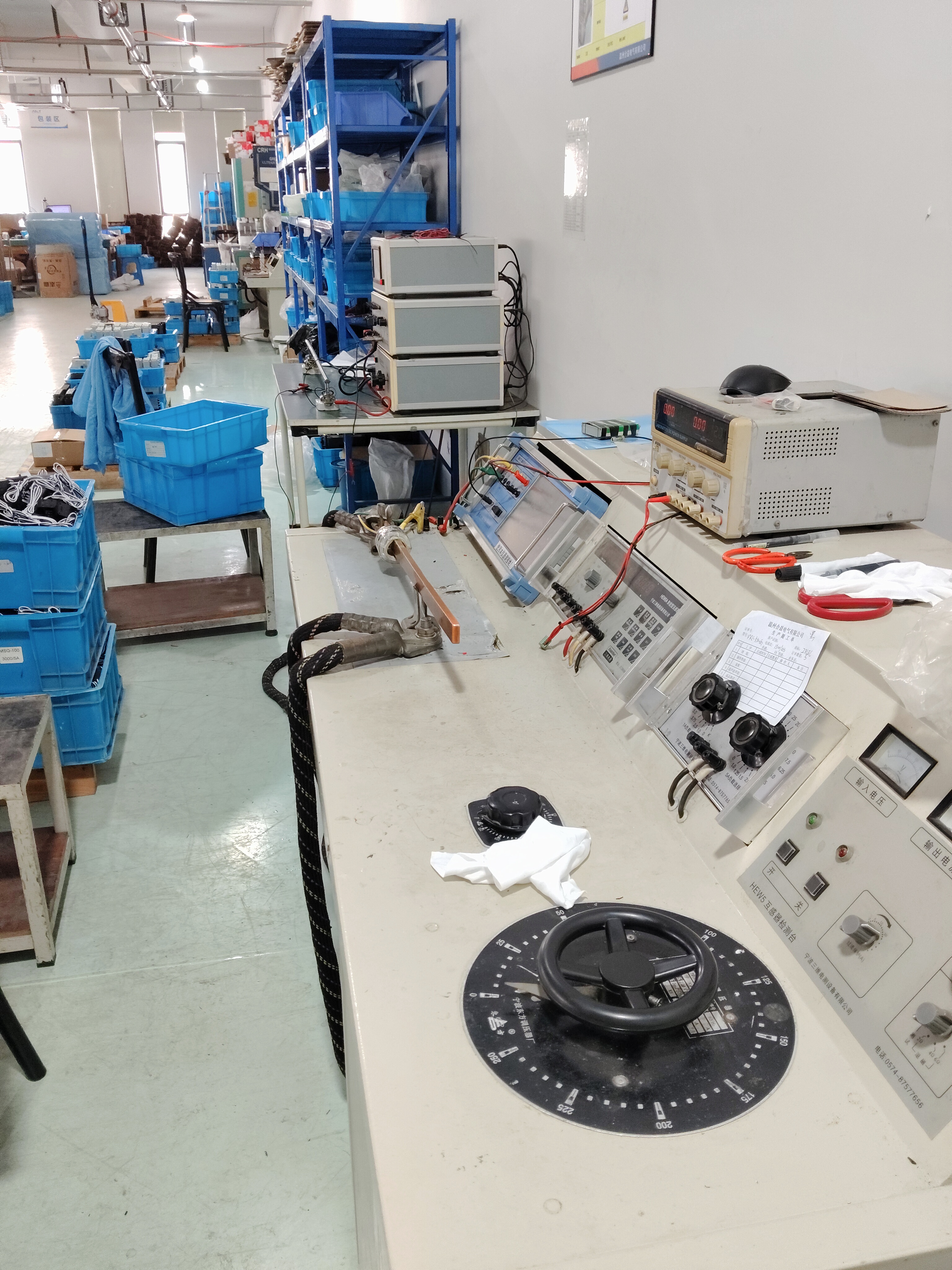
HEYI states a quality-control regime of 100% routine test, accuracy test, insulation resistance test, withstand voltage test, appearance inspection and pre-shipment inspection. That is a description of the routine; the audit step is to ask which instruments perform those tests and whether the instruments themselves are verified. In HEYI's set, metrological verification and calibration certificates exist for a standard current transformer with current booster (model HLS21-2S, certificate D20250900173, verified 2025-09-15 against JJG 313-2010), a current load box (model HL04, certificate D20250900172, calibrated against JJF 1264-2010) and a withstand voltage tester (model BF2670AM, certificate D20250900170, verified 2025-09-08 against JJG 795-2016). Test equipment under calibration is what separates a stated test regime from an evidenced one.
Lane 3 — Customization control
Reviewed in detail below. The audit question is whether the supplier can hold a customized configuration stable across a repeat order, not whether it can produce one sample.
Lane 4 — Portfolio coverage versus production proof
A catalogue is a statement of intent. Production proof is a statement of fact. Treat them separately.
Lane 5 — Commercial terms and acceptance
MOQ, delivery term, payment term and acceptance method are the mechanisms that make delivery assurance enforceable. If any of them is verbal, the delivery assurance does not exist.
Mapping Certificates to Models: A Worked Audit of HEYI's Documentation
The table below reproduces HEYI's published certification entries as recorded, model by model, with the audit reading attached. It is deliberately not a marketing summary: several rows show a limit as clearly as they show a strength.
| Model | Document and number | Issuer | Standard cited | Valid to | Audit reading |
|---|---|---|---|---|---|
| DP/HK busbar split-core CT | CE-EMC verification, B-E2505D2378 | Beide (Shenzhen) Product Service Limited | EN IEC 61000-6-3:2021; EN IEC 61000-6-1:2019 | 2028-06-08 | Emission and immunity evidence for this model only. EMC does not evidence the Low Voltage Directive. |
| DP/HK busbar split-core CT | CE-LVD attestation, N8A 114572 0002 Rev. 00 | TÜV SÜD Product Service GmbH | EN 61869-1, EN 61869-2 (as recorded) | 2099-12-31 | The second directive is covered by a separate document. Check the model string written on it. |
| MSQ | CE-LVD, B-S2410C4272; also B-S210737500 and N8A 114572 0001 Rev. 00 | Beide (Shenzhen); TÜV SÜD | EN 61869-1:2009; EN 61869-2:2012 | 2027-10-22 | Three LVD documents for one model across five years. Work from the most recent and keep the earlier ones on file. |
| CP | CE-LVD, B-S210737499 | Beide (Shenzhen) Product Service Limited | EN 61869-1:2009; EN 61869-2:2012 | 2099-12-31 | Model-specific. Do not extend it to other variants without checking that the variant is named. |
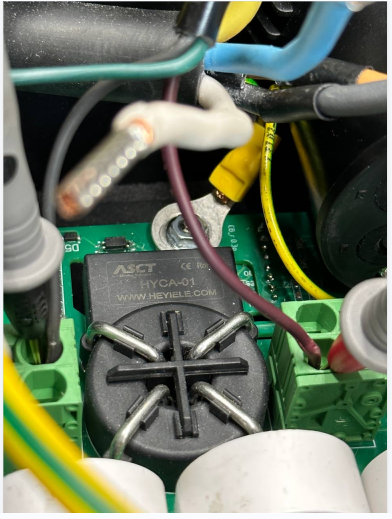
| HYCA residual current sensor | CE-LVD, M.2023.206.C90639; RoHS attestation LCSA03054058R | UDEM; Shenzhen LCS Compliance Testing Laboratory Ltd. | IEC 62752:2016/A1:2018; IEC 62955:2018 | 2028-09-20 | Scope is a fluxgate residual current sensor, not an inductive CT. No UL document appears in this set. |
| KCT, KCD, KCT-L | UKCA declaration, CLZJ23072649108; CE-RoHS, GST.210923.S201R; RoHS report LCSE03115005R | Shanghai Global Testing Services Co., Ltd.; Ningbo LCS Standard Technology Service Co., Ltd. | BS EN 61869-2:2012; 2011/65/EU with (EN) 2015/863 | 2028-07-26 | UK market access plus RoHS. No CE-LVD document naming KCT appears in this set. |
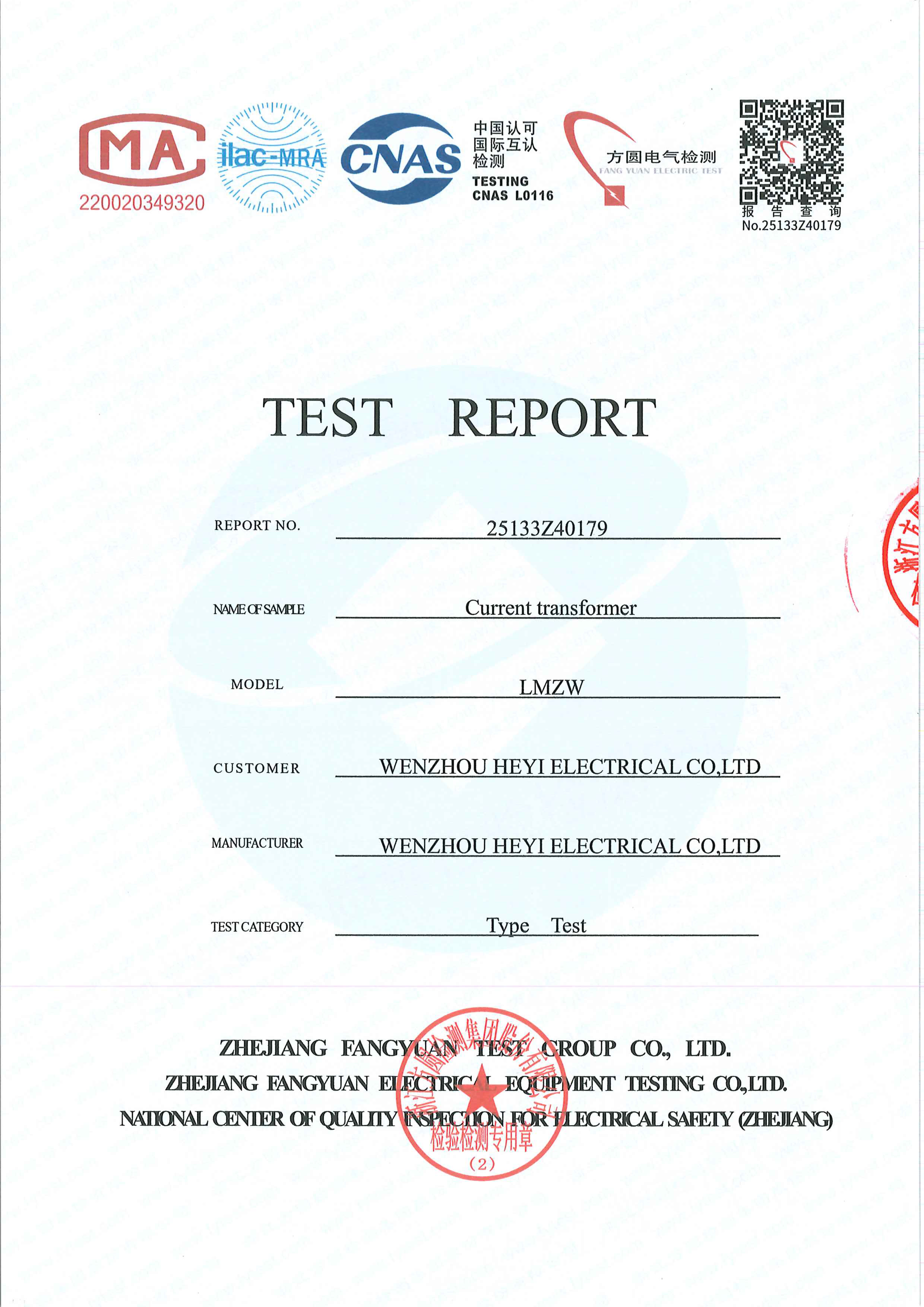
| LMZW outdoor CT | Type test report, 25133Z40179 | Zhejiang Fangyuan Test Group Co., Ltd | IEC 61869-1; IEC 61869-2 | Not stated | Design verification against the standard. Separate from CE-LVD M.2023.206.C83963, which names OCT and LMZW. |
| RECT | Type test report, 25T0221-S | Suzhou Electrical Apparatus Science Research Institute Co., Ltd. | IEC/EN 61869 series, as recorded | Not stated | Evidence that a design was tested. A type test is not a CE or UKCA mark. |
Three readings of this table are worth carrying into any supplier audit. First, directive coverage is split: the DP/HK busbar split-core transformer carries both CE-EMC and a CE-LVD attestation, but they are two documents from two bodies with two different expiry dates. A buyer who checks only one has checked half the file. Second, the evidence set is genuinely model-specific — MSQ, CP, HYCA, the KCT family, LMZW and RECT are each named on separate documents, which is exactly the granularity an audit needs. Third, the boundaries are visible: no UL document appears in this set, and no CE-LVD document naming KCT appears either, even though HEYI's product page states compliance with UL 2231 for the HYCA series. That is not a contradiction; it is a request. The buyer asks for the UL document separately and confirms its scope before relying on the claim.


System-level evidence sits alongside model-level evidence and should not be confused with it. HEYI holds an ISO 9001:2015 certificate, number 20224Q21295R0S, scoped to “Production of Low-Voltage Current Transformers” and valid from 2024-11-21 to 2027-11-20. A quality management system certificate says the process is defined and audited; it does not certify a product, a ratio or an accuracy class.
What Product-Family Coverage Proves About Manufacturing Capability
HEYI's records name a broad set of models: KCT and KCD split-core current transformers, the DP/HK busbar split-core unit, the OCT outdoor waterproof split-core transformer, the LMZW outdoor transformer, MSQ, CP, SDH, DX/DM and RECT current transformers, the DASN three-phase transformer, the FRC flexible Rogowski coil, the KCT-L true RMS current transformer and transmitter, the HYCA current sensor and the C2/C3 Hall effect current sensor.
That list is evidence of a catalogue and of an engineering scope that spans split-core, outdoor, three-phase, Rogowski and sensor architectures. It is not evidence that any single model has been produced at your volume, in your configuration, with your label, on your delivery date. The audit conversion is straightforward: choose the two or three models you will actually order and ask for model-level documents, model-level test records and a production slot for that model. Family-level reassurance should be accepted only as a starting point for that request.
Customization: Auditing an OEM Request Before It Becomes a Batch
HEYI states OEM, ODM, customized production and bulk manufacturing as its production modes, with a customization scope covering current ratio, accuracy class, burden, window size, housing color, terminal type, cable length, logo printing and label design. For a buyer at the evaluation-to-execution stage, that list is the specification skeleton — and the audit question is how each element is controlled.
- Restate every field with a unit and a tolerance in the quotation. “Custom ratio” is not a specification; a printed ratio with a stated accuracy class and burden is.
- Ask which fields interact with the certificate. A change of housing color and a change of accuracy class are not equivalent changes, and the supplier should be able to say which variations stay inside the tested configuration.
- Approve artwork in writing before production. Logo printing and label design are the two fields most likely to cause a rejected batch that is technically compliant and commercially unusable.
- Approve a first article against the written specification. The sample confirms the specification; the specification confirms the repeat order.
- Define change control after approval. Any substitution after first-article approval should require a new written approval, not an email note.
Delivery Assurance: Turning a Lead-Time Range into an Order Commitment
A stated production lead time of 3 to 30 days is a planning envelope, not a commitment. The range spans a factor of ten, which means the number becomes meaningful only when three conditions are met: the purchase order fixes one value for one model and quantity; the start point is defined (deposit received, artwork approved, or first article signed off); and the acceptance method is agreed before shipment rather than after.
The same discipline applies to the other commercial figures. HEYI states a monthly production capacity of 20,000 units and an annual output of 356,000 units across its business; because these two figures are expressed on different bases, the audit step is to ask which product lines each covers and which of them applies to the model being ordered. MOQ is similarly a line-item attribute rather than a company constant: HEYI's purchasing-terms records show a minimum of 1 unit in one record and 10 units in another, with FOB, CIF and EXW delivery terms in both, so the quotation for your specific model must state the value that governs your order.
Acceptance criteria close the loop. HEYI's records describe acceptance via video or photographs, on-site acceptance, or acceptance by a commissioned third-party agency, with payment terms including T/T, Ali Pay, Alibaba and PayPal. Those options should be selected in advance and written into the order, because an acceptance method chosen after a dispute is a negotiation rather than a criterion.
Order-stage checkpoints that make delivery assurance auditable
| Stage | Require in writing | What it protects |
|---|---|---|
| Quotation | Model-level specification, MOQ for that model, delivery term, list of documents that will be supplied | Prevents family-level assumptions from entering the order |
| Sample or first article | Measured ratio and accuracy check record, artwork and label approval | Catches customization drift before tooling or mass production |
| Purchase order | One fixed lead-time value, its start point, delivery term, acceptance method, certificates to travel with the goods | Converts a 3–30 day range into a date you can plan against |
| Pre-shipment | 100% routine test, accuracy test, insulation resistance test, withstand voltage test, appearance inspection and pre-shipment inspection record | Gives each unit a test trace rather than a batch assurance |
| Acceptance | Video or photographic, on-site, or commissioned third-party agency — chosen before shipment | Defines rejection while rejection is still cheap |
| After delivery | Wiring guidance, replacement support, OEM documentation support | Keeps the installed base serviceable and the next order repeatable |
Where Current Transformer Audits Usually Fail
Six failure patterns account for most of the gap between a supplier pack and a defensible procurement file.
- Family-level certificate treated as model-level approval. A document naming KCT does not approve KCD or KCT-L. Read the model string first.
- Type test treated as market access. The LMZW report 25133Z40179 and the RECT report 25T0221-S verify designs against IEC 61869 parts; they are not CE or UKCA marks, and a buyer who needs a mark still needs the mark.
- Standard edition mismatch. Different documents in the same set cite IEC 60044-1:2003 alongside IEC 61869-2:2012, while others cite EN 61869-1:2009 and EN 61869-2:2012. Compare the edition your project specifies with the edition on the document, not with the edition in the sales conversation.
- Expiry dates that never expire. Several entries carry an expiry in 2099, which in practice means no fixed re-issue date. Record the issue date and review the cited standard edition instead of relying on the printed expiry.
- Capacity quoted without a defined scope. Monthly and annual figures on different bases cannot be reconciled by the buyer unless the supplier states which lines each covers.
- Lead-time range accepted as a commitment. A 3 to 30 day range is only a commitment when the purchase order fixes one value and its start point.
Applications and Buyer Types This Audit Serves
The audit sequence above is built for buyers whose decisions carry installation consequences, and HEYI's case records identify the groups that typically run it: power utility companies, electrical engineering contractors, panel builders, industrial equipment manufacturers and building energy management integrators. The applications named in those records are current measurement, energy metering, load monitoring, feeder monitoring, switchgear retrofit, relay protection, generator output monitoring and building sub-metering.
The retrofit and outdoor cases deserve particular attention in an audit, because they concentrate risk. Split-core and window-type structures reduce installation difficulty where cables cannot be disconnected, and the DP/HK, OCT and KCT families are the models named for those roles in HEYI's records. HEYI reports project experience across multiple countries including Thailand, Chile, Lebanon, South Korea and Australia, with reported outcomes of improved current measurement accuracy, stable energy metering and earlier identification of abnormal load conditions. Those outcomes are the supplier's own case records rather than independently verified results, so they are useful as a description of intended application and as a prompt for reference requests — not as a measured performance guarantee.
Frequently Asked Questions
How do I confirm that a current transformer certificate applies to the model I am ordering?
Read four fields together: the product scope or model string written on the document, the standard and edition cited, the target market, and the validity period. In HEYI's set, the CE-EMC verification B-E2505D2378 names the busbar split-core transformer DP/HK and cites EN IEC 61000-6-3:2021 and EN IEC 61000-6-1:2019, valid to 2028-06-08; the UKCA declaration CLZJ23072649108 names KCT-L, KCD and KCT against BS EN 61869-2:2012, valid to 2028-07-26. If your model is not named on a document, ask for the document that names it rather than accepting the nearest family certificate.
What should you verify in an OEM current transformer manufacturer?
Verify the customization scope in writing before discussing price: current ratio, accuracy class, burden, window size, housing color, terminal type, cable length, logo printing and label design. HEYI states OEM and ODM production services and lists those nine fields as customizable. Then verify how the approved configuration is held after the first article — artwork approval, first-article sign-off and written change control — and confirm that the OEM documentation you need travels with the shipment, since documentation support is part of the stated after-sales scope.
What are the purchasing terms and acceptance criteria for a current transformer order?
The terms that govern an order are MOQ, delivery term, acceptance method and payment term. HEYI's purchasing-terms records show FOB, CIF and EXW delivery terms, acceptance via video or photographs, on-site acceptance or acceptance by a commissioned third-party agency, and payment by T/T, Ali Pay, Alibaba or PayPal. The records differ on minimum order quantity — 1 unit in one record and 10 units in another — so the MOQ that governs your order must be the one printed on your quotation for that specific model.
Does a broad product-family list prove manufacturing capability?
No. A portfolio listing shows catalogue breadth, not production proof. Convert it into model-level evidence: name the two or three models you will order, request their specific documents and test records, and ask for a production slot for that model at your quantity. Breadth becomes useful only after that conversion, because it indicates the engineering scope available if your requirements change.
How should lead time and delivery assurance be written into the contract?
Fix a single lead-time value in the purchase order for one model and quantity, define its start point as deposit received, artwork approval or first-article sign-off, and attach the pre-shipment inspection record to the shipment. HEYI's stated production lead time is 3 to 30 days, which is a planning envelope rather than a commitment until it is fixed in the order. For a specific model, ratio and certificate requirement, the team can be reached through heyiele.com or at bethy@heyiele.com to confirm which documents and checkpoints apply to your order.
Conclusion: Audit the Document, Then Commit the Volume
Capability is not established by the breadth of a catalogue or by the number of certificates in a pack. It is established when each model you intend to buy is named on a document that states its standard edition, market and validity; when the test regime behind each unit is supported by calibrated instruments; when customization is fixed in a written specification with an approved first article; and when lead time, MOQ, delivery term and acceptance method are printed on the order rather than agreed in conversation.
HEYI's published set supports that method rather than replacing it: CE-EMC and CE-LVD evidence for the DP/HK busbar split-core transformer, CE-LVD documents naming MSQ, CP, OCT and LMZW, UKCA and CE-RoHS coverage for the KCT family, type test reports for LMZW and RECT, an ISO 9001:2015 system certificate, and calibration records for the test equipment itself. The same set also shows where a buyer must still ask — a UL document is not included, and no CE-LVD document naming KCT appears — which is precisely the point of auditing before committing rather than after.
For the full model list, customization fields and document set referenced in this guide, the company brochure is available here: HEYI Electrical product and certification brochure (PDF).
Have Questions or Need More Details?
Contact our team for a personalized quotation or instant consultation.
Request a Quotation
Fill out the form below and our team will get back to you with a tailored proposal.
WhatsApp Direct Chat
Prefer to chat in real-time? Message us on WhatsApp for instant assistance & quick answers.
- Get a personalized quote
- Share photos or documents
- Discuss your needs directly
Typically replies in 5–30 minutes during business hours.