
Current Transformer Application Guide: Matching CTs to Project Scenarios
Answer first: a current transformer is matched to a project by four conditions, taken in this order — whether the primary conductor can be opened, what geometry and space the panel allows, what ratio, accuracy class and burden the receiving meter or relay actually needs, and what documentation and continuity the installation must carry after commissioning. Model designations are the result of those four answers. When a part number becomes the starting point, projects end up with a unit that fits the catalogue but not the panel.
This guide applies that order to the range listed by HEYI ELECTRICAL — Wenzhou Heyi Electrical Co., Ltd., a China-based manufacturer established in 2012 that produces current transformers and current sensors. HEYI's publicly listed portfolio covers split-core, solid-core, mini or PCB-mount, clamp, Rogowski-coil, leakage-current, three-phase and revenue-grade current-transformer categories, alongside current sensors, shunts, digital energy meters and current transmitters.
Category is where this guide deliberately stops and the datasheet begins. Ratio, accuracy class, window size, insulation level and certificate scope are model-level facts: they change between parts inside the same family and must be confirmed for the exact item being purchased. Each scenario below therefore names the category to specify and the evidence to request, instead of quoting a specification that may belong to a different part number.
Why model-first selection fails in real installations
HEYI lists the failure modes it designs and tests against as measurement deviation, insulation failure, overheating, wrong wiring, unstable output signal, installation mismatch and transport damage. Most of those begin as selection errors rather than manufacturing errors: a ratio outside the meter's input range, a window that will not clear an insulated busbar, a mounting format that cannot be fixed to the rail, or an accuracy class the approving engineer will not accept at that measurement point.
The commercial consequence is asymmetric. HEYI states that its units may carry a slightly higher unit cost than low-cost generic CTs, but argues the difference is offset by lower replacement cost, installation risk, measurement deviation and project mismatch. In retrofit work the argument sharpens: a split-core design avoids cable disconnection, which removes shutdown and labour cost from the installation rather than only product cost.
That is a supplier's position and it should be tested, not accepted. The practical test is simple: can this CT be installed, commissioned and documented inside the outage or construction window the project actually has? That is a scenario question before it is a product question.
The standards layer that decides which architecture you can specify
Before type, ratio or mounting, three IEC documents place the measurement in a technical family, and they are not interchangeable:
- IEC 61869-2:2012 sets additional requirements for newly manufactured inductive current transformers used with electrical measuring instruments and/or protective devices at rated frequencies from 15 Hz to 100 Hz.
- IEC 61869-10:2017 covers additional requirements for low-power passive current transformers with analogue output, used for measurement or protection at rated frequencies from 15 Hz to 100 Hz.
- IEC 61869-14:2018 provides requirements specific to current transformers used in DC applications, covering measurement, protection and control in DC power systems with rated voltage above 1.5 kV.
For North American projects, IEEE C57.13-2016, Standard Requirements for Instrument Transformers, is published by IEEE SA and is the IEEE reference normally named in instrument-transformer specification packages. Confirm which edition and which clauses a supplier's type test actually covers rather than assuming equivalence with an IEC programme.
The buyer consequence is that an RFQ line reading CT, 400/5 A, class 0.5 does not identify a product. It leaves the architecture, the frequency, the output type and the standard open, so two quotations can be technically incomparable while looking identical on the price sheet.
A four-filter matching framework
Filter 1 — Can the primary conductor be opened?
If the panel can be de-energised and the conductor disconnected, a solid-core ring or bar-primary CT is the simplest fit: the conductor is threaded through the window or the busbar passes through the core, with no assembled joint in the magnetic path. If the conductor cannot be opened — the usual case in occupied buildings, live utility installations and continuous-process plants — the choice moves to split-core or clamp-on designs that assemble around the existing conductor.
HEYI states that split-core models can reduce installation time by 50%–70% in retrofit projects. Read that as an installation-time claim for the split-core format, not a measurement guarantee: the reading still depends on the two core halves seating correctly, so installer technique is part of the accuracy result.
Where the conductor is very large, irregular or carries strong harmonic content, a flexible Rogowski coil is the alternative to evaluate. It has no iron core in the measurement path, so it has no iron-core saturation mechanism — the reason it is considered for high-current and harmonic-rich AC measurement. Mordor Intelligence reports growing adoption of Rogowski coils for harmonic monitoring and for flexibility in tight spaces. Accuracy and phase error are set by the coil and its integrator, so the performance figure at your working frequency has to come from the datasheet, not from the topology.
Filter 2 — What geometry does the panel allow?
Two measurements decide more projects than any datasheet comparison: the outside dimension of the insulated conductor or busbar stack, and the free depth in front of it. A window that clears the bar but leaves no room for a hinged half will not close; a compact CT that fits the depth but cannot be fixed will not stay in place.
Four formats cover most of that ground in HEYI's listed range: split-core and clamp-on designs for existing conductors; mini and PCB-mount designs for space-constrained and embedded sensing; three-phase units that take three conductors in one housing for three-phase four-wire circuits, reducing part count and wire runs; and flexible coils for geometries no rigid window fits. Where the mounting is a DIN-rail format or a fixed footprint, treat it as a model-level dimension and confirm it before ordering.
Filter 3 — What ratio, class and burden does the measurement need?
The ratio should follow the current the circuit will carry in normal operation rather than the breaker's nominal rating, and it must land inside the connected meter's or relay's input range. HEYI lists a rated current range covering small-current to high-current applications and offers customized ratios including 100/5 A, 500/5 A, 1000/5 A and 2000/5 A.
Accuracy class is model-dependent: HEYI states classes up to 0.5 or 0.2 depending on model. Class is not a stand-alone badge — it is valid only together with the burden and the current range at which it was tested. A 0.2 statement without burden and test range cannot be checked against the meter it feeds.
For protection cores, the class system and the applicable clauses differ from metering, so confirm the requirement with the protection engineer instead of reusing a metering datasheet.
Filter 4 — What output and lifecycle does the project need?
Three interconnection patterns recur in monitoring projects: a conventional secondary output to a meter or relay; a conditioned analogue output such as 4–20 mA into a PLC or DCS analogue card; and a digital output such as RS485 onto a monitoring network. HEYI's product scope includes current transmitters, shunts and digital energy meters alongside the CT range, which matters at system level: CT, transmitter and meter have to be specified as one chain, because an accuracy class acceptable at the CT terminals can be lost downstream if the transmitter's own accuracy is not declared.
Lifecycle is the filter most often skipped at purchase and most expensive later. Three questions belong in every RFQ: which document proves the claim for this exact model; who holds the wiring diagram the installer will work from; and how a second batch will be kept compatible with the first.
Step-by-step: from site survey to released purchase order
- Classify the measurement point. Decide whether the core serves billing or revenue metering, operational monitoring, or protection. That single decision fixes the accuracy class target and the size of the evidence pack the client will expect.
- Record the installation condition. Note whether the panel is energised, the conductor type, cross-section and insulation, the free depth in front of the bar, the mounting format, and whether the position is indoor or outdoor. For outdoor positions, confirm the enclosure and ingress rating plus the temperature range on the datasheet; never assume a family-level rating.
- Fix the ratio from load, then check the receiving device. Size the ratio to expected operating current, then verify the meter or relay input range and burden before the ratio is sent out for quotation.
- Select the type from Filters 1 and 2, then choose the smallest window that clears the conductor while leaving installation clearance for the hinged half or the coil.
- Design the output chain as one line item. Secondary, 4–20 mA or RS485 — one chain, one accuracy statement, one wiring diagram.
- Build the per-model evidence pack. Datasheet with ratio, class, burden and window; certificate naming standard, edition, scope and validity; type-test or routine-test record; wiring diagram. HEYI's stated controls are 100% routine test, accuracy test, insulation resistance test, withstand voltage test, appearance inspection and pre-shipment inspection, with accuracy calibration, polarity and ratio tests, temperature-rise control, flame-retardant housing and secure terminal structures listed among its production controls.
- Approve by sample, then release volume. Acceptance can be by video or photographs, and on-site or third-party acceptance is also listed. Typical lead time is 3–30 days, so sample approval is the event that sets the delivery date.
Scenario matrix: installation condition to CT category
| Project scenario | Category to specify | What the listed facts support | Confirm on the datasheet |
|---|---|---|---|
| New-build LV switchgear feeder metering | Solid-core current transformer | Listed category; classes up to 0.5 or 0.2 depending on model; custom ratios including 100/5 A to 2000/5 A | Ratio, class with burden, window, insulation level |
| Live retrofit, cable cannot be disconnected | Split-core or clamp-on current transformer | Company statement of 50%–70% lower installation time in retrofit work; shutdown and labour cost avoided | Aperture, class at installed condition, core seating method |
| Large busbar, parallel conductors or tight depth | Large-window split-core or Rogowski coil | Rogowski coils have no iron-core saturation mechanism; research reports adoption for harmonic and tight-space work | Coil length, accuracy and phase error at working frequency |
| Compact distribution board or embedded sensing | Mini or PCB-mount current transformer | Listed category for space-constrained positions | Footprint, pinout, isolation, mounting format |
| Three-phase four-wire service metering | Three-phase current transformer | Listed category; one housing for three conductors reduces parts and wire runs | Phase configuration, class per phase, wiring diagram |
| Billing and revenue metering | Revenue-grade current transformer | Listed category; IEC 61869-2:2012 and IEEE C57.13-2016 as the standards buyers normally name | Model certificate, type test, standard edition, validity |
| Utility distribution and outdoor positions | Outdoor split-core current transformer | HEYI describes outdoor split-core CTs for utility distribution transformer monitoring | Ingress rating and its test report, temperature range, cable entry |
| Leakage and residual current monitoring | Leakage-current current transformer or sensor | Listed category; HEYI describes AC/DC leakage current sensors engineered for EV charging piles | Detection type, applicable standard, certificate scope |
| DC monitoring on PV strings, batteries or EV DC circuits | DC-capable current sensor | An inductive AC CT has no DC measurement mechanism; IEC 61869-14:2018 addresses DC CTs above 1.5 kV | Sensing principle, accuracy at DC and at temperature, output |
Four project scenarios in practice
Commercial building sub-metering retrofit
Taken from HEYI's listed application base of commercial buildings, energy metering systems and feeder monitoring, the constraint is that risers cannot be shut down for a metering upgrade. Split-core units assemble around the existing cable, and the 50%–70% installation-time statement is the reason the format is chosen here. The governance step is documentation: record the ratio and class used on each riser so that a later board change does not create an unmatched spare.
Utility distribution feeder and transformer monitoring
HEYI describes outdoor split-core CTs for robust utility distribution transformer monitoring across global grids, and lists utility power monitoring projects among its application areas. The selection discipline is environmental evidence rather than catalogue description: request the ingress rating with its supporting test report, the operating temperature range and the cable-entry arrangement for the model quoted, then match them to the installation position.
Industrial control panels, generator panels and ATS cabinets
HEYI lists industrial control panels, generator panels, ATS cabinets and relay protection systems among its application areas. In these panels the dominant risk is wiring rather than measurement: HEYI names wrong wiring and unstable output signal among its design risks, and secure terminal structures and clear wiring labels among its controls. Specify the wiring diagram as a deliverable, not an accessory, and confirm terminal size against the panel's conductor.
Revenue metering and billing points
Revenue-grade current transformers are a listed HEYI category, with classes up to 0.5 or 0.2 depending on model. At a billing point the class is only one of four required facts: class, burden, the current range at which the class was tested, and the certificate that names the standard and edition. IEC 61869-2:2012 is the relevant IEC scope for inductive metering CTs; IEEE C57.13-2016 is the IEEE reference for North American specification packages. Requiring all four on the quotation is what makes two offers comparable.
Three decisions stay with the project engineer: the class demanded by the tariff or protection scheme, the ingress and temperature rating the enclosure requires, and the acceptance test the client will witness. This guide supplies the selection order and the questions; the datasheet and the certificate supply the numbers.
What execution and long-term supply actually require
Matching the model is the first half of the decision; being able to repeat the same match across a programme is the second. HEYI ELECTRICAL operates a 10,000 m² factory with 56 employees and five R&D engineers, states monthly production capacity of 20,000 units and annual output of 356,000 units, and reports an export ratio of about 95% across Southeast Asia, South Korea, Europe, South America, Australia, Africa, the Middle East and North America. Typical lead time is 3–30 days, and minimum order quantity is confirmed per item at quotation.
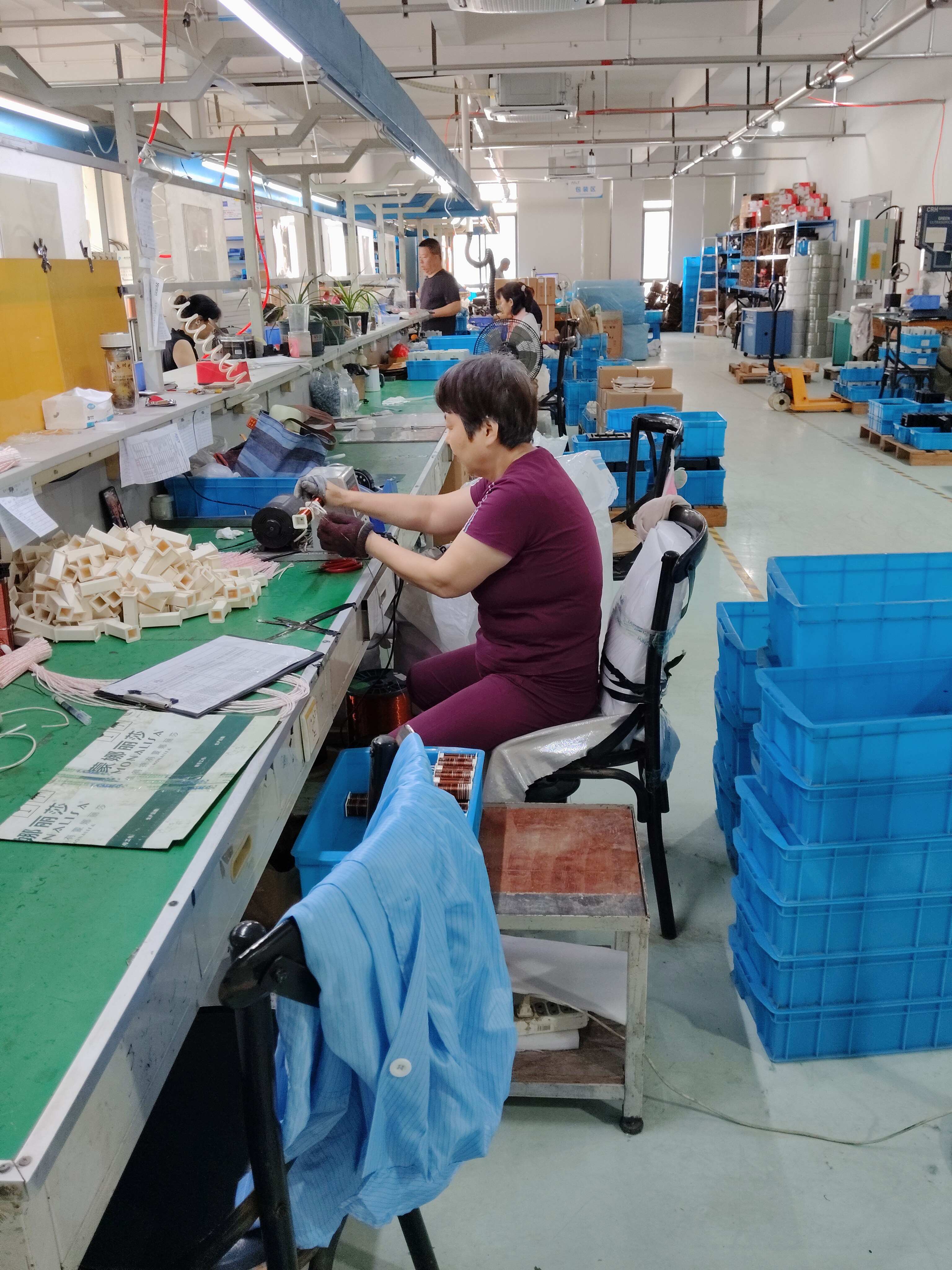
Quality control is stated as 100% routine test, accuracy test, insulation resistance test, withstand voltage test, appearance inspection and pre-shipment inspection. Technical support covers wiring guidance, product replacement support and online after-sales service. Commercial terms are quoted FOB, CIF or EXW, with payment by T/T, PayPal, Alibaba or Ali Pay, and acceptance by video or photographs, on site, or through a commissioned third party.
For multi-year programmes, three practical measures protect the installation after the first delivery. Standardise a short ratio and class list so spares fit more than one panel. Keep a site spare set at each voltage and format used. Maintain an asset register that records which model sits behind which feeder, because a replacement is only interchangeable when ratio, class, window and mounting all match — the same four filters that started the selection.
Frequently asked questions
What documentation should I request before approving a CT for revenue metering?
Request four items for the exact model, not the family: a datasheet stating ratio, accuracy class, burden and the current range at which the class applies; the certificate naming its standard, edition, scope and validity; the type-test or routine-test record supporting the declared class; and the wiring diagram the installer will work from. Revenue measurement normally falls under an inductive CT standard such as IEC 61869-2:2012, or under IEEE C57.13-2016 in North American specification packages, so the certificate should name the standard and edition it was assessed against. HEYI lists revenue-grade current transformers as a product category; per-model class and certificate details are confirmed on the quotation documents.
How do I match a CT to a live retrofit where the cable cannot be disconnected?
Use a split-core or clamp-on design that assembles around the existing conductor, because a solid-core ring CT requires the primary to be opened. HEYI states that split-core models can reduce installation time by 50%–70% in retrofit projects, and that avoiding cable disconnection removes shutdown and labour cost from the job. Two conditions protect the result: the window must clear the insulated conductor with enough room for the hinged half to close, and the two core halves must seat cleanly, because installation quality affects the reading. Confirm aperture, class and burden on the datasheet for the model being quoted.
What should a current transformer request for quotation contain?
At minimum: measurement purpose (billing, operational monitoring or protection); installation condition (energised retrofit or de-energised new build); conductor type, size and insulation; required ratio; accuracy class and burden together with the receiving device input; rated voltage and insulation requirement; mounting format and available depth; output type (secondary, 4–20 mA or RS485); the standard and certificate the project requires; acceptance method; and quantity. HEYI quotes on FOB, CIF or EXW terms and accepts payment by T/T, PayPal, Alibaba or Ali Pay. A request that omits installation condition and receiving-device input cannot be priced or technically compared on equal terms.
How should a buyer validate current transformers before releasing a full order?
Approve a sample against the same documents used for the order, then keep the approval record. HEYI lists its pre-shipment controls as 100% routine test, accuracy test, insulation resistance test, withstand voltage test, appearance inspection and pre-shipment inspection, with polarity and ratio tests, temperature-rise control and secure terminal structures among its production controls. Incoming inspection at the buyer's site should repeat what matters to the installation: ratio and polarity, insulation resistance, wiring labels and physical fit in the panel. Typical lead time is 3–30 days, so sample approval is the step that governs the delivery date.
How do I evaluate a long-term current transformer supply partner in China?
Evaluate the partner on documented capacity, repeatable quality control, delivery performance and technical support rather than catalogue breadth. HEYI ELECTRICAL, established in 2012, operates a 10,000 m² factory with 56 employees and five R&D engineers, states monthly production capacity of 20,000 units and annual output of 356,000 units, and reports an export ratio of about 95% to markets including Southeast Asia, South Korea, Europe, South America, Australia, Africa, the Middle East and North America. Its stated support covers wiring guidance, product replacement support and online after-sales service. For a multi-year programme, add three checks: whether a second source can be qualified against the same ratio and class list; whether installed models are held in an asset register so replacements match; and how you will be told if a model or its certification changes. A sample or trial order is the practical way to test the whole chain — request one at bethy@heyiele.com or +86 13968747975, or download the catalogue below.
Conclusion: match the scenario, then the model
The order that works is consistent across project types: fix whether the conductor can be opened, confirm the geometry and mounting the panel allows, resolve ratio, class and burden against the receiving device, then choose the output chain and the evidence pack. Applied in that sequence, the split-core, solid-core, mini or PCB-mount, clamp, Rogowski-coil, leakage-current, three-phase and revenue-grade categories in HEYI's listed range become answers to defined conditions rather than a list to browse.
The execution half is documentation and repeatability. Ask for the model-level certificate, the type test behind the declared class, and the wiring diagram; keep ratio and class lists short; record what was installed where. Those steps are what allow a second order — or a replacement three years later — to fit the same panel without a redesign.
Next step: download the HEYI ELECTRICAL company catalogue for the full listed range, or send your installation condition, ratio, class and receiving-device input to bethy@heyiele.com for a matched quotation. Company details: Wenzhou Heyi Electrical Co., Ltd., 5 Floor, Building 2, No.56 Nirong middle road, Kunpeng Street, Wenzhou Marine Economy Development Demonstration zone, Wenzhou City, Zhejiang, China; website www.heyiele.com; telephone and WhatsApp +86 13968747975.
Have Questions or Need More Details?
Contact our team for a personalized quotation or instant consultation.
Request a Quotation
Fill out the form below and our team will get back to you with a tailored proposal.
WhatsApp Direct Chat
Prefer to chat in real-time? Message us on WhatsApp for instant assistance & quick answers.
- Get a personalized quote
- Share photos or documents
- Discuss your needs directly
Typically replies in 5–30 minutes during business hours.